House skirts lawmaker salary-freeze vote, in line for $1,600 increase


The House surprised the Senate by slipping a pay raise into budget legislation, then refusing to take action on the Senate’s attempt to reverse it.

Illinois lawmakers are in line for a $1,600-a-year salary increase after the House surprised the Senate by slipping a pay raise into budget legislation, then refusing to take action on the Senate’s attempt to reverse it.

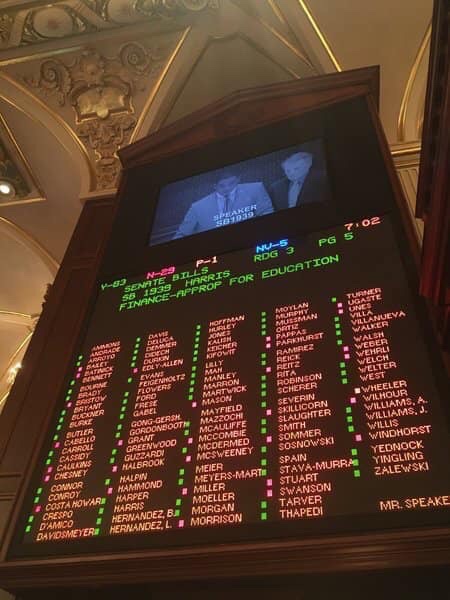
The $39.9 billion budget the House adopted Saturday night, followed Sunday by Senate action which ended the legislature’s spring session, includes a 2.4% cost-of-living adjustment in legislators’ base salary of $67,836.
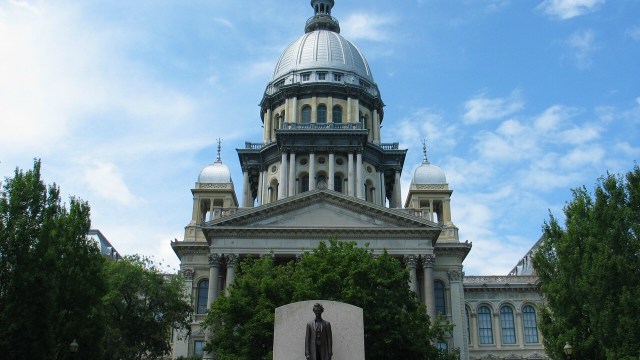
It would be the first pay increase for lawmakers since 2008 and would take effect July 1, if Democratic Gov. J.B. Pritzker signs the budget agreement, which all 19 Senate Republicans opposed because of the pay raise.

“If we think we deserve one, then stand up and say it,” said Sen. Dale Righter, a Mattoon Republican who was the first to point out the missing COLA freeze to majority Democrats. “Don’t try to slip it through in the last hours of session because that’s what people resent.”

Lawmakers are due annual cost-of-living increases unless legislation blocks them. For a decade, budget legislation has included language to freeze salaries.

During Friday night’s budget debate, sponsoring Democratic Sen. Heather Steans was surprised when Righter pointed out that the agreed-to COLA freeze was absent. Senate Democrats reversed the omission by adding the prohibition to another bill they sent to the House, but the House took no action.

“You should go and ask the House why they didn’t pass the bill that we sent them,” Steans said.

Pritzker, at a celebratory end-of-session news conference in his state Capitol office, avoided questions about whether lawmakers should have given themselves a raise.

“I was very happy we got a balanced budget this year,” Pritzker said when asked about the raise. “These legislators did an outstanding job. You saw how hard people worked.”

House Majority Leader Greg Harris, a Chicago Democrat, would not say why the House didn’t vote on the separate salary-freeze legislation, noting only that the budget plan including the COLA underwent committee and House-floor examination.

A spokesman for Democratic House Speaker Michael Madigan said he was unaware of a pay increase. But Rep. David McSweeney, a Republican budget hawk from Barrington Hills, was incensed.

“Illinois citizens are sick and tired of secret insider budget deals that enrich Springfield politicians at the expense of hardworking taxpayers who are getting hit with massive tax increases,” McSweeney said.

The salary freeze plan that the Senate sent to the House would have required a roll call of House members on whether to implement the freeze or accept the raise.

“They were aware that we passed the bill over to them, so for whatever reason, I don’t know what happened over there, they didn’t take it up,” said Senate President John Cullerton, a Democrat from Chicago. “But I would advise them to do so.”

The Senate added the freeze language to unrelated legislation sponsored by Democratic Rep. Stephanie Kifowit. When it came back to the House, records indicate Kifowit transferred it to Democratic Rep. Thaddeus Jones of Calumet City. Jones filed a motion to reject the freeze, but it was never called for a vote. Neither Jones nor Kifowit returned messages seeking comment on Sunday.

It’s unclear when House Republicans learned that the COLA was included, but legislative records show that on Saturday, the GOP caucus signed on as co-sponsors to Metropolis Republican Rep. Patrick Windhorst’s bill prohibiting lawmakers from accepting COLAs or increased reimbursement for mileage, lodging or meals in the 2020 fiscal year.

Rep. Tim Butler, R-Springfield, took to Facebook Sunday to call on Democrats to return to Springfield to act on the legislation. Absent that, he said Pritzker should use his amendatory veto powers to add the pay raise rejection to the companion budget bill.

Added Avery Bourne, R-Raymond: “With our state facing so many financial challenges, we should not be raising lawmakers’ pay.”

The bill to reject the Senate freeze on the COLA is HB837. The Windhorst bill to prohibit COLAs and expense reimbursement increases is HB2965 .

Posted in #420day, #madigoon, Chicago, Education, Elections, gun control, Illinois, Illinois Pensions, illinois politics, legal services, marijuana, mike madigan, News, political satire, politics, Pritzker, Rauner, referendum, robert martwick, Roy F. McCampbell, Schiller Park, senator durbin, senator Mulroe, Social Media, Taxation, weed | Tagged , , , , , , , , , , , , , | Leave a comment

Illinois Residents Face a Massive Tax Increase To Pay For the Illinois General Assembly Spending Spree


It was a tax massacre in Springfield! They doubled your gas tax and passed a budget with out of control spending that will likely lead to a massive future tax hike.

I thought I would give a brief review one more time of the frenzied activities by the Illinois General Assembly.

Illinois state legislators in bipartisan fashion gave themselves a 2.5 % increase in pay and an increase of 25% in per diem and 33% in mileage reimbursement…in the worst slaughter of taxpayers in the over 200 year history of Illinois

Be sure to read to the end.

This week in Springfield the following legislation was passed.

1. Expanded abortion up to birth.

2. Expanded gambling with up to 6 new casinos.

3. Allowing inmates to vote including establishing a polling place at the Cook County Jail.

4. Removing $5 co-pay for inmates making medical and dental completely free.

5. New law passed regarding Driver Licenses. When completing your drivers application you can identify as Male, Female, or Other (non-binary).

6. Legislation to extend voting rights to non-citizen student trustees in Illinois.

7. Passed legislation preventing law enforcement from enforcing the law and making Illinois a Sanctuary State.

8. A bill that requires all Refineries in Illinois, all petrochemical plants, all ethanol plants, all basic organic chemical plants must become union. BILL WAS TABLED! Did not pass!

9. Tonight passed legislation for a $40 billion budget (a billion more than the governors proposed budget) and $45 billion capital bill, raising license plate fees to $150, legalizes sports betting, higher taxes on video gaming and an expansion of video gaming, a tax hike on cigarettes and vaping, a new tax on parking garages, and raises the gasoline tax to $.38 a gallon.

10. Passed a constitutional amendment to go from a flat tax to a progressive tax.

11. Increased minimum wage to $15.

12. Legalization of marijuana.

13. Last but not least legislators gave themselves a 2.5% salary raise, a 25% and 33% increase in mileage and per diem.

To pay for all of this a massive , bipartisan TAX INCREASE was passed by the Illinois General Assembly.

The General Assembly just doubled the gas tax on working families. Too many other taxes and fees to name, were also included.

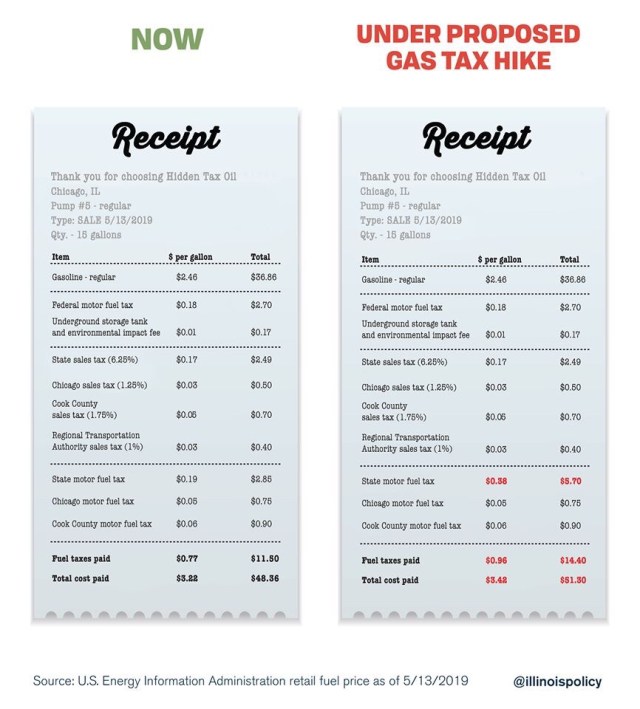
The gas tax increase approved by the Illinois General Assembly will double the motor fuel tax from 19 cents to 38 cents per gallon.

Drivers filling up in Chicago could see an effective per-gallon gas tax burden of 39% when they fill up their tank.

No reforms on property taxes, pensions or Medicaid that would provide much needed relief for hard-working families in all of Illinois !!!

This is reckless spending that every working family will have to pay!

Posted in #420day, #madigoon, #taxation, abortion, Chicago, e cigarettes, election fraud, Elections, Finance, gambling, gun control, Horse Racing, Illinois, Illinois Pensions, illinois politics, marijuana, News, political satire, politics, Pritzker, Rauner, referendum, robert martwick, Roy F. McCampbell, senator durbin, senator Mulroe, Social Media, Taxation, transgender, vaping, vote, weed | Tagged , , , , , , , , , , , , | Leave a comment

Before you light up your joints, there are some things you should know.


Recreational marijuana will soon be legal in Illinois after a plan passed both the state House and the Senate this week. 

But before you light up your joints, here are five things you should know: 

What still needs to happen? 

The bill still needs the governor’s signature, but Gov. J.B. Pritzker has already said he will sign the bill. It’s just a matter of when.

“The state of Illinois just made history, legalizing adult-use cannabis with the most equity-centric approach in the nation,” the governor said in a statement. “This will have a transformational impact on our state, creating opportunity in the communities that need it most and giving so many a second chance… In the interest of equity and criminal justice reform, I look forward to signing this monumental legislation.”

When will it take effect?

The legislation is set to take effect on Jan. 1, 2020.

Some videos on how to light up :

https://www.youtube.com/watch?v=1iY9WaIeH8U&feature=share

https://youtu.be/Jq7QUtzxDHo

What does the plan include? 

Once signed into law, the plan will allow Illinois residents 21 and older to legally buy marijuana from licensed dispensaries and possess any combination of: up to 30 grams (roughly one ounce) of cannabis, as much as 500 milligrams of THC in a cannabis-infused product, and up to five grams of cannabis concentrate.

One contentious portion of the bill that evolved through a little “give and toke” was how it addresses the growth of cannabis plants in the home. The measure’s Democratic sponsor Sen. Heather Steans had originally proposed allowing anyone to keep five plants in their home, but the amended version ultimately would permit only patients qualified for medicinal use of cannabis to grow their own plants, in a locked space away from public view.

The proposal also addresses the criminal justice element of marijuana legalization by allowing anyone convicted in the past of marijuana possession of 30 grams or less to have their record expunged through the governor’s clemency process, which does not require individuals to initiate the process.

The bill would also allow those with a conviction of possession of between 30 and 500 grams of marijuana, or the state’s attorney, to petition the court to vacate convictions on an individual basis. 

How many other states have legalized recreational marijuana? 

Illinois will be the 11th state in the U.S. to allow for the recreational use of marijuana. Illinois will also be only the second state after Vermont to legalize recreational marijuana without direct referendum approval from voters.

Colorado and Washington were the first states to legalize recreational marijuana use in 2012, with eight others following in the years after.

Some Illinoisans have weighed in on the issue in the past, however. In the March 2018 primary election, 68% of voters in Cook County voted in favor of legalizing recreational marijuana. That following November, 88% of Chicago voters approved of using marijuana revenue to increase funding for Chicago Public Schools and mental health services.

Where will the revenue from pot sales go? 

The proposal allocates the revenue first to pay for administrative needs and costs incurred from the expungement process, then 35% to the state’s General Revenue Fund, 25% to a program to invest in minority communities impacted most negatively by cannabis prohibition, 20% to substance abuse prevention programs and mengal health services and 10% to the bill backlog, among other initiatives.

Posted in #420day, #madigoon, #mentalhealthmonth, #taxation, cancer, Chicago, Illinois, Illinois Pensions, illinois politics, legal services, marijuana, Medical, mental health, mike madigan, News, political satire, politics, Pritzker, Rauner, referendum, robert martwick, Roy F. McCampbell, Social Media, vaping | Tagged , , , , , , , , , , | Leave a comment

WARNING……This Opening of the Constitutional Amendment Could Be Very Harmful to Public Employee Retirees and Future Retirees


WARNING….THIS OPENING OF THE CONSTITUTIONAL AMENDMENT COULD BE VERY HARMFUL TO RETIREES AND FUTURE RETIREES, BESIDES TO THE TAXPAYERS.

THE POLS IN SPRINGFIELD WANT US TO TRUST THEM….HA,……….

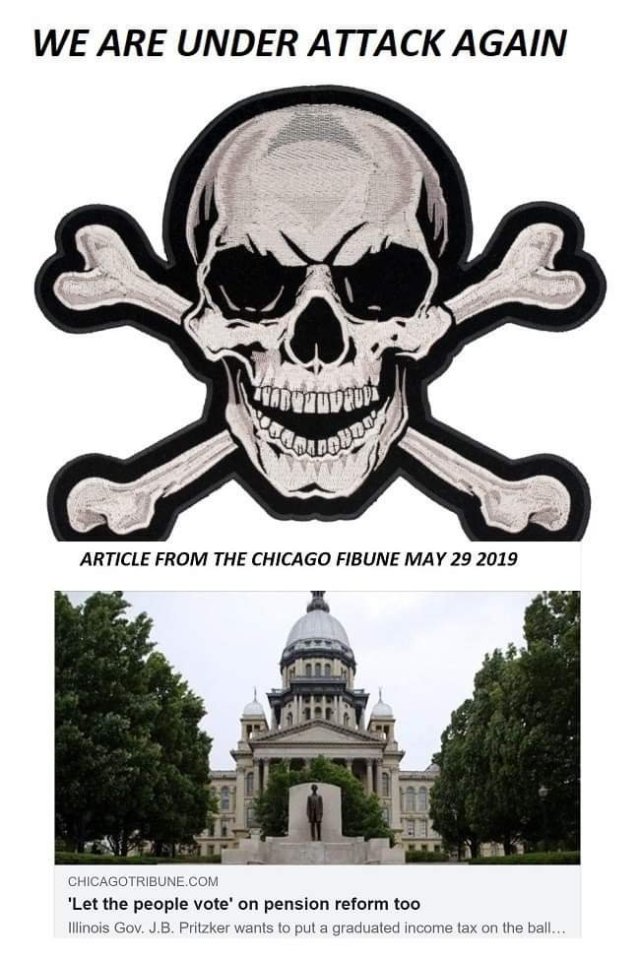
HOW DID THAT GO BEFORE .?……THE CHICAGO FIBUNE ARTICLE IS CALLING FOR AN ATTACK ON PUBLIC EMPLOYEE COLAS (and most likely our pensions in time too)

THEY WANT TO ALTER JUST WHAT CHICAGO RETIREES FOUGHT FOR IN COURTS FOR OVER 3 YEARS IN FACT ALL THE WAY TO THE SUPREME COURT WHERE CHICAGO RETIREES WON THE CASE TO PROTECT OUR PENSIONS AND COLAS……………

………….ACCORDING TO THE SPRINGFIELD POLS, THEY WANT THE AMENDMENT OPEN TO MAKE THE RICH PAY MORE TAXES……….

……..PROBLEM IS WHATS TO STOP THEM GOING AFTER THE MIDDLE CLASS AND EVEN THE POOR>>>NOT A DAMN THING.……….

.. TO ADD TO THIS, OUR FRIENDS AT THE FIBUNE ARE CALLING FOR A VOTE BY THE TAXPAYERS, WHO BECAUSE OF THE MEDIAS PAINTING US AS GREEDY S.O.B.s….WE MOST LIKELY WOULD GO DOWN IN FLAMES ON THAT VOTE…. PART OF THE FIBUNE ARTICLE ….The good news is that this fight isnt over (*IT SHOULD BE BECAUSE THE SUPREME COURT SIDED WITH PUBLIC EMPLOYEES AND IT IS THE LAW*)

Lawmakers have until May 2020 to put a companion referendum on the ballot to change the constitution’s pension clause.

The way out is real reform and its hiding in plain sight. The pension clause needs to be loosened.

Benefits earned so far should and would be protected. But going forward, the legislature should be empowered to tweak those costly guarantees such as 3% compounded cost of living adjustments……….

……….AGAIN WE CANT TRUST THE FIBUNE WHO LABELS US AS “GREEDY” BESIDES THEY DONT MAKE THE LAWS………..

……….BUT THEY SURE WILL DICTATE WHAT THE LAWS SHOULD BE……………

…..HERES ANOTHER QUESTION FOR THE FIBUNE ABOUT THIS PROTECTION OF EARNED BENEFITS….

REMEMBER A GUY NAMED Rahm Emanuel WHO TOOK CHICAGO Employees BENEFIT OF HEALTH CARE AWAY AND THE FIBUNE BACKED THAT (how soon we forget) BUT THE QUESTION IS WHAT ABOUT PRESENT CHICAGO EMPLOYEES….THEY HAVE PLENTY OF MEMBERS WHO ARE GOING NUTS OVER THINKING ABOUT PAYING FOR HEALTH CARE IF THEY RETIRE AND NOW YOU JUST ADDED MORE TO THE FIRE….C.W.P.P. HAS ALWAYS BACKED THE CONTRACT OF WHEN YOU WERE HIRED WHATEVER THE DEAL WAS AT THE TIME, THATS WHAT YOU RETIRE WITH….”WE STAND AS ONE” …..

OPPOSE OPENING THE ILLINOIS CONSTITUTION AS TO PENSION PROTECTIONS ………Change the law on new government hires !!!!!

Posted in #taxation, gun control, Illinois, Illinois Pensions, illinois politics, News, political satire, politics, Pritzker, referendum, robert martwick, Roy F. McCampbell, senator durbin, senator Mulroe, Social Media, Taxation | Tagged , , , , , , , , , , , | Leave a comment

Legalized marijuana linked to a sharp rise in car crashes


There has been an increase by up to 6 percent in the number of highway crashes in four of the states where the recreational use of marijuana has been legalized.

— Read on www.nbcnews.com/business/consumer/legalized-marijuana-linked-sharp-rise-car-crashes-n921511

Posted in #420day, #madigoon, #mentalhealthmonth, #taxation, Chicago, Crime, e cigarettes, Education, Elections, health risk, Illinois, Illinois Pensions, illinois politics, marijuana, mental health, mike madigan, political satire, politics, Roy F. McCampbell, Taxation, weed | Tagged , , , , , , , , , , , , , , | Leave a comment

SURPRISE……..STAND BY…….Governor Pritzker has just announced that he isn’t finished and told the General Assembly to stay and work through the weekend…….WOW!!!….And Illinois House approves marijuana legalization bill backed by Gov. J.B. Pritzker


Illinois is one signature away from joining the 10 other states that have legalized recreational use of marijuana.

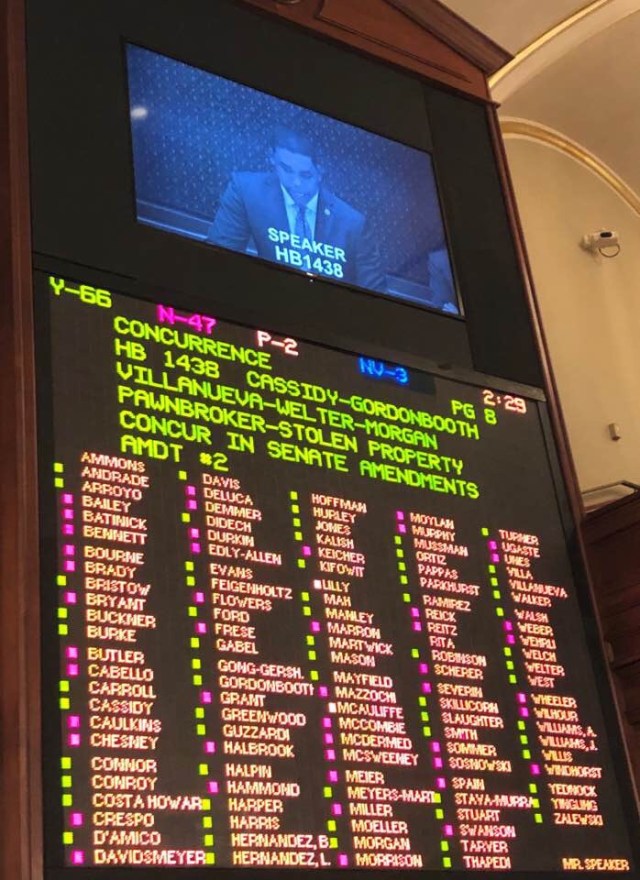
With a bipartisan vote of 66-47, the House approved a bill Friday that would allow residents age 21 and older to legally possess 30 grams of cannabis, 5 grams of cannabis concentrate or 500 milligrams of THC contained in a cannabis-infused product. Nonresidents could possess 15 grams of cannabis.

And passing with 66 votes, recreational cannabis heads to the Governor…

Gov. J.B. Pritzker, who campaigned for office on a promise to legalize pot, is expected to sign the billwhen it reaches his desk. The Senate approved it Wednesday.

So what does the Governor still want ? Casino-expansion……Infrastructure bill ?

With a budget and capital plan still being sorted out — not to mention an expansive gambling measure that would add a Chicago casino, Illinois House Speaker Mike Madigan has opted to extend adjournment of the spring legislative session until Sunday.

The extension means that any vote taken after May 31 will require a three-fifths majority to for the law to go into effect within the next 12 months — and legislators will likely use Friday to handle the state’s budget.

The Illinois Senate, however, plans to try to take up the budget and capital bills on Friday. The Senate also plans to take up the Reproductive Health Act, an abortion measure already passed by the House. 

The announcement was a surprise, even with the vast amount of work to be done. That’s because negotiations had been led by Democrats — the party that holds the governor’s mansion and supermajorities in both legislative chambers. 

And it looked like Gov. J.B. Pritzker would be getting what he wanted: a budget and capital plan, marijuana legalization and expanded gambling.

Capitol insiders speculated whether the overtime demand is a Madigan power play. If Pritzker had attained all his legislative priorities by the end of Friday, the rookie governor would be largely credited with the wins. 

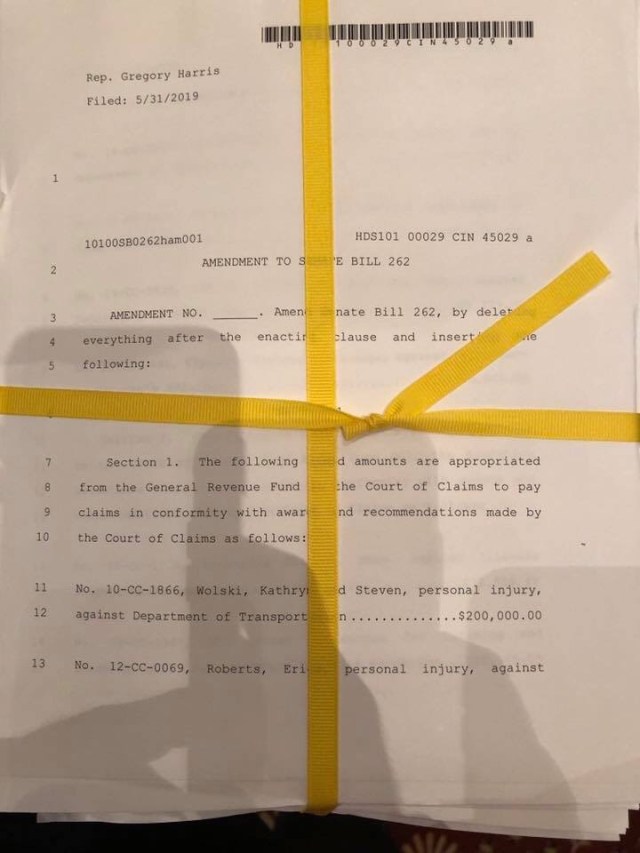
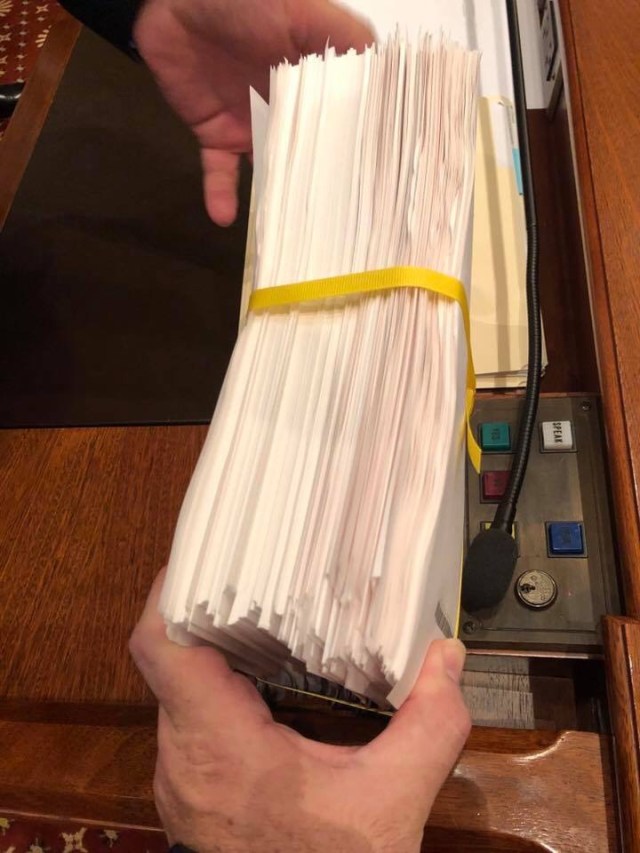
Today is the final day of the Illinois legislative session and a 1,581 budget bill was just filed. Members will be asked to vote on a bill that was negotiated by insiders behind closed doors. This terrible budget relies on the revenues from the 32% income tax hike. HELL NO!!!!!!

Legislators have complained that there was little time to digest comprehensive capital and budget bills — and negotiations were vastly done behind-the-scenes. House Republicans on Friday blasted out a statement accusing Democrats of increasing spending and neglecting any of their preferred job reforms. Republicans said the reforms were taken out on Friday morning, prompting the statement. 

The state budget is 1581 pages printed on both sides.It appears Madigan, too, is trying to force some Republicans to vote on the budget and capital plan, to show that it is “bipartisan.” Republicans had asked for a real estate tax and the $1 tax on cigarettes to be removed from the capital plan. On Friday they learned the taxes were still on the table, and their requested reforms were stripped out.

Asked about the budget negotiation process during a House Executive Committee, House Majority Leader Greg Harris, D-Chicago, noted there was “less agreement than there was in the past.” 

“Some things we agreed upon, some things we did not,” Harris said of negotiations with Republicans. 

There has been plenty of animosity within the House, as Republicans have spent hours in debate fighting various controversial measures, including the abortion bill and marijuana legalization.

In another development Friday, a Senate committee cleared a measure that provides funding for a capital plan. It includes $1.2 billion in revenue for increasing the motor fuel tax by 19 cents; $475 million with a $50 increase to vehicle registration fees; $4 million from a $233 increase to the registration fees for electric vehicles; $146 million from an increase in title registration fees; $50 million from a $100 increase to truck registrations and $78 million from a 5 cent increase for diesel fuel.

For vertical projects within the plan — which include buildings, such as schools and recreational facilities, rather than roads or bridges — $150 million would come from an increase in video gaming terminal taxes; $10 million from sports wagering revenue; $500 million from upfront license fees from casino and sports betting; $30 million from a tax on parking garages and lots; $68 million from an increase on the real estate transfer tax on commercial properties; $45 million from removing the sales tax exemption on traded-in property valued above $10,000; and $156 million from an increase on the cigarette tax by $1 per pack. 

And a House committee planned to take up a massive gambling measure Friday afternoon that would add six casinos in Chicago, Waukegan, the south suburbs, Williamson County in southern Illinois, Rockford and Danville. 

The Chicago casino would be able to have up to 4,000 gambling positions — three times more than any other casino in the state currently has — and slot machines would be allowed at O’Hare and Midway airports. Video gambling machines would OKed for larger truck stops. The Illinois Gaming Board would have oversight of regulating the Chicago casino, which would be privately run with revenue evenly split between the operator, the city and the state.

Posted in #madigoon, #taxation, Chicago, Crime, Economy, Education, election fraud, Elections, gambling, gun control, Health, Horse Racing, Illinois, Illinois Pensions, illinois politics, Leyden, marijuana, Medical, mike madigan, Pritzker, Roy F. McCampbell, Social Media, Special Education, Taxation, vaping, vote | Tagged , , , , , , , , , , , , | Leave a comment

Weed Backers: Senate passes legal pot bill, sends it to House


With the clock ticking to adjournment, the Illinois Senate quickly passed a comprehensive measure to legalize recreational marijuana.

The Illinois Senate voted 38-17 to approve the legislation after about 40 minutes of debate. It must still pass the Illinois House. 

With opposition from law enforcement groups and other groups, bill sponsors scaled back the expungement provisions in the measure and narrowed down home grow for just medical marijuana patients, among other changes. 

The governor’s office said they are “encouraged by the progress being made.” 

“The Governor looks forward to working with the sponsors to pass this bill, creation the most equitable cannabis approach in the country,” Pritzker spokeswoman Jordan Abudayyeh said in a statement.

During the debate, state Sen. Dale Righter argued legalization will increase use and has led to more organized crime prosecutions in Colorado.

“More people are going to use and this is going to cause more hazards for the public no less,” Righter, R-Mattoon, said. But his Republican colleague, State Sen. Jason Barickman, said he now supports the measure, in part because of the additions ensuring a zero tolerance for employers. He said it also gives people “more freedom of their choices.”

Earlier Wednesday, the Illinois Senate Executive Committee voted 13-3 to approve the latest language. Changes include allowing only medical marijuana patients to have up to five plants in a home; and scaling back expungements. Convictions dealing with amounts of cannabis up to 30 grams will be dealt with through the governor’s clemency process, which does not require individuals to initiate the process. For amounts of 30 to 500 grams, the state’s attorney or an individual can petition the court to vacate the conviction.

The original language would have automatically expunged an estimated 800,000 convictions. The revised language means those with convictions for cannabis possession convictions under 30 grams can get pardoned by the governor. States attorneys would then be able to petition the court to expunge the record. A judge would direct law enforcement agencies and county clerks to clear their record. This only applies to those convicted with no other violent crime associated with the charge. And it only applies for convictions that have taken place when the bill takes effect on Jan. 1.

“It’s only a one-time look back,” bill sponsor state Sen. Heather Steans, D-Chicago, said after committee. “That’s an important point.” 

Designed to address concerns about impaired driving, new language would also add a DUI Task Force led by Illinois State Police to examine best practices. Those would include examining emergency technology and roadside testing, bill sponsor State Sen. Heather Steans, D-Chicago, said during the Illinois Senate Executive Committee. 

Deputy Gov. Christian Mitchell also testified that a social equity loan program was upped to $30 million, from $20 million. He said the expungement changes were made in conjunction with Cook County State’s Attorney Kim Foxx, other states attorneys and Illinois Attorney General Kwame Raoul.

Barickman, R-Bloomington, commended sponsors for going back to the table to set a “gold standard” for workplace standards. New changes also include strengthening language to ensure employers can maintain a zero tolerance drug policy, should legalization happen. 

Jim Kaitschuk, executive director of the Illinois Sheriffs’ Association, said during the committee that home grow still remains an issue, even if it’s limited to medical marijuana patients since the program is expanding: “We don’t have access. We won’t be able to tell who is doing what.”

New conflict of interest provisions were also added, which would ban lawmakers and their family members, as well as state employees from being able to get a cannabis business license for two years. 

The conflict of interest ban was added after it was reported that state Sen. Patricia Van Pelt, D-Chicago, was involved in marketing and investment seminars and leading a company that intended to obtain license to grow and sell marijuana. Van Pelt was removed as a sponsor of the bill on May 15. The Sun-Times reported that Van Pelt and her involvement in the business is being investigated by the Illinois Secretary of State’s office. And while Van Pelt told the Sun-Times that she wouldn’t be involved in shaping the legalization bill, she did not commit to abstaining from votes on the measure.

Opponents of the wide-ranging bill had free rein to voice their displeasure at a lengthy Senate committee hearing in Springfield on May 15 — and they aired concerns about everything from how law enforcement will measure impairment in drivers to which marijuana offenses should be expunged to whether or not weed causes erectile dysfunction.

Posted in #420day, #taxation, e cigarettes, Economic Development, Economy, Health, health risk, Illinois, illinois politics, marijuana, Medical, mental health, News, political satire, politics, referendum, Roy F. McCampbell, senator durbin, senator Mulroe, Social Media, Taxation, weed | Tagged , , , , , , , , , | Leave a comment

Graduated income tax question makes it to ballot; House OKs constitutional amendment


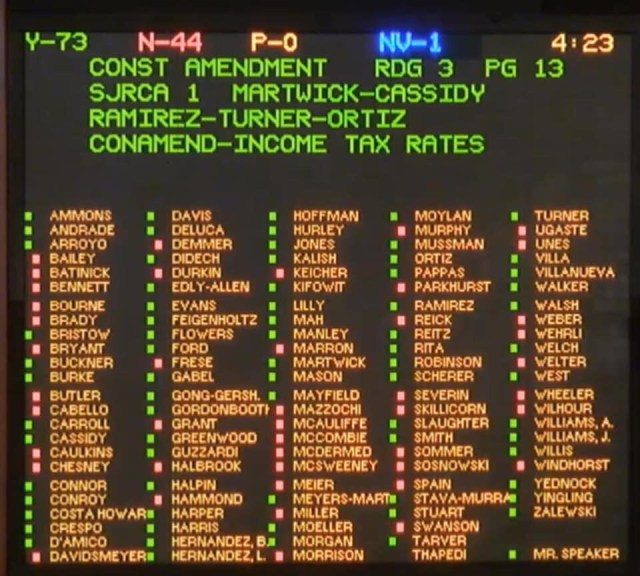
The Illinois House, on partisan lines, voted to approve a constitutional amendment to ask voters in 2020 if the flat tax structure should be removed from the constitution.

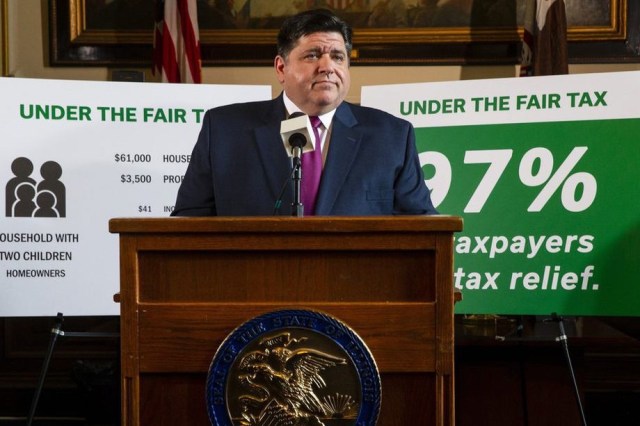
Landing Gov. J.B. Pritzker a huge win, the Illinois House — on strictly partisan lines — on Memorial Day passed a constitutional amendment that will land a question on the 2020 ballot to change the state’s income tax structure.

The Illinois House voted 73-44 to approve the constitutional amendment. 

With the Illinois Senate approving the amendment on May 1, the House passage means voters will be asked if they want to change the state’s flat tax structure to a graduated income tax — in which high earners will pay more. The flat rate language has been part of the state’s constitution since 1970, a year after the income tax was first enacted. The amendment does not require the governor’s approval. 

The referendum would need the support of 60 percent of voters for the change to take effect.

A corresponding measure that sets the tax rates is still making it through the Illinois House.

Monday’s passage sets the start button on a lengthy public campaign leading up to the referendum, full of big money efforts via two dark money groups. 

The amendment’s sponsor, State Rep. Robert Martwick, D-Chicago, called the state’s current system “a very unfair tax system.” He countered opponents claims about Illinoisans and businesses leaving the state: “This is reform. This is an opportunity to fix the problems of Illinois.”

“The fair tax, if approved by the voters, if they choose this tax reform, this path forward for Illinois, we will be in a position where we can eliminate those deficits,” Martwick said. “And when we eliminate those deficits, we stop accumulating debts and we begin to pay them down. And when we pay down those debts we relieve the pressure for future tax increases.”

All 44 House Republicans put their lights on to speak during a lengthy debate on the floor on Monday afternoon, which began about 1 p.m. The debate was much, much longer than the Senate debate — which clocked in at seven minutes. 

Illinois House Republican Leader Jim Durkin called the vote “a foregone conclusion” and “the end result of the Illinois Democrats’ historical reckless irresponsible budgeting and spending.” 

“Please think about how repeating the same foolish tax-and-spend policies will not change anything about our future,” State Rep. Margo McDermed, R-Mokena, said. “We need to address the underlying drivers and we need to get our financial house in order and this amendment does none of those things.” 

Several Republicans called it a “jobs tax,” a tax change that will drive more people out of Illinois and a problem of trust. 

“This plan will not work. Do we need tax reform? You bet we do. This isn’t the way to do it,” State Rep. Steve Reick, R-Woodstock, said. “We need a global review of our entire tax system … with an operating system that tracks our economy, that doesn’t create class envy and class warfare and take money from those who are the most productive in our society. We need a tax system that tracks our economy.”

A House committee last week cleared the tax rate measure, which would raise the top income tax rate to 7.99 percent — up from Pritzker’s preferred 7.95 percent. It also separates rates for single and joint filers, an issue many brought up when Pritzker unveiled his preferred rates in March. The corporate tax rate within the package would also be raised to 7.99 percent.

Under current law, all personal income is taxed at 4.95 percent and corporate income at 7 percent.

Democrats have said the new personal income tax rate would bring in $3.57 billion, and the new corporate tax rate would bring in $350 million.

While many lawmakers believed the House would clear the amendment, it’s unclear whether lawmakers will approve the two other measures amid concerns over the lack of property tax relief. And sponsor state Rep. Mike Zalewski, who chairs the House Revenue and Finance Committee, said there’s support for a task force to discuss property tax relief this summer.

Pritzker’s plan, unveiled in March, proposed dropping the personal tax rate for the first $10,000 of income for single and joint filers to a 4.75 percent rate; income above $10,000 to $100,000 would be taxed at 4.9 percent; income between $100,000 and $250,000 would be taxed at 4.95 percent; income between $250,001 and $500,000 would be taxed at 7.75 percent; and income from $500,001 to $1 million would be taxed 7.85 percent. Income over $1 million would be taxed 7.95 percent.

Pritzker had said he wants a progressive income tax approved before the Illinois General Assembly adjourns in May. Pritzker’s office has framed the tax change as a way to generate $3.4 billion in additional revenue, while noting that 33 other states have enacted a graduated income tax structure.

The way this amendment is structured unlike most other states it can be rewritten when once approved and becomes a blank check with no control of future legislation

If you think that [a progressive income tax in Illinois] doesn’t hit you, you’re wrong. None of the drivers that have created the structural deficit have been addressed… Even the rates that are listed there are not ‘enough’ in the eyes of people that are sitting here today.

“But just because a state applies different rates to different amounts of income doesn’t mean only the wealthy pay top rates. In neighboring Missouri, for example, the state’s top rate of 5.4% is levied on all income over $8,424, according to the Tax Foundation, which compiles state tax rates and brackets annually. Alabama’s top rate kicks in even sooner — after the first $3,000 for single filers.” Politifact.com

Posted in #madigoon, #taxation, Chicago, Crime, Economy, Education, Elections, health risk, Illinois, Illinois Pensions, illinois politics, Leyden, News, political satire, politics, referendum, robert martwick, Roy F. McCampbell, Schiller Park, senator durbin, senator Mulroe, Social Media, Taxation | Tagged , , , , , , , , , , , | Leave a comment

Memorial Day, Originally Called Decoration Day………


Memorial Day, originally called Decoration Day, is a day of remembrance for those who have died in our nation’s service.

There are many stories as to its actual beginnings, with over two dozen cities and towns laying claim to being the birthplace of Memorial Day. There is also evidence that organized women’s groups in the South were decorating graves before the end of the Civil War: a hymn published in 1867, “Kneel Where Our Loves are Sleeping” by Nella L. Sweet carried the dedication “To The Ladies of the South who are Decorating the Graves of the Confederate Dead” (Source: Duke University’s Historic American Sheet Music, 1850-1920).

While Waterloo N.Y. was officially declared the birthplace of Memorial Day by President Lyndon Johnson in May 1966, it’s difficult to prove conclusively the origins of the day.

It is more likely that it had many separate beginnings; each of those towns and every planned or spontaneous gathering of people to honor the war dead in the 1860’s tapped into the general human need to honor our dead, each contributed honorably to the growing movement that culminated in Gen Logan giving his official proclamation in 1868. It is not important who was the very first, what is important is that Memorial Day was established. Memorial Day, originally called Decoration Day, is a day of remembrance for those who have died in our nation’s service. There are many stories as to its actual beginnings, with over two dozen cities and towns laying claim to being the birthplace of Memorial Day.

There is also evidence that organized women’s groups in the South were decorating graves before the end of the Civil War: a hymn published in 1867, “Kneel Where Our Loves are Sleeping” by Nella L. Sweet carried the dedication “To The Ladies of the South who are Decorating the Graves of the Confederate Dead” (Source: Duke University’s Historic American Sheet Music, 1850-1920). While Waterloo N.Y. was officially declared the birthplace of Memorial Day by President Lyndon Johnson in May 1966, it’s difficult to prove conclusively the origins of the day. It is more likely that it had many separate beginnings; each of those towns and every planned or spontaneous gathering of people to honor the war dead in the 1860’s tapped into the general human need to honor our dead, each contributed honorably to the growing movement that culminated in Gen Logan giving his official proclamation in 1868. It is not important who was the very first, what is important is that Memorial Day was established. Memorial Day is not about division. It is about reconciliation; it is about coming together to honor those who gave their all.

Another story attributes the origin

of Memorial Day was started by former slaves on May, 1, 1865 in Charleston, SC to honor 257 dead Union Soldiers who had been buried in a mass grave in a Confederate prison camp. They dug up the bodies and worked for 2 weeks to give them a proper burial as gratitude for fighting for their freedom. They then held a parade of 10,000 people led by 2,800 Black children where they marched, sang and celebrated.Memorial Day is not about division. It is about reconciliation; it is about coming together to honor those who gave their all.

Another story attributes the origin

of Memorial Day was started by former slaves on May, 1, 1865 in Charleston, SC to honor 257 dead Union Soldiers who had been buried in a mass grave in a Confederate prison camp. They dug up the bodies and worked for 2 weeks to give them a proper burial as gratitude for fighting for their freedom. They then held a parade of 10,000 people led by 2,800 Black children where they marched, sang and celebrated.

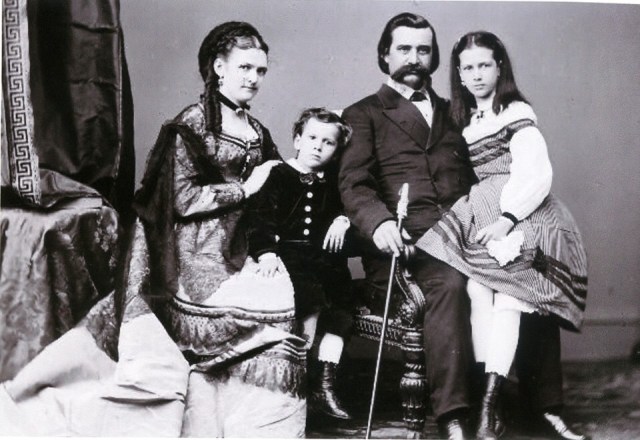
He was both a war hero and a politician, but General John A. Logan (in photo with his family) of Illinois is also remembered as the man who helped create Memorial Day. After an illustrious Civil War career, Union General Logan served as a member of Congress from 1867-1871. In 1871, he was elected as a U.S. Senator from Illinois while also serving as the Commander-in-Chief of the Grand Army of the Republic—a powerful veterans’ organization. Through his efforts, the first public holiday (Decoration Day; now Memorial Day) was established to honor casualties from the Civil War (and ensuing conflicts). Concerned that their sacrifices might be forgotten, he helped create Memorial Day as a national holiday by issuing (as the Commander-in-Chief of the Grand Army of the Republic) General Order No. 11 “Logan’s Memorial Day Order” on May 5, 1868. Today, it is the Logan name itself that has become easily recognizable throughout the country in honor of General John A. Logan. In Chicago, the area known as Logan Square can be traced to the general, and an inspiring statue of General Logan resides in downtown Grant Park. Other Logan namesakes include counties in Kansas, Oklahoma, Colorado, Illinois, and North Dakota, as well as Logan Township in New Jersey. Logan Junior High School (Princeton, IL) and Logan College (Carterville, IL) are named after Logan. In addition to the previously mentioned statue of General Logan in Grant Park, one may also visit statues of Logan in (of course!) Logan Square in Washington, D.C. as well as Vicksburg, MS and Raleigh, NC. Many others exist due to the popularity of the general following the Civil War as well as his strong support in the creation of Memorial Day.

Posted in Chicago, D Day, Elections, Employing Disabled, Illinois, illinois politics, Leyden, Memorial Day, News, politics, Roy F. McCampbell, Schiller Park, senator durbin, senator Mulroe, Social Media, Uncategorized, USCongress, vietnam, vietnam virtual wall, vietnam wall, War on Terror, World War II | Tagged , , , , , , , , , | Leave a comment

Memorial Day Weekend Marks the 45th Anniversary of the Totem Lumber Fire in Schiller Park


This Memorial Day weekend marks the 43rd Anniversary of the Totem Lumber Fire on 25th Avenue. The fire started on the Saturday shortly after lunch on Memorial Day weekend 1976. George Kubalewski was the shift commander. Walter Siwek was the Fire Chief.

Totem Lumber opened in Schiller Park in 1958.

The fire burned for 36 hours. Under the fire department mutual aid agreements 14 fire departments responded with almost all 100 firefighters. Fire engines pumped water to the scene from as far away as 25th and Irving and Leland and 25th. No neighboring properties were damaged. That was an era when Charles V Leiser, Bill Schultz, Reno Biasi, Chester Kwiat, Herb Milnes, Carl Schuyler, Robert Ritt, Gerry Phipps were on the Schiller Park Fire Department.

Posted in Chicago, fire protection, firefighter, Illinois, illinois politics, Leyden, Leyden Fire Protection District, News, Norridge, Northlake, paramedic services of illinois, politics, Roy F. McCampbell, Schiller Park, schiller park police, Social Media, Totem Lumber Fire | Tagged , , , , , , , , , , , , , , | Leave a comment