Six Reasons to Oppose the ‘Pritzker Tax’


Over the next nearly 17 months, Illinois Democrats will try to persuade voters to profoundly amend the Illinois Constitution. Call their proposal the “Pritzker Tax,” placed on the Nov. 3, 2020, ballot thanks to exclusively Democratic votes in the spring session of the General Assembly.
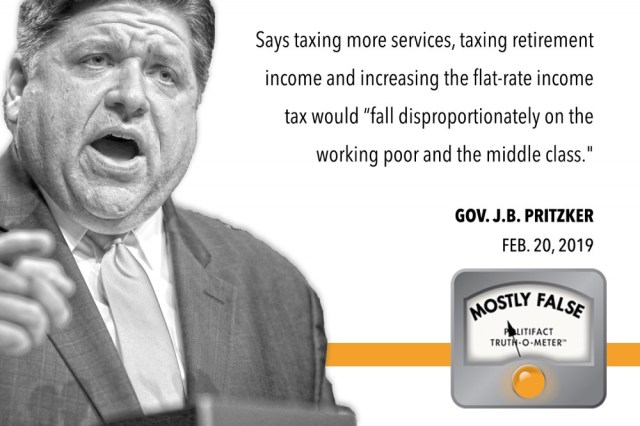
The change hasn’t gone well for Connecticut, where progressively higher income and property taxes drive residents to other states. We suspect the change would be every bit as counterproductive in Illinois, which has lost population for five straight years. As young people abandon this state or don’t return here to start families and careers, the Illinois Exodus is intensifying. That leaves fewer people working and paying taxes to Illinois’ state and local governments. Every time a taxpayer departs for Florida, Tennessee or Texas, the tax burden on those of us who remain grows heavier.
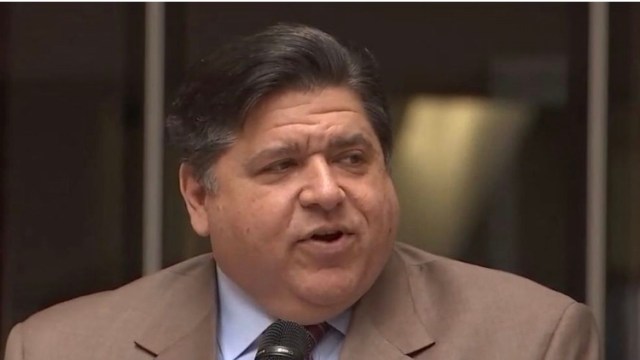
For the first time since Connecticut in 1996, an American state would switch from a flat income tax to a graduated tax scheme. Meanwhile, North Carolina and Kentucky have gone the opposite direction. to flat taxes: If you earn five times what your neighbor earns, you pay five times as much to the state. And in 2018, Colorado voters rejected an amendment to convert from flat to graduated.

So each of us should think skeptically, not reflexively by political tribe, about what the Pritzker Tax would do to Illinois. Six reasons — for now — to vote it down:

The pols don’t deserve more of Other People’s Money

Recall how candidate Lori Lightfoot pledged to wring spending from City Hall before asking Chicagoans to pay higher taxes. In Springfield, by contrast, annual budgets blithely rise, so taxpayers should blithely pay more, right? Pritzker’s Democrats haven’t done the hard work to earn more of Other People’s Money. They didn’t make even a phony show of trying to economize. Remember those news stories about Dems’ agency budget cuts, greater outsourcing and their other spending reforms? Neither do we.

Yes, the Democrats feel they must placate the government employee union leaders whom ambitious streamlining would aggrieve. But by advocating for more income tax revenue, Democrats who rely on labor for campaign support seek to make their problem the taxpayers’ problem: Tax rates now on the table would extract an additional $3 billion a year from the private sector to placate workers in the public sector.

Retailers call it a “loss leader,” the low-priced item that attracts customers who often wind up buying high-priced items. The baited hook here is that, at least initially, the Pritzker Tax will hit only the high-income 3%; the rest of us will see slight tax decreases. Maybe, at least initially, the math works. Maybe, at least initially, that pledge will sucker millions of voters into supporting graduated tax rates — just as the $9.99 toaster gets people to shop at Biggy Bob’s Bargains.

We wish Pritzker & Co. had been forthright from the get-go: Deadbeat Illinois has $6 billion in unpaid bills, an unfunded pension obligation north of $133 billion, and we want to spend a lot more on programs our voters like. If taxpayers give us another $3 billion a year it’s, um, a start. But nowhere near enough. So you know what comes next.

Instead, the messaging is that the Pritzker Tax would be one-stop salvation. We thought we’d stepped into the Wayback Machine with Sherman and his dog Peabody when we read the words of Rep. Robert Martwick, a Chicago Democrat who sponsored the measure: “This is reform. This is what we all come here to do: identify problems, find solutions. This is the solution for Illinois going forward.” Other Democrats went on and on about this shortfall, or that deficit or the other crying need that fresh buckets of money from the Pritzker Tax would ameliorate.

Look at the tax-hike marketing from — well, from any recent year. Always the promises:

Give us the tax hike, we’ll fix Illinois!

Except, today’s tax hike is tomorrow’s license to spend … more.

If they can legalize graduated rates, Illinois Democrats soon will have to come after middle-class taxpayers. The state’s obligations are set in concrete, and $3 billion annually won’t cover existing costs plus the new spending Pritzker wants.

We ask yet again: Democrats, your new tax rates are guaranteed to hit only wealthy people and spare the middle class for … how long, exactly? Because if voters approve the Pritzker Tax, you can raise rates on every one of us, as often as you like.

The beauty of the flat tax is that raising the rate on everyone at once is much harder politically than gouging only those 3-percenters. That’s the leverage you want all of us to surrender to you.

One solution to Illinois’ financial fiasco is hiding in plain sight: a constitutional amendment that would relax the constitution’s rigid pension clause. Benefits earned so far would be protected, but going forward, lawmakers could adjust such unaffordable guarantees as 3% compounded cost-of-living-adjustments.

When lawmakers want more money, their proposed amendment flies onto the ballot. But when taxpayers want to address pension crises? Democrats, you have about 11 months to put this proposed amendment, too, on the ballot. About 11 months to do what Pritzker said about his tax scheme: “Let the people vote.” On pension reform too.

We have mixed reactions, but as the 2020 election approaches, this taxing frenzy is a bad look for Democrats.

Yet those grabs are mere prelude to citizens’ vote on the Pritzker Tax. The ultimate aim is to make middle-class taxpayers soakable, from here to eternity. So getting voters to trust that this only punishes those rich swells is key. As we’ve been showing in this series — When taxpayers trust Springfield … here’s what happens — Illinois voters would be fools to think tomorrow’s “emergency” need for higher rates won’t obliterate today’s earnest promises. Let’s revisit Springfield’s Hall of Promise Breakers, lawmakers who assured voters that:

Illinois tollways will be freeways by 1973. (Promised conversion dates varied.)

The Illinois Lottery, authorized in 1973, will fund schools. (Instead, in a shell game, lottery proceeds get diverted).

The 1989 income tax surcharge is just temporary. (Made permanent in 1993.)

Gov. Jim Edgar in 1994 signs into law a plan to fix a $15 billion unfunded pension liability that Edgar calls “a time bomb.” (Lawmakers give themselves pension holidays and spend the money elsewhere. Taxpayers’ unfunded liability now exceeds $133 billion.)

The “College Illinois” program Speaker Michael Madigan helps pass in 1997 is guaranteed to pay for itself. (Unfunded liability now facing taxpayers: $501 million.)

In 2010, Gov. Pat Quinn says he won’t permit an individual income tax hike higher than 1%. In January 2011 he signs into law a “Quinncome Tax” twice that size.

In 2011, while legislating a 67% increase in the income tax rate, Democrats include a provision that by 2025, the rate will retreat to 3.25%. Democrats also promise that the tax hike will fix the pension system, eliminate overdue bills, boost Illinois’ economy, create jobs, end annual budget shortfalls and improve state bond ratings. (None of that happens.)

In 2017, lawmakers instead say they need much more revenue than the retreating tax rate gives them. So they raise the personal income tax rate by 32%, to 4.95%. Democratic sponsors say the spending plan should start paying down old bills and reduce costs in the pension system. (Instead …)

In 2017, lawmakers instead say they need much more revenue than the retreating tax rate gives them. So they raise the personal income tax rate by 32%, to 4.95%. Democratic sponsors say the spending plan should start paying down old bills and reduce costs in the pension system. (Instead …..

Voters, you’re free to believe that, sometime after Year One, lawmakers wouldn’t greatly expand the Pritzker Tax.

Gov. Pritzker and fellow Democrats, again, our suggestion to you:

Be honest. Admit to voters that for all your talk of “fairness,” you came up with this plan because you want private-sector workers and companies paying much more into your public sector.

Posted in #madigoon, Education, election fraud, Elections, Illinois, Illinois Pensions, illinois politics, Illinois Tollroad, marijuana, News, political satire, politics, Pritzker, Rauner, referendum, robert martwick, Roy F. McCampbell, Schiller Park, senator durbin, senator Mulroe, Social Media, Taxation, Transportation, weed | Tagged , , , , , , , , , , , | Leave a comment

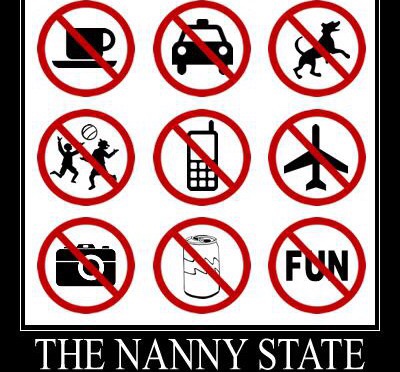
Illinois Extends It’s Role As The “Nanny State”


This is idiotic.

A requirement for graduation?

What if you are brilliant or an athlete and have been given a free ride?

Okay, this is all my opinion.

However, I suspect this is another case of the State of Illinois imposing a law on all of us that most residents don’t want, another one-size-fits-all?

Or am I talking through my hat?

In addition to math, science, reading, and gym class, Illinois high school students will soon have a financial aid requirement to graduate high school. 

Every high school senior in the state of Illinois will have to apply for federal student aid before they can graduate. 

Lawmakers approved the new law last week. Gov. J.B. Pritzker says he will sign it. 

Under the plan, high schools in the state will be required to have seniors fill out a Free Application for Federal Student Aid, and if eligible a state student aid application as well. 

State Rep. Katie Stuart says it will be easy for schools and kids, and could help some students get into college. 

“This initiative will connect more students to the resources that are already available to help them get education or training after high school,” Stuart said. “But it’s flexible enough that we are not putting up any new barriers to graduation.”

Not all lawmakers are happy about the idea. 

Opponents say there’s always a cost when the state requires local schools to do anything. And there’s a question about why all high school seniors need to fill out a FAFSA application. 

But state Rep. Mary Flowers, who voted for the plan, said the requirement is aimed at the students who need extra help.

Rep Mary Flowers assumes that all schools have the necessary counselors to take the time to educate the students, as well as the parents, about college and/or other programs, Flowers told opponents of the plan. 

Pritzker says the idea is critical for the state’s schools. He says he looks forward to signing the new law. 

Once he does, the requirement will start in the 2020-2021 school year.

Posted in #madigoon, #taxation, Crime, Education, fafsa, Finance, Health, Illinois, Illinois Pensions, illinois politics, Leyden, mike madigan, nanny state, News, political satire, politics, Pritzker, Rauner, referendum, robert martwick, Roy F. McCampbell, Social Media, Taxation, West Leyden | Tagged , , , , , , , , , , , , , , , | Leave a comment

Illinois lawmakers vote to eliminate prisoner copay


Prisoners in Illinois will no longer have to pay copays because of a bill passed by the legislature, prisoners currently pay a $5 copay for medical and dental services.

A bill that passed last week will eliminate that cost.

It’s now awaiting action from Governor JB Pritzker.

When this bill becomes law, the Illinois Department of Corrections said they’ll lose out on about $400,000 over 10 years.

A similar bill passed last year, but was vetoed by former Governor Bruce Rauner

Posted in Uncategorized | Leave a comment

Illinois Teacher Pension Costs Continue to Soar After the Current General Assembly Session to Placate the Unions At Taxpayer Costs


Sen. Jim Oberweis compromise plan ignored as teacher pension spiking provision slips through

State Sen. Jim Oberweis (R-Sugar Grove) believed he had a gentleman’s agreement with his Democratic counterparts to keep a cap in place that prevented teachers from spiking their pensions. And then at the last minute he didn’t.

“I talked to Andy Manar [D-Bunker Hill] about compromise language I had come up with, and he told me it sounded like a great idea,” Oberweis told Prairie State Wire. “Then at that last minute they sneak through language that removes the cap.”

The change the Senate sent to Gov. J.B. Pritzker, a Democrat, on Sunday as part of the budget removed a three percent cap imposed by the General Assembly just last year. Under it, the school district, not the state, would be responsible for the cost of the pension boost a teacher would receive thanks to late career salary increases over three percent. The Democratically controlled Senate voted to revert to an earlier, higher cap of six percent.

On the Senate floor, Oberweis pushed for his compromise plan: let the districts increase salaries as high as they like, but keep them, not state taxpayers, responsible for additional pension costs incurred under salary increases above three percent.

“This will cost the taxpayers millions, even billions more, if this type of nonsense is allowed to continue,” Oberweis said on the floor.

The teachers, through their unions, argue that the late career increases are justified since teachers near retirement often assumed additional duties – coaching, mentoring, curriculum development.

“I believe 90 percent of that is baloney,” Oberweis told Prairie State Wire.

The economists at Wirepoints studied what the change is going to mean to taxpayers. As example, they looked at the automatic salary increases New Trier teachers receive.

“Take a New Trier teacher with a salary of $130,000 who recently committed to retiring in four years,” the Wirepoints article said. “The 6 percent bumps will grow her salary to more than $164,000 at retirement. As a result, she’ll earn approximately $400,000 more in pension benefits over the course of her retirement when compared to a salary based on 2 percent annual raises.”

Posted in #madigoon, #taxation, Chicago, East Leyden, Economy, Education, election fraud, Elections, Franklin Park, gun control, Illinois, Illinois Pensions, illinois politics, Leyden High School Dostrict 212, political satire, politics, Pritzker, Rauner, referendum, robert martwick, Roy F. McCampbell, salary cap, Taxation, Union, vote | Tagged , , , , , , , , , , , , , , , , | Leave a comment

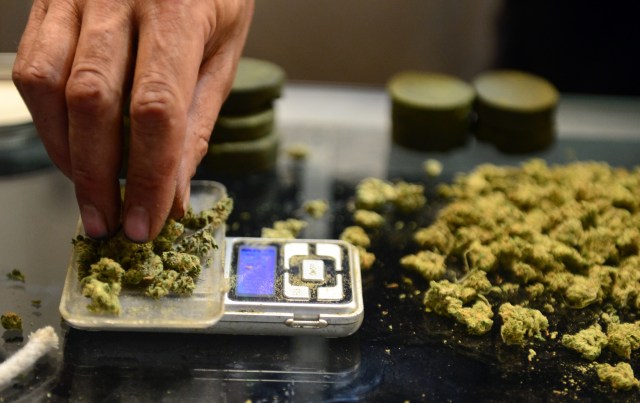
Here’s where you will (likely) be able to buy legal weed in the Chicago area Jan. 1, 2020


The recreational marijuana bill approved by state lawmakers allows Illinois’ 55 existing medical marijuana shops to buy an additional license and start selling recreational pot next year.

Operators of Illinois’ 55 medical dispensaries — 11 of which are in Chicago — will have first crack at selling recreational weed after Gov. J.B. Pritzker made good on his vow to sign the legalization bill into law. Those firms will have the option to both convert their existing locations into dual-use dispensaries and open a second storefront dedicated solely to recreational pot sales.

Representatives for three firms that own medical marijuana dispensaries throughout the state said this week that their companies plan to take advantage of the opportunity. All three have recently expanded or renovated some of their existing cannabis facilities.

Mark de Souza — CEO of Elmhurst-based Revolution Enterprises, which owns a north suburban dispensary and a downstate cultivation center — said he expects all of the state’s medical dispensary operators to seize the opportunity to start selling recreational pot.

Pritzker hopes on January 1 to have more outlets available. It is very clear that the 55 medical marijuana storefronts is going to be insufficient to serve the demand, even though this is the quickest way to get the doors open.

Where to buy:

Chicago Area Legal Pot Map – https://www.google.com/maps/d/viewer?mid=19jePEpE51pRG79HaihNzS6kDR89W1xVb&usp=sharing

As part of the early approval process — aimed at ensuring that dispensaries are open and stocked with marijuana when sales kick off — existing dispensaries can pony up $30,000 to apply for a license to sell both medical and recreational weed at a single location. The dispensary will then have to pay $100,000 or 3% of its yearly sales to the cannabis business development fund, which will help subsidize licensing fees and loans for people of color looking to get into the industry.

Medical pot shop operators can also obtain an additional license to dole out recreational marijuana at another location by paying another $30,000 application fee and putting $200,000 more into the business development fund. Those licenses will require zoning approval from local governments and can’t be located within 1,500 feet of any existing dispensaries, among other regulations.

According to the Illinois Department of Public Health’s most recent annual report on the program, Dispensary 33 in Uptown served the most medical cannabis patients in the state. Abigail Watkins, director of marketing for Dispensary 33, said the store now intends to seek both new recreational pot licenses. 

Watkins noted that the dispensary has recently made some major changes, including redesigning counters to help accommodate twice as many customers and installing new display cases that can show off more pot products.

“We wanted to expand in hopes that this bill would pass soon,” she added. “It just passed a little sooner than we thought. But that’s a good thing.”

Cresco Labs, a River North-based company that has five medical dispensaries and three cultivation centers in Illinois, plans to convert all of its current retail spaces in the state into dual-use stores and open five standalone recreational cannabis dispensaries. Because the pot legalization bill will only allow individual companies to operate ten total dispensaries and three cultivation centers, the multi-state firm won’t be able to obtain any further licenses after that.

Jason Erkes, a spokesman for Cresco’ estimates that Cresco could double its Illinois workforce and hire up to 300 new employees to help grow and sell recreational pot in the state.

De Souza, who expects Revolution to create 365 new jobs, confirmed that his company would be seeking licenses to sell recreational cannabis at its New Age Care dispensary in Mount Prospect and another location.

He noted that construction is underway to expand waiting and counter areas at the dispensary and separate lines for medical and recreational patients. Nevertheless, he said Revolution is more focused on growing marijuana than selling it, noting that it would be “difficult for us to compete” with other Illinois pot firms that have been more focused on retail since the state’s medical program was established.

Existing growers of medical marijuana will also have the opportunity to opt into the recreational program and begin growing additional pot in the lead-up to the implementation of the legalization bill. Revolution has already started expanding its cultivation center in Delavan, shelling out more than $100 million to build a new facility adjacent to its existing grow operation.

Posted in #420day, #madigoon, #mentalhealthmonth, #taxation, Economy, Elections, health risk, Illinois, illinois politics, Medical, mental health, political satire, politics, Pritzker, Rauner, referendum, Social Media, tom dart, weed | Tagged , , , , , , , , , | Leave a comment

Turmoil in the Governance Of Western Illinois University


Increasing enrollment and retaining students are critical to the success of the City of Macomb and Western Illinois University; but now turmoil in the governance of Western Illinois University is rampant and the blame game persists without solutions.

Signs seeking the removal of WIU’s president are popping up at local businesses.

Dr. Jack Thomas was named the 11th President of Western Illinois University (WIU) in 2011.

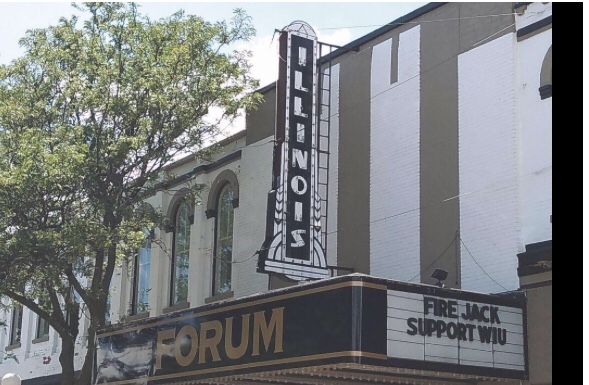
Photos of signs outside area businesses began appearing on social media on the last two weeks. Perhaps the most visible was the sign on the marquee of The Forum, which reads, “Fire Jack” on the first line and “Support WIU” just below.
However, other signs have been appearing as well. One wooden sign at an unknown location reading, “Fire Jack Thomas Support WIU” in purple, spray painted stencil lettering was posted on Facebook by The Forum co-owner Roger Ward. Another, yellow sign outside of the old Farm King building on E. Jackson Street reads simply, “Fire Jack.” 

Former Western Illinois University Trustee Lyneir Cole is accusing several of the newly-appointed board members of a “plot to fire” WIU President Jack Thomas.
Cole’s accusation is based on a series of email exchanges among trustees, retired faculty and others sent between April 25 and May 10, 2019. 
The main series of emails took place primarily between Larry Balsamo and Jackie Thompson. Balsamo is a retired history professor and former department chair who is also listed as a member of the WIU Foundation Board on the WIU website, although his current status was not confirmed as of this writing. Thompson is one of the newly-appointed trustees and the former president of the WIU Foundation Board. She resigned from the foundation board when she became a trustee.
The content of the emails between Balsamo and Thompson revolves around discussions with other trustees and unnamed parties. 
“Jackie, it was good to meet with you again, seemed like old times,” Balsamo wrote in an April 27 email. “I know that you are facing some really demanding challenges in your new position, but if things are going to get better here that will likely have to be instigated by you and your board colleagues. Two things, I will write to Eric this weekend to open a dialogue, and Jack just has to go.“
While not explicitly stated, “Eric” may refer to Erik Dolieslager, a trustee who was appointed to the WIU board in March this year. A later email by Balsamo to Thompson refers to a phone conversation Balsamo had with Trustee Nick Padgett in which Padgett told Balsamo that “Jack was really (dug) in as president…and some board members wanted to move on Jack, some did not really have a position and were on the fence, and some we need some work. He liked the idea of us approaching Aguilar.“
Also in the email between Balsamo and Thompson are comments referencing concerns about perceived racism. Balsamo wrote on May 7, “I am picking up some disturbing () about the Jack situation and so is at least one other member of the group. My fear is that the Jack predicament cannot easily be separated from race. (My) guess is that right three members of the board, the two African Americans and Aguilar will be at least skeptical about any immediate move on Jack and they may be supported by some in the governor’s office and certainly some in the legislature…. I know certainly that some of the opposition to Jack is racist, but even if he were purple he has been a near total failure here.“
He later wrote on May 9, “Race hangs over this whole situation, but I have the feeling that if Jack were white or even Asian he would have been gone some time ago.“
Cole made the accusation in a May 23, 2019 email which he sent to members of the current board of trustees and Thomas with the subject heading, “The plot of WIU board members.” Attached was a document with images of the emailed conversations and commentary by Cole. He forwarded the email later that day to Jesse Ruiz, Deputy Governor, and then again to media outlets shortly before 1 p.m. on May 26. 
Cole shared this commentary in the body of the original and forwarded emails:

“This stream of Emails are conversations had between several board members prior to being appointed and after appointment,” he wrote. “I have forwarded the emails to the governors office and will be releasing to the press prior to your board meeting. The President has only followed the direction of the previous board which includes myself. The plot to fire Dr. Thomas by Jackie Thompson, Nick Padgett and (Polly Radosh) through these emails are inappropriate. This is blatant disregard to the university and unethical as a Board Member. The Black Alumni will not stand by and allow you all to railroad President Thomas without knowing why things were done and at the Board request. Please trust and believe that your actions to fire Dr. Thomas at the (May) Board meeting will be fought and again these emails have been released to the Governors office and I will be sending to the press today.”

The university administration provided the following statement: “As a result of the state budget impasse and its aftermath, the University has been forced to make difficult decisions, and no matter what decision is made, there will be some individuals with difference of opinions. This is the reality. We ask that everyone join together to focus on the future of our University and our communities.“
The governor’s office provided the following statement: “The governor appointed board members focused on rebuilding Western Illinois University after the devastating cuts to higher education during the previous administration. The governor encourages all university boards to work with the administration, faculty and students to ensure our public colleges and universities can thrive.”

Posted in #madigoon, #taxation, Chicago, Illinois, illinois politics, News, political satire, politics, Pritzker, Rauner, robert martwick, senator durbin, senator Mulroe, Social Media, Taxation, vote, Western Illinois University | Tagged , , , , , , , , , , , | Leave a comment

Dozens of Illinois prisoners could be released when governor signs recreational pot bill


Of Illinois’ almost 40,000 inmates housed in state Department of Corrections facilities, a few dozen of them might be eligible for release if the recreational marijuana bill becomes law.

According to the Illinois Department of Corrections, as of April 30, 2019, there were 36 inmates being held on Class Four cannabis charges.

The recreational marijuana bill that passed the General Assembly would expunge some criminal records relating to cannabis charges.

You have to meet the following criteria to be eligible for expungement.

Only non-violent offenders guilty of possessing less than 30 grams of cannabis can be pardoned by the governor.

Those requests don’t need to be initiated by the offender. They are automatic.

Non-violent offenders guilty of possessing more than 30 grams but less than 500 grams of cannabis can petition to have their charges thrown out.

IDOC said they can’t say with certainty if the 36 inmates in their custody fit the criteria for release.

Posted in #420day, #madigoon, #taxation, e cigarettes, Elections, Illinois, illinois politics, legal services, marijuana, Medical, News, political satire, politics, Rauner, referendum, Rosemont, Roy F. McCampbell, senator durbin, senator Mulroe, Social Media, Taxation, tom dart, vaping, vote, weed | Tagged , , , , , , , , , | Leave a comment

Rosemont To Get A Sports Betting License For The Allstate Arena


Rosemont, which long sought its own casino under the late Mayor Donald Stephens only to be thwarted by the Illinois Gaming Board amid accusations of mob influence, could be back in the gambling hunt. 

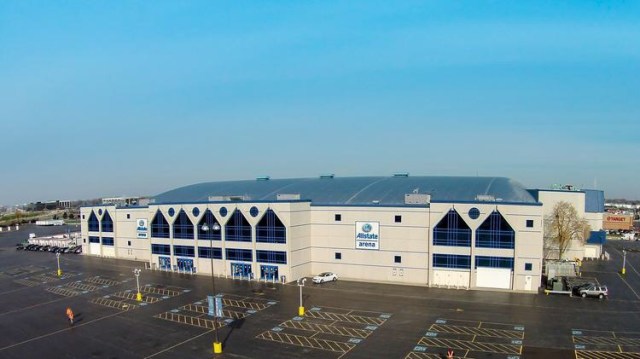
The legislation allows for up to seven sports betting licenses to be issued to sports facilities that seat more than 17,000 persons. The Allstate Arena in Rosemont seats 18,500, making it one of eight sports venues in the state that would appear to qualify. 

The other seven are: Wrigley Field, Guaranteed Rate Field, Soldier Field, United Center, SeatGeek Stadium (Bridgeview), Chicagoland Speedway (Joliet) and World Wide Technology Raceway (Metro East). 

Gary Mack, a spokesman for Rosemont, confirmed the Allstate Arena qualifies for a sports betting license under the new law and will explore the possibility of applying.

“Yes, we’ll look at it. We’re not sure if we want it. It’s going to cost a heckuva lot of money,” Mack said, referring to fees that would be owed the state in addition to the cost of investing in a facility.

Posted in #madigoon, News, politics, Pritzker, referendum, Rosemont, Roy F. McCampbell, senator durbin, senator Mulroe, Social Media, Sports, sports betting, Taxation, vote | Tagged , , , , , , , , , , | Leave a comment

Illinoisans will pay more for gas, vehicle registration, cigarettes and parking after a bipartisan vote for $45 billion in new capital spending.


Are you ready for all the taxes coming out of Springfield this past session!!

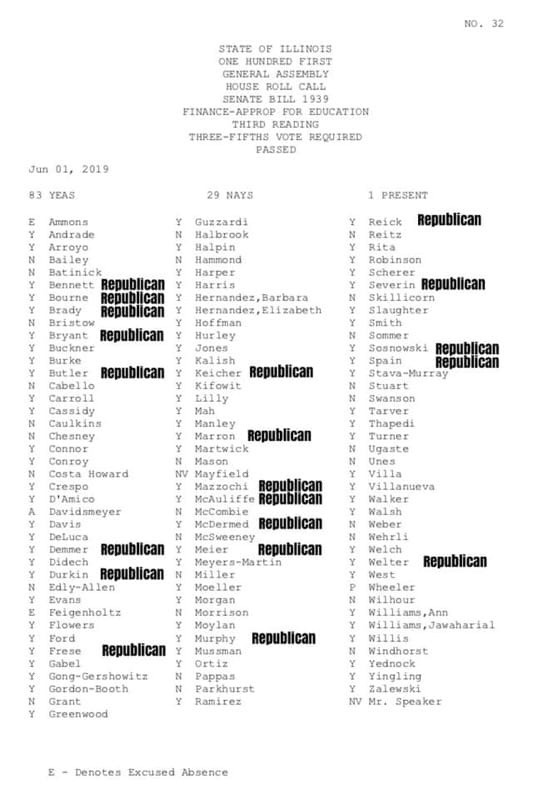
The Gas Tax Increase and Vehicle Fee Increase Roll Call. See how did your legislator voted.

Elections have consequences-Vote the tax hikers out next election !!!

A chaotic final week of legislative session in Springfield has resulted in a flurry of tax hikes and new spending.

Illinois state representatives introduced and passed a $45 billion infrastructure plan on June 1. It will hit up drivers almost immediately, pending expected approval from the Illinois Senate and Gov. J.B. Pritzker.

Revenue to pay for that plan comes from higher taxes on gasoline, vehicle registration, cigarettes, parking and more.

Senate Bill 1939, which hikes the state’s motor fuel tax and vehicle registration fees, was approved by a bipartisan 83-29 vote in the Illinois House of Representatives. Senate Bill 690, which hikes taxes on cigarettes and vaping, as well as parking garages, passed on a bipartisan vote of 87-27. SB 690 also increases the number of casinos in Illinois, legalizes sports betting, and hikes taxes on video gaming, among other changes.

Twenty House Republicans voted for the gas tax hike, including House Republican Leader Jim Durkin. GOP members justified that vote as part of a larger deal that included reinstating the manufacturer’s purchase credit, expanding tax incentives for data centers and eliminating Illinois’ $200 million franchise tax in 2022. Seven House Democrats voted “no” on the gas tax hike. House Speaker Mike Madigan did not vote.

Doubling Illinois’ gas tax

The plan doubles Illinois’ state gas tax to 38 cents from 19 cents per gallon, which will vault the total tax burden on Illinois gas beyond states such as New York and California to second-highest in the nation, according to 2018 data from the Tax Foundation. The increase will be effective July 1.

The state motor fuel tax will also be tied to inflation, meaning it will automatically rise in future years without lawmaker approval. The hike will cost the typical driver around $100 more in its first year.

In addition to the state-level increase, the bill allows Chicago to increase its local gas tax by 3 cents. It allows Lake County and Will County to impose a gas tax of up to 8 cents per gallon. And DuPage, Kane and McHenry counties would be able to double their 4-cent-per-gallon gas taxes to 8 cents. These additional hikes may end up making Illinois’ average state and local gas tax burden the highest in the nation.

As of May 13, the wholesale price of gasoline in Chicago was $2.46 per gallon. If Chicago City Council approves a local increase on top of the state’s increase, drivers at Chicago filling stations would pay 99 cents in taxes and fees on each gallon of gasoline – an effective tax burden of more than 40%.

Hiking vehicle registration fees

Drivers will see a $50 annual increase in vehicle registration fees for most cars and motorcycles next year – up to $148 from $98. Illinois’ vehicle registration fee was just $79 as recently as 2009.

$1 per pack cigarette tax hike

Chicago already imposes the highest cigarette tax in the nation, at $7.17 per pack as of 2016. Illinois charges the fourth-highest cigarette tax in the Midwest at $1.98. The capital plan hikes this tax by $1 per pack.

According to the Illinois Department of Revenue, tax dollars generated by cigarette sales have declined every year since fiscal year 2015. Cigarette taxes are highly volatile, as shown in the Tax Foundation’s recent analysis of cigarette tax revenues from 1955 to 2018 across all 50 states. This can be attributed in part to a general decline in smoking, as well as the ability of smokers in high-tax states to buy smuggled tobacco from bordering low-tax states.

Parking tax hikes

Parking garage users would see an increase in their taxes starting Jan. 1, 2020. For hourly or daily parking garages, taxes would go up by 6%. Monthly or annual parking spaces would be slapped with a new 9% tax.

Alternative plan 

The Illinois Policy Institute outlined a plan in May showing how Illinois could finance $10 billion in new capital spending without tax hikes.

Illinois could achieve this by focusing on maintenance infrastructure, reforming costly prevailing wage mandates and a more efficient prioritization of projects, while dedicating revenue from legalized sports betting and sales taxes on gasoline to transportation infrastructure.

Posted in #madigoon, Economy, Elections, Illinois Pensions, illinois politics, News, political satire, politics, Rauner, referendum, robbed, robert martwick, Roy F. McCampbell, Social Media, Taxation, Union, vote | Tagged , , , , , , , , , , | Leave a comment

Illinois’ Reckless $45 Billion Capital Spending Binge


When Governor Pritzker announced a $41.5 billion capital spending plan a couple weeks ago we thought it was surely just a pie-in-the-sky first offer – that economic realities and unpopular tax hikes needed to fund so massive a plan would chop it down to something reasonable.

Silly us. The plan has now increased to $45 billion.

To get a sense of the enormity of that number, consider that it’s over twice the state’s combined annual revenue from personal and corporate income taxes. It dwarfs all previous capital spending programs. The Illinois Jobs Now capital plan under Governor Pat Quinn was for $18.0 billion in new projects and $11 billion of reappropriations from previous years. Governor George Ryan’s Illinois FIRST was for $12 billion. The Build Illinois program under Governor Jim Thompson was $2.3 billion.

We understand the case for a capital program of some kind, but this is madness. A spending binge so massive, prepared by proven incompetents and dumped on the General Assembly along with thousands of pages of other budget and spending matters inevitably will be loaded with pork and waste.

Even on sensible projects, spending will be excessive thanks to the absurd “prevailing wage” rules that govern all of it. They drive costs far beyond what the private sector pays, which we’ve documented often. The average, total, full-time-equivalent compensation under our prevailing wage laws, including benefits, for all job categories over all counties is $119,000. Public unions effectively set those numbers. Their power is unchallenged in Springfield, which largely accounts for this capital bill.

How will Illinois pay for this? That’s not entirely clear since nobody has had a chance to fully digest the legislation and disclosures so far have been horrible – cherry-picked numbers given to reporters. The only good news is that the federal government apparently will reimburse Illinois for about $10 billion of the $45 billion (though Illinoisans pay part of that, too).

According to a Chicago Sun-Times summary, Illinoisans will see the state’s tax on gasoline doubled; higher vehicle registration fees; an increase in video gaming terminal taxes; charges on  sports wagering revenue; license fees from casino and sports betting; a tax on parking garages and lots;  removal of the sales tax exemption on traded-in property valued above $10,000; and an increase on the cigarette tax by $1 per pack. Cook County municipalities would be allowed to add a 3-cent tax on top of the state-issued motor fuel tax. However, the latest version of the bill apparently eliminated a real-estate transfer tax increase, a $1-a-ride fee for ride-sharing services and a tax on cable and streaming video services, which were in the initial proposal.

Much of it will also come out of the state’s general fund, putting more pressure the already desperate situation there. And, no, that won’t be fixed by a new progressive income tax. Revenue from that has already been spoken for elsewhere several times over.

One way or another, though the tax increases may not yet be clear, the bill will have to be paid.

Where will the money be spent?  According to a Capitol Illinois News summary, the plan would allocate $33.2 billion for transportation projects including roads and bridges, $3.5 billion for education infrastructure projects, $4.3 billion for state facilities, $1.2 billion for environmental conservation projects, and $420 million for broadband expansion and $465 million for health care and human services facilities.

We will have much more to say on this, the budget and the rest of this legislative session as facts become available. It will take time for much of what was done to be exposed.

Posted in #420day, #madigoon, #taxation, Education, election fraud, Elections, Illinois, Illinois Pensions, illinois politics, marijuana, political satire, politics, Pritzker, Rauner, referendum, robert martwick, Roy F. McCampbell, salary cap, senator durbin, senator Mulroe, Social Media, Taxation | Tagged , , , , , , , , , | Leave a comment