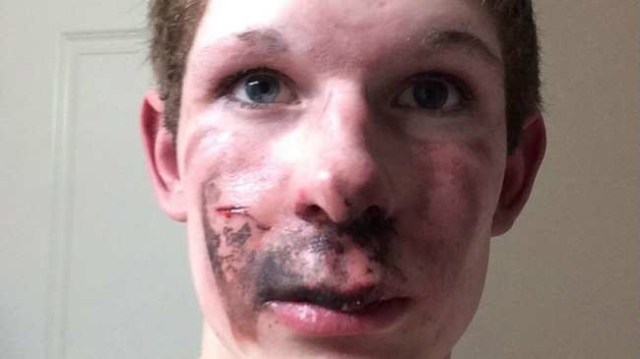
E-cigarette explodes in teen’s mouth, breaks jaw and teeth


A teenage boy was left with a broken mouth, a hole in his chin and damaged teeth after an electronic cigarette exploded in his mouth. 17-year-old Austin arrived at the Primary Children’s Hospital hours after the e-cigarette burst inside his mouth, according to a case study published in the New England Journal of Medicine.

His jaw was swollen and he complained of pain in his mouth. Doctors discovered the boy suffered a punctured chin and cuts across his mouth.
— Read on kutv.com/news/local/e-cigarette-explodes-in-teens-mouth-breaks-jaw-and-teeth

Posted in Food, health risk, Illinois, Illinois Pensions, illinois politics, Leyden, Medical, mental health, mike madigan, News, political satire, politics, Pritzker, robert martwick, Roy F. McCampbell, senator durbin, senator Mulroe, Social Media, vaping | Tagged , , , , , , , , , , | Leave a comment

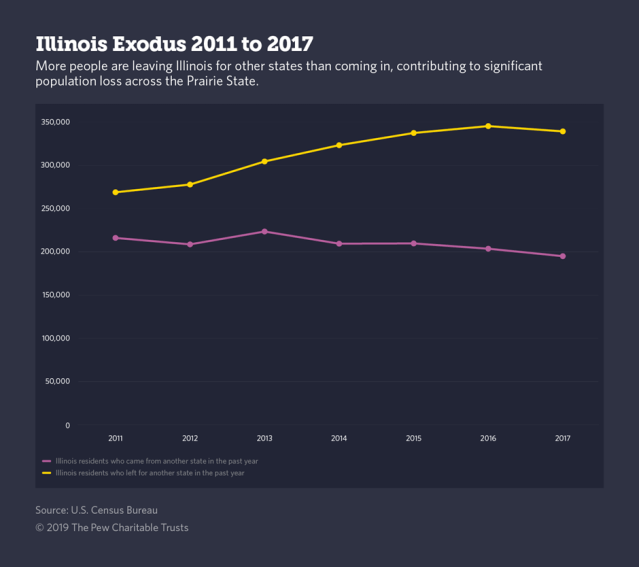
Illinois: The Exodus


People are leaving Illinois in droves. Republicans blame the state’s high taxes and its unfunded pension liability, which tops $130 billion. Democrats believe it’s the state’s lack of investment in education and infrastructure. 

One thing is certain: Illinois’ population has declined by 157,000 residents over the past five years, making it one of only two states — West Virginia is the other — to lose people over the past decade.

Illinois’ predicament is a perfect storm of declining manufacturing, stagnant immigration, declining birth rates, young people leaving for college and never coming back, long-standing economic discrimination against black residents, high housing costs, and the continued draw of residents to the Sun Belt.

What’s happening in the Prairie State may offer national lessons about the deindustrialized economy and how that creates inequity issues in wages and housing, said Matthew Wilson, a senior research specialist at the University of Illinois at Chicago’s Great Cities Institute. 

For a Rust Belt state to thrive, Wilson said, officials have to focus on retaining and growing its manufacturing sector by training workers, providing affordable housing and attracting new businesses. Building up the manufacturing sector has to go hand in hand with attracting high-paying jobs, he said. 

Illinois has struggled with all of that.

A 2016 poll by Southern Illinois University found that nearly half of Illinois residents wanted to move to another state, citing taxes, weather, ineffective and corrupt local government and a lack of middle-class jobs. A March poll from the university found that two-thirds of Illinois residents think the state is going in the wrong direction.

Between 2017 and 2018, 114,000 more residents left Illinois than moved in from other states. Those who left mostly moved to Florida, Texas and Indiana, IRS data shows.

Chicago’s population has dropped slightly, largely because black residents are leaving for areas with lower housing costs and more jobs that don’t require higher education. In downstate Illinois, the population loss has come largely from a decrease in manufacturing jobs.

Nearly 15 miles south of the famed Magnificent Mile in the booming downtown Loop is another stretch of Chicago’s Michigan Avenue. Up until the 1980s, this part of the Roseland neighborhood was “the place to be” for black residents, lined with stores and restaurants. But many of those are gone now, leaving only the boarded-up facades and a distant memory.

As Abraham Lacy drove down the street earlier this month, the new father and Chicago resident described the “heart-wrenching” state of the area since its decline began 50 years ago.

This was a manufacturing hub. But those jobs are gone. Nearly 28% of the population lives below the poverty level, according to the U.S. Census Bureau.

Posted in Economic Development, Economy, Education, election fraud, Elections, Illinois, Illinois Pensions, illinois politics, infrastructure, Leyden, marijuana, mental health, mike madigan, minimum wage, murder, News, political satire, politics, Pritzker, Rauner, referendum, robert martwick, Rosemont, Roy F. McCampbell, Social Media, Union, USCongress | Tagged , , , , , , , , , , , , , | Leave a comment

Victims of High School Bullying May See A Lifetime of Mental Health Problems


Victims of bullying in secondary school have dramatically increased chances of mental health problems and unemployment in later life.

New research reveals a decade on, victims of persistent or violent bullying suffer the worst consequences.

Examples of bullying within the study include being called names; being excluded from social groups; being threatened with violence; and experiencing violence. As well as the consequences later in life, the research shows bullying affects the academic achievement of the victims while they are in school, and beyond into further and higher education.

https://www.eurekalert.org/pub_releases/2019-04/lu-sbi041719.php

Posted in #mentalhealthmonth, Illinois, illinois politics, LASEC, Leyden, Leyden Area Special Education CoOp, Leyden High School Dostrict 212, Mannheim School District 83, mental health, Norridge School D80, Northlake, Pennoyer School District 79, politics, referendum, Rosemont School District 78, Roy F. McCampbell, School Incident Reporting System, Social Media, student discipline, vaping | Tagged , , , , , , , , , , , | Leave a comment

Pregnancy No Bar To Pot Smoking


PREGNANT WOMEN SMOKING MORE POT: Marijuana use in pregnancy has doubled among U.S. women and is most common during the first trimester, government research shows.

Overall, 7% of pregnant women, or 1 in 14, said they used marijuana in the past month. That’s from a nationally representative health survey in 2016-17 and compares with a little over 3% in 2002-03.

Some studies have linked marijuana use during pregnancy with increased chances of premature birth and low birthweight. Animal studies have linked high doses early in pregnancy with fetal brain abnormalities, but whether typical use in humans poses similar risks is unknown, said Dr. Nora Volkow, director of the National Institute on Drug Abuse.

The study was presented at a medical meeting Tuesday and published online in the Journal of the American Medical Association.

First trimester use jumped from almost 6% to 12%. Many women may have used pot before they learned they were pregnant, or used it to ease morning sickness, although few women said a doctor had recommended it, Volkow said.

Among women who weren’t pregnant, the rate of marijuana use increased from almost 7% to nearly 12%, or 1 in 8.

The results are based on health surveys involving nearly half a million U.S. women who were questioned during a period when rising numbers of states legalized marijuana for medical or recreational use. It’s legal in 10 states for both uses but remains illegal federally.

A separate study on marijuana use among pregnant Canadian women, published in the same journal, adds to evidence suggesting that pot use in pregnancy may lead to premature birth. A journal editorial notes that like similar previous studies, the Canadian research can’t rule out whether other factors that may have contributed.

The editorial warned against relying on imperfect data to make judgments about potential harms from marijuana use and said more rigorous research is needed. Volkow said U.S. government restrictions on marijuana research are “very much an issue” and have hampered efforts to answer fundamental questions about pot use.

Posted in #420day, #madigoon, #mentalhealthmonth, Chicago, e cigarettes, Economy, Education, Health, health risk, Illinois, illinois politics, marijuana, mental health, mike madigan, political satire, politics, Pritzker, referendum, Roy F. McCampbell, senator durbin, senator Mulroe, Social Media, weed | Tagged , , , , , , , , | Leave a comment

Political Party Politics Hurts The Voters


WE NEED TO LEARN IN OUR THICK SKULLS THAT ITS THE PERSON WE VOTE FOR AND NOT THE PARTY….LOYALTY TO A PARTY IS A SICK JOKE, BOTH PARTIES ……..Each Political Party take their turns taking advantage of the voter.

Shake-up is ahead for Northwest Side politics as city’s lone Republican state lawmaker retires

State Rep. Michael McAuliffe, R-Chicago, has served in the House for the past 23 years.

A major shake-up is coming to the Northwest Side’s political representation in Springfield.

Four days after the Illinois Supreme Court announced the appointment of Democratic state Sen. John Mulroe of Chicago to a vacant Cook County judgeship, Republican state Rep. Michael McAuliffe, who represents the western half of Mulroe’s district, announced Monday that he’s retiring, effective immediately.

Meanwhile, Democratic Rep. Robert Martwick, who represents the other half of Mulroe’s district, is among those vying for the soon-to-be-vacant Senate seat.

McAuliffe, the city’s lone GOP state lawmaker, has served 23 years in the House after being appointed to the seat held for 23 years by his father, Roger McAuliffe. Michael McAuliffe took the seat following his father’s death in 1996.

“While I never set out to spend 13 terms in Springfield, I felt a higher calling for public service and responsibility to my community,” McAuliffe said in a statement Monday. “I’ve worked extremely hard to represent my constituents and bring their minds and hearts with me on every 200-mile drive to Springfield, but I’ve decided it’s time to yield to an even higher calling, my family.”

House GOP leader Jim Durkin of Western Springs praised McAuliffe for fighting “resiliently for the priorities of the families” in his district.

“Mike has seen Illinois in its best and worst of times — and he has been a part of making this state, and his district, a better place for Illinois residents,” Durkin said in a statement.

Local Republican leaders will meet soon to choose McAuliffe’s successor. McAuliffe, who serves as the Republican committeeman for the 41st Ward, will have a major say in the selection, controlling nearly half the weighted vote based on the number of ballots cast in the ward during his unopposed reelection in November. He declined to comment through his district office.

Mulroe will officially resign from the Senate before being sworn in as a judge Friday. At that point, local Democratic leaders will name his successor. If they choose Martwick to fill the Senate seat, they will then need to choose a replacement for the vacant House seat.

Mulroe’s 10th Senate District stretches from the Northwest Side to near northwest suburbs including Rosemont, Des Plaines and Niles.

Posted in #madigoon, #taxation, Chicago, Crime, e cigarettes, Edison Park, Education, gambling, Harwood Heights, Illinois, Illinois Pensions, illinois politics, Leyden, News, Norridge, political satire, politics, Pritzker, Rauner, referendum, robert martwick, Rosemont, Roy F. McCampbell, Schiller Park, senator Mulroe, Social Media, Sports, Taxation, tom dart, Uncategorized, vote, weed | Tagged , , , , , , , , , , , , | Leave a comment

How Will Legal Pot Work in the Workplace?


With recreational marijuana becoming legal next year, there are a growing number of questions still to be answered. Here’s what you’re probably wondering…

With recreational marijuana becoming legal next year, there are a growing number of questions still to be answered.

Among them, are how things will work in the workplace.

The answer? It will be on a company-by-company basis.

While smoking marijuana in a public place will still be off limits, it will be up to employers to decide how to handle and different companies will have different rules.

For some companies, and employees getting the job won’t care while other companies are going to be very concerned about it.

Companies will need clear policies about marijuana use.

They will need to make sure they have clear communication about the rules and put them into place quickly.

It won’t just be employers setting guidelines for use.

Any person, business or landlord can prohibit the use of marijuana on private property as the drug still remains federally illegal.

Those with pot convictions are also hoping the new law will mean a clean slate.

The governor could start pardoning those with past convictions for up to 30 grams beginning Jan. 1.

People have been held back due to cannabis offenses on their record.

Specifically in Chicago, where black men are being targeted for arrest, it is an opportunity to get their records expounded and with that, you can create new opportunity for jobs and inclusion.

Different companies will have different rules.

For some companies, employees getting the job, it’s OK. “Other companies are going to be very concerned about it.

Companies will need clear policies about marijuana use.

Make sure they have clear communication about the rules and put them into place quickly.

It won’t just be employers setting guidelines for use.

Any person, business or landlord can prohibit the use of marijuana on private property as the drug still remains federally illegal.

Those with pot convictions are also hoping the new law will mean a clean slate.

The governor could start pardoning those with past convictions for up to 30 grams beginning Jan. 1.

“People have been held back due to cannabis offenses on their record,” said Donte Townsend with Chicago Normal, a group that has been pushing for marjuana law reforms.

Specifically in Chicago, where black men are being targeted for arrest, it is an opportunity to get their records expounded and with that, you can create new opportunity for jobs and inclusion.

Posted in #420day, #taxation, Foxx, Health, health risk, Illinois, Illinois Pensions, illinois politics, legal services, Leyden, marijuana, Medical, mental health, News, political satire, politics, Pritzker, Rauner, referendum, robert martwick, Roy F. McCampbell, Social Media, vaping, weed | Tagged , , , , , , , , , , , | Leave a comment

Watch “Leyden 212 Presentation on Vaping at Leyden Parent University” on YouTube


According to the CDC, more than 3.6 million middle and high school students used e-cigarettes over a 30-day span in 2018. That figure includes 4.9% of middle schoolers 20.8% of high schoolers.

See the Leyden High School presentation on “vaping”.

Posted in #420day, #madigoon, #mentalhealthmonth, #taxation, Crime, e cigarettes, East Leyden, Education, Elections, illinois politics, Leyden, Leyden High School Dostrict 212, Mannheim School District 83, marijuana, Roy F. McCampbell, Social Media, Union, vaping, weed, West Leyden | Tagged , , , , , , , , , , , , | Leave a comment

Illinois police authorities will be in “a tough spot” when the recreational use of marijuana becomes legal on Jan. 1.


Illinois law-enforcement officials are “incredibly unprepared” for the potential upswing in impaired driving that could result from legalization of recreational use of marijuana.

That view of the impact of House Bill 1438 came from a Chicago-area police officer spearheading a pilot program to develop a roadside chemical test for marijuana.

Sgt. Brian Cluever, director of traffic safety at the Carol Stream Police Department, said technology to accurately check saliva for cannabis-related impairment and support driving-under-the-influence cases in courts is months and potentially years away in Illinois and other states.

And unlike alcohol, there’s no breath test for marijuana.

In addition, Cluever said it’s unclear how much it will cost and how long it will take to train more Illinois police officers on how to interview people and conduct field sobriety tests for marijuana. The field tests for pot are different from alcohol but still can be used to arrest and charge drivers with marijuana-related DUI.

Those various challenges will put police in a “tough spot,” Cluever told The State Journal-Register last week. “We won’t be ready by Jan. 1, 2020.”

His statements reflected many of the concerns raised by police, prosecutors and even the speaker of the Illinois House before and since passage of HB 1438 last month. The legislation would make Illinois the 11th state to legalize use, possession and sales of marijuana involving people 21 and older.

The work being done in Carol Stream to develop a non-invasive chemical test was described by supporters of the bill during debate in the General Assembly as a sign that technology is moving forward to identify and prosecute cannabis-related impaired driving.

But the saliva testing program that the Carol Stream Police Department began using in early 2018 for marijuana, cocaine, methamphetamines, opiates and other drugs has slowed because problems with the testing equipment prompted the department to change suppliers, Cluever said.

Testing with equipment from a new supplier began only this year, and the equipment isn’t sensitive enough detect the presence of tetrahydrocannabinol, or THC, down to the legal limit in Illinois — 10 nanograms per milliliter in saliva, he said. The equipment is sensitive only to 40 nanograms, he said.

Illinois’ legal limit for THC in blood for drivers is 5 nanograms/ml.

A trial of saliva-testing equipment in Michigan could detect THC no lower than 25 nanograms/ml. A February report on the Michigan pilot program said results were encouraging but that more study was needed.

“This is why I asked the legislature to slow down and get these public-safety components in place before the bill moved forward,” Sangamon County Sheriff Jack Campbell said. He testified in front of lawmakers on behalf of the Illinois Sheriffs’ Association.

Concerns raised by Campbell and others weren’t enough to stop progress of the legislation, which is expected to be signed into law by Democratic Gov. J.B. Pritzker so it can take effect Jan. 1.

Heather Steans, D-Chicago, chief sponsor of HB 1438 in the Senate, said impaired driving related to marijuana is taking place now, and law-enforcement groups probably will never support legalizing cannabis, so their request for more study wasn’t persuasive.

“I don’t think waiting is a compelling argument,” she said.

Legalizing adult use probably won’t lead to a “significant” increase in impaired driving, Steans said, so the wisest move would be to create a streamlined path for Illinois to implement the latest testing technology as it’s developed and, at the same time, fund more training for police.

The bill would create a “DUI Cannabis Task Force,” made up of lawmakers and representatives from the Illinois State Police, Secretary of State’s Office and advocates promoting civil rights and safe driving.

The task force would be required to make recommendations to the governor and General Assembly by July 1, 2020, on “best practices” in impaired-driving law enforcement and “emerging technology in roadside testing.”

Steans noted the bill calls for 8 percent of tax revenue generated by sales of recreational marijuana to be distributed to local law-enforcement agencies. Based on her estimates for sales, the 8 percent could total $4.5 million in fiscal 2020, $11 million in fiscal 2021 and up to $40 million a year once the state’s recreational pot market is fully developed.

Whether marijuana is making roads less safe in Illinois and the rest of the country is unknown. Also unknown are ways of measuring marijuana’s influence on impaired driving and fatal crashes, but officials in Illinois and other states say there are troubling signs that require more research.

House Speaker Michael Madigan, D-Chicago, didn’t vote when the House approved the legalization bill on a 66-47 vote. He issued a statement afterward that he has taken no stance on the issue.

“The lack of adequate field sobriety testing that our police need to identify and stop impaired drivers remains of concern,” Madigan’s statement said.

Jim Kaitschuk, executive director of the sheriffs’ association, said police are worried legalization will lead to more use of marijuana and more people driving after they smoke it or use marijuana-infused edibles. Without a chemical test or adequate police training, some impaired drivers could go unpunished and remain on the road, he said.

“We’re already depleted with resources on the street,” he said.

A 2017 report from the National Highway Traffic Safety Administration highlighted the challenges facing law enforcement.

The report said surveys show there was a 48 percent increase in the prevalence of drivers testing positive for THC at any level from 2007 to 2013-14, with 8.6 percent positive in 2017 and 12.6 percent positive in 2013-14.

At the same time, the report said the percentage of drivers testing positive for alcohol at any level declined from 12.4 percent in 2007 to 8.3 percent in 2013-14.

The report pointed out that the driving risks posed by alcohol use have been well known for decades, while “relatively little” is known about the risks posed by marijuana and other drugs.

There’s evidence that marijuana “impairs psychomotor skills, divided attention, lane tracking and cognitive function,” but “its role in contributing to the occurrence of crashes remains less clear,” the report said.

THC levels in blood are highest in people right after they finish smoking marijuana, and THC levels decline significantly in the next hour or two, the report said.

Experts say the THC decline can pose problems for police who want to take a blood test for THC but could face delays associated with bringing a driver to a hospital or summoning a phlebotomist for a blood draw.

There also could be delays in obtaining a search warrant for a blood test if the driver refuses to give consent.

The report pointed out more problems with police relying on THC levels. The few studies looking at the relationship between THC in the blood and level of impairment showed that peak impairment usually doesn’t occur at peak THC levels, the report said.

And impairment can vary by person at the same THC level, the report said.

The AAA Foundation for Traffic Safety analyzed the available studies and said specific THC threshold levels for legal impairment “cannot be scientifically supported” even though the foundation is concerned that marijuana may be contributing to fatal crashes.

AAA spokesman Nick Jarmusz said there’s a mistaken perception in the public that marijuana isn’t as dangerous as alcohol when it comes to driving.

In Colorado, the number of DUI citations by the Colorado State Patrol in which police listed marijuana or marijuana in combination with alcohol or something else as the impairing substance increased from 12 percent of all DUIs in 2014 to 15 percent in 2017.

Legal recreational use of cannabis in Colorado began in 2012, and legal sales began in 2014.

However, Colorado officials said the state’s increase in police trained in recognizing drug use could have played a role in the higher marijuana detection rates.

“Training is key,” said Sgt. Blake White, spokeswoman for the Colorado State Patrol.

Cluever, the Carol Stream police officer, said police who are trained as “drug recognition experts” or who have gone through “advanced roadside impairment drug-enforcement” training learn how to spot the telltale signs of marijuana impairment that are different from indicators of alcohol intoxication.

The clues for cannabis impairment can include body tremors, dilated pupils and fine-motor exaggerations, he said.

Having a reliable roadside chemical test, as well as a chemical test that’s admissible in court, would only help police and prosecutors secure convictions, Cluever said.

The lack of a roadside chemical test makes training for officers even more important, he said.

“These people are just as dangerous, sometimes more dangerous, than the alcohol-impaired driver,” he said.

Posted in #420day, #madigoon, #taxation, cancer, Crime, e cigarettes, Elections, Health, health risk, Medical, mental health, mike madigan, News, politics, Pritzker, Rauner, referendum, robert martwick, Roy F. McCampbell, senator durbin, senator Mulroe, Social Media, Taxation, vaping, weed | Tagged , , , , , , , , , , , , , | Leave a comment

Illinois Pot Industry Buzzing With Union Drives—-Union Label on Weed


The marijuana industry is expected to generate thousands of high-wage jobs in Illinois over the next decade, and there’s a strong chance cannabis growers and sellers will be hiring union labor.

Legislation (H.B. 1438) legalizing cannabis for recreational use Jan. 1, 2020, includes language affirming labor neutrality. The bill, headed to the desk of Gov. J.B. Pritzker (D) who’s expected to sign it, also specifies that businesses seeking marijuana licenses with the state must be given credit for demonstrating “a plan of action” to “engage in fair labor practices, and provide worker protections.”

While the proposed law doesn’t create requirements for the use of organized labor, unions including the United Food and Commercial Workers, the International Brotherhood of Teamsters, and the Service Employees International Union said they believe the labor peace language gives them a seat at the table as Illinois’ budding cannabis industry catches fire over the next decade. 

“This bill was a full acknowledgment from a bipartisan legislature, in both House and Senate, to say labor should have a role in this activity lifting up and building out our economy,” said Zach Koutsky, legislative and political director for UFCW Local 881. 

Pritzker announced he would sign the measure after it passed the House May 31. The first-term governor said H.B. 1438, making Illinois the 11th state to embrace recreational marijuana, would “have a transformational impact on our state, creating opportunity in the communities that need it most.”

Job-Creating Machine

By all accounts, H.B. 1438 will be a bonanza for businesses lucky enough to snag licenses and a job-creating machine for the state, employing thousands in new cultivation centers, dispensaries, and transportation networks. 

Cresco Labs Inc., one of the largest cultivators and retailers of marijuana in the country, estimates the adult-use cannabis market in Illinois will outpace the state’s current medical marijuana program by a factor of between 10 and 20. 

Jason Erkes, Cresco’s chief communications officer, said his company plans to quickly double its Illinois workforce from 300 to 600, open five new dispensaries, and expand its current cultivation and manufacturing facilities to accommodate a flood of new customers. The impact across all cannabis companies will be broader.

“Right now there are roughly 20 cultivators and 60 dispensaries in the state. All of those businesses will have to expand a lot more,” Erkes said. “Easily there will be another 60 dispensaries added that will need staff. There will be delivery services that need to be staffed. Sales forces will need to be built up to sell from 120 dispensaries instead of 60.”

He added, “and that’s just short term. The state will be issuing more licenses for cultivation and dispensaries long term.”

Labor Peace Agreements

Organized labor will have strong opportunities for organizing those workers under the licensing requirements laid out in H.B. 1438, Koutsky said. Companies seeking operating licenses would be given credit for adhering to “labor peace agreements,” by which the licensee couldn’t interfere with a union’s efforts to organize and represent workers’ interests. 

“You have seen this emerging as a standard approach in the states where this is happening,” said Koutsky, who worked with lawmakers drafting the bill. “So Illinois is in line with what’s happening elsewhere, but this is a significant step that Illinois is taking because it is the first state where this happened through a legislative process rather than a rulemaking or administrative approach.”

Koutsky said the UFCW would take a lead role organizing Illinois workers engaged in the cultivation, testing, and sales of cannabis products. That effort meshes with the UFCW’s national goals under its Cannabis Workers Rising campaign, which has organized more than 10,000 cannabis workers in states with medical and recreational marijuana programs. 

As a jurisdictional matter, Koutsky said the SEIU would likely have authority to try to represent security personnel hired in cannabis facilities. The Teamsters would have jurisdiction for workers transporting cannabis products and driving armored trucks, he said.

Posted in #420day, #madigoon, #taxation, Education, Elections, Finance, Health, Illinois, Illinois Pensions, illinois politics, marijuana, Medical, mike madigan, News, political satire, politics, Pritzker, Rauner, referendum, robert martwick, Roy F. McCampbell, senator durbin, senator Mulroe, Social Media, Union, vaping | Tagged , , , , , , , , , , , , , , | Leave a comment

States Attorneys Across Illinois Continue to Prosecute Cannabis Cases


A Montgomery cancer patient who ordered 42 pounds of THC-infused chocolate to his home in 2014 began serving his 4-year prison term Friday, expressing his gratitude to the judge for accepting a guilty plea on a lesser charge.

I happened to be at the Kane County Judicial Center for another matter yesterday and stopped for this matter.

Thomas Franzen, 37, was charged in February 2014 after postal inspectors intercepted a suspicious package, obtained a search warrant and waited until he accepted it at his home.

Franzen, whose attorney says he has been battling various forms of cancer since high school and was using the drugs to “self-medicate,” faced a punishment of 12 to 60 years in prison on charges of a drug conspiracy and cannabis trafficking of more than 5,000 grams.

If convicted, Franzen would have had to serve 75% of any sentence, meaning he faced a minimum of nine years behind bars.

Two weeks ago, Franzen pleaded guilty to felony marijuana possession of more than 5,000 grams and was sentenced to the minimum of four years; the top penalty was 15 years and he can have his sentence cut to two years for good behavior.

On Friday, defense attorney David Camic presented Kane County Judge Clint Hull with a letter from one of Franzen’s doctors stating that Franzen is battling stage 3 testicular cancer that spread to his lungs and a kidney. The letter outlined surgeries Franzen underwent and urged that he receive regular access to doctors and medication while in prison.

Franzen also wanted to express his gratitude to the judge for accepting the plea on the lesser charge, Camic said.

“Your health is really important. From that standpoint, I appreciate the documentation you gave (the court),” Hull told Franzen. “It’s a hard day for you and a hard day for your family. But my hope is you do what you need to do.”

Camic said Franzen was 220 pounds in high school when first diagnosed with cancer and now is down to 130 pounds.

“He’s really sick,” Camic said outside court.

After Franzen’s guilty plea, Kane County State’s Attorney Joe McMahon said members of the North Central Narcotics Task Force, a unit of the state police, searched Franzen’s home after his arrest and found “evidence of drug dealing,” such as ledgers, more than $2,000, a digital scale, hashish oil, paraphernalia, and receipts for packages he mailed across the country and Canada.

“In recognition of the seriousness of Mr. Franzen’s medical condition, our office reduced a 12-year mandatory minimum sentence to four years, of which he is required to only serve two years,” McMahon said.

He said the amount of drugs Franzen had was far in excess of what is deemed for personal use. “We did this in spite of evidence that proves Mr. Franzen is a drug dealer.”

Camic disagreed with McMahon’s assessment, arguing Franzen was reselling items on eBay and other online sites.

“My client was not selling drugs,” Camic said. “What he was selling was sneakers, vintage clothing, vintage toys and sporting goods.”

Camic said the criminal justice system is ill-equipped to deal with someone seriously ill who is facing a mandatory minimum sentence, such as Franzen. A mandatory minimum term is a lawmaker’s way of saying to a judge, “We don’t trust you,”

Posted in #420day, #madigoon, #mentalhealthmonth, #taxation, marijuana, Medical, politics, Pritzker, referendum, robert martwick, Roy F. McCampbell, senator durbin, senator Mulroe, Taxation, vaping, weed | Tagged , , , , , , , , , , , | Leave a comment
Law Review

Strategic Arts and Wellness

Millarson Diaries

Personal Musings and Thought Experiments

Words Kraft

The Content Scientists

BRAINCHILD

gehadsjourney.wordpress.com

Health Tips Now

Health and Diet Tips

thedihedral.wordpress.com/

Climbing, Outdoors, Life!

Divided We Fall

Bipartisan dialogue for the politically engaged

Roy F. McCampbell's Blog

Sarcasm and Silliness by a Resident of Leyden Township

My German Table

German comfort food for the soul