Norridge Taxpayers Need To Repeal Home Rule To Curtail Out Of Control Taxation by Village Government


As Norridge Improvement Party regime leader James Chmura flees from being Village President effective June 30th, he has proposed a Village property tax levy for 2020 of $2.1 million.

That’s a 32% increase from 2019’s $1.6 million, which itself was a 35% increase over 2018’s $1.2 million levy.

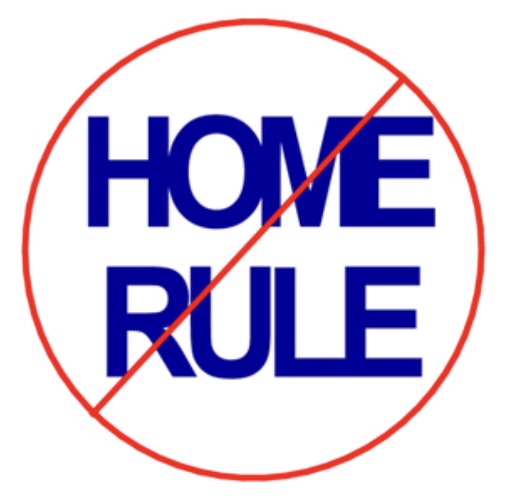
Norridge taxpayers need to consider a referendum to repeal Norridge Home Rule powers.

The Village levies property taxes under it’s “home rule” authority, which does not require a referendum for increases beyond the rate of inflation.
Village trustees rubber stamped Chmura’s last tax increase budget without a single comment… as per usual.

Chmura will leave office in 2019 with the Village property tax levy 110% higher than it was when he took office in 2013.

The tax levy will not happen until after a formal hearing is held later in the year, followed by another Village board vote. The likelihood of Norridge Improvement Party ( What Improvement ?) politicians opposing it? Pretty slim.

One thing’s for certain – Norridge taxpayers will be digging deeper into their wallets to clean up James Chmura’s mess which has been stupidly supported by the Trustees.

Two things are infinite: the universe and human stupidity; and I’m not sure about the the universe. – Albert Einstein

Clearly the elected officials of Norridge cannot be trusted with “Home Rule” taxation powers. The residents need to vote on a referendum to repeal “Home Rule”. Repealing “Home Rule” will ensure all future real estate tax increases would be voted on directly by the taxpayers in a referendum, not by tax crazed and power hungry trustees.

Posted in #madigoon, #taxation, Crime, election fraud, Elections, Illinois, Illinois Pensions, illinois politics, mike madigan, News, Norridge, Norridge School D80, referendum, Referendums, robert martwick, Roy F. McCampbell, senator durbin, senator Mulroe, Social Media, Taxation | Tagged , , , , , , , , , , , , | Leave a comment

Rosemont Mayor Brad Stephens was Named to the Illinois State House 20th District


Congratulations State Rep.Brad Stephens !!!

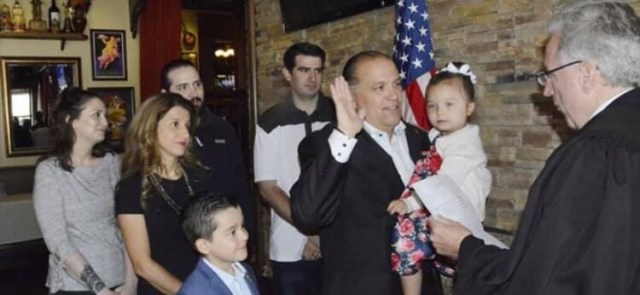
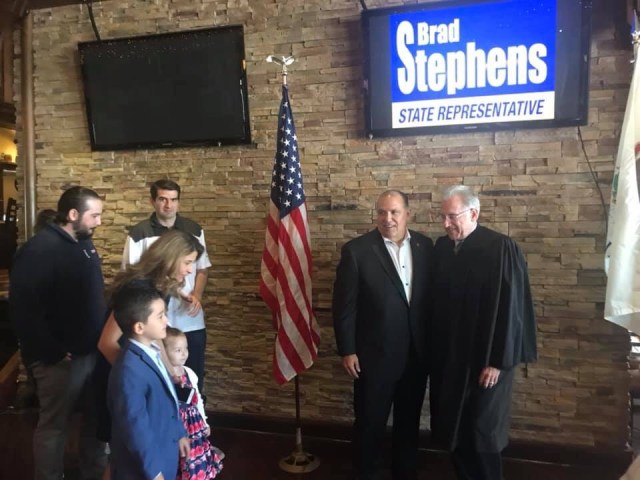
Rosemont Mayor Brad Stephens was named representative of the Illinois State House 20th District before a crowd at Moretti’s restaurant in Chicago’s Edison Park neighborhood Saturday morning (June 29).

Stephens replaces Michael McAuliffe, who announced his retirement from the elected position earlier this month. Both are Republicans with Stephens also serving as Leyden Township Republican committeeman.

The 20th District serves Chicago’s far Northwest side, plus portions of Des Plaines, Niles, Park Ridge, Rosemont, Norridge and Schiller Park in the Northwest suburbs. It is the only area of Chicago with a Republican representative in the House.

The six committeemen representing portions of the 20th District met Saturday to pick McAuliffe’s replacement. Stephens will fill the remaining 18 months of McAuliffe’s term. He told the Journal this week that he plans to run for a full term in the 2020 election while retaining his seat as Rosemont mayor.

Posted in Bradley Stephens, mike madigan, News, Norridge, O'Hare Noise, political satire, politics, Pritzker, referendum, robert martwick, Rosemont, Roy F. McCampbell, senator durbin, senator Mulroe, Social Media, state representative, vote | Tagged , , , , , , , , , , , , , , , , , | Leave a comment

On 1/1/2020, Where Marijuana Can and Can’t Be Used


While marijuana consumption and possession will become legal for Illinois residents age 21 and older starting Jan. 1, consumption in public places will still be prohibited and employers can continue to set rules for their workplaces.

Democratic Gov. J.B. Pritzker signed House Bill 1438 into law Tuesday, making Illinois the first state in the U.S. to legalize adult-use marijuana consumption and sales through the legislature rather than by ballot initiative. The legislative process allowed lawmakers to craft a 610-page regulatory bill with bipartisan support

Legalization doesn’t mean people will have carte blanche to use marijuana wherever they want to.

Consumption will be allowed at private residences but prohibited in any public place and in the proximity of a person under age 21 who is not a licensed medical patient. Landlords will be able to prohibit marijuana use on their premises as well.

Anyone operating a car, boat or plane is prohibited from consuming marijuana, although possession will be permissible in a motor vehicle if the marijuana product is placed in a “secured, sealed container and reasonably inaccessible while the vehicle is moving.”

Consumption and possession are prohibited at corrections facilities and on school grounds unless for licensed medical use. Consumption by school bus drivers, police officers, firefighters or corrections officers is prohibited while they are on duty, and is not allowed at any residence that serves as a child care facility.

Local governments maintain authority under the new law as well, but they cannot ban individual possession of marijuana or marijuana products.

A unit of government may, however, prohibit or significantly limit a cannabis business’ location within its jurisdiction.

Locals get to determine where these facilities exist in their communities.

Local governments can decide if the on-premises consumption of marijuana is allowed at marijuana-related businesses within their jurisdiction, as the new law allows local governments to exempt these facilities from limitations in the Smoke Free Illinois Act.

Municipalities can also enact zoning restrictions pertaining to licensed cultivation centers, craft growers, processing organizations and dispensaries.

Despite local control, the law requires at least 1,500 feet — about four blocks — between retail dispensaries.

Colleges and universities may continue to prohibit marijuana use on campus in accordance with federal regulations, and any business may prohibit use on private property.

Only licensed medicinal patients will be able to grow up to five cannabis plants in their own homes, unless the property is rented, in which case they would need written consent from the property owner.

The new law also allows employers to continue to maintain drug-free workplaces and zero-tolerance drug-use policies provided they are nondiscriminatory. Employers will also maintain the right to discipline or fire an employee for violating workplace drug policies.

Posted in #420day, #taxation, Chicago, e cigarettes, IEP, Illinois, illinois politics, infrastructure, Medical, mental health, News, political satire, politics, Pritzker, referendum, robert martwick, Roy F. McCampbell, Taxation, vaping | Tagged , , , , , , , , , , , , , , , | Leave a comment

Mayor Of Chicago Attempting to Impose the City Pension Obligations on State Of Illinois-wide Taxpayers for Bale-out


The outlines of how Mayor Lori Lightfoot would like Springfield to help her balance her new city budget are coming into focus, and it looks like she’ll be making a big, big ask.

According to knowledgeable sources in Chicago and Springfield, after weeks of preliminary maneuvering the mayor is pitching nothing less than a state takeover of the city’s cash-short pension funds, which under current law will require upward of $1 billion in new city tax hikes over the next three years to reach a path to full actuarial funding. Her proposal would consolidate city pension money with smaller downstate and suburban pension funds in a new statewide system. In some cases, those non-Chicago funds are even worse off than the city’s.

Insiders say Chicago might be willing to forgo some revenue it now gets from the state in exchange for relinquishing responsibility for the funds, which now are about $28 billion short of the assets they’ll eventually need to pay promised benefits. To pay the cost, Ms. Lightfoot reportedly supports state legislation to tax retirement income of better-off seniors — taxing income above $100,000 a year would net roughly $1 billion annually, according to the Civic Federation — or extending the sales tax to cover high-end services such as accounting and legal advice.

Some of the money also could come from proceeds of the governor’s proposed new graduated income tax. Gov. J.B. Pritzker estimated it will pull in an additional $3.4 billion a year and so far has allotted only $200 million to state pension funds but nothing to local pension funds.

It’s far from clear that Ms. Lightfoot’s proposal will fly with Mr. Pritzker. But Chicago’s new mayor has some strong arguments, including the fact that, without state help, Chicago will be forced to impose property tax hikes so large they could cripple the city’s and state’s economy.

Ms. Lightfoot also will be able to argue that, if she has to implement huge property tax increases, Chicagoans may not be wild about backing Mr. Pritzker’s vaunted graduated income tax proposal in a referendum in November 2020. The measure is favored to pass, but it’s no slam dunk, requiring 60% voter approval.

Mr. Pritzker has been talking about pension fund consolidation, but in a different sense. The governor has a task force examining how much money could be saved by combining into one, more efficient fund hundreds of small funds, mostly for police and firefighters, that now are scattered across the state.

Ms. Lightfoot’s move somewhat echoes what happened last year with Chicago Public Schools’ pension fund. It still is separate from the state system that covers all other Illinois school districts, but now the state is picking up an increasing share of the cost.

Posted in #madigoon, #mentalhealthmonth, #taxation, capital projects, Economic Development, Economy, Education, election fraud, Finance, Illinois, Illinois Pensions, illinois politics, Illinois Tollroad, infrastructure, legal services, political satire, politics, Pritzker, Rauner, referendum, Rosemont, Roy F. McCampbell, Social Media, Taxation | Tagged , , , , , , , , , , | Leave a comment

Gas Tax Increase to Anger Illinoisans This Summer


Expect the doubling of Illinois gas taxes to anger Illinoisans this summer. The state’s motor fuel tax on July 1 will increase to 38 cents per gallon from 19 cents currently. The state says the tax, which has not been increased since 1990, will fund capital improvements throughout the state.

Illinoisans have long been frustrated by higher gas prices in Illinois. In addition to paying the motor fuel tax, Illinoisans also pay a 6.25 percent state sales tax on gasoline purchases. Many residents also pay additional city and county sales taxes. Illinois is only one of seven states to hit consumers with a sales tax at the gas pump.

The Institute on Taxation and Economic Policy just published the list of states hiking gas taxes effective July 1, 2019, and unsurprisingly Illinois tops the list.

This state’s 19 cent jump is nearly double that of Ohio’s and nearly quadruple that of California’s.

Many of the other states on the list grew their taxes because their taxes are linked to the price of gas and/or inflation. Illinois is about to join that list of states. The state’s gas tax will now grow every year with inflation instead of staying flat.

The massive jump this year will skyrocket Illinois to near the top of the national rankingfor combined taxes on gas. 

Before the hike, Illinois’ gas taxes ranked 21st in the nation. After taking into account 2019 tax hikes across the nation, Illinoisans will pay the 3rd-highest combined taxes on gas.

That’s painful. And remember what that hike is going toward: an absolutely massive, unvetted, politically-motivated, pork-filled capital bill.

Posted in #taxation, capital projects, Chicago, Illinois, illinois politics, infrastructure, News, political satire, politics, referendum, Referendums, Roy F. McCampbell, Taxation | Tagged , , , , , , , | Leave a comment

Governor to Clear 800,000 Criminal Pot Convictions


POT RECORDS WILL BE CLEARED:

For decades, getting caught with a small amount of marijuana could put Illinois residents in jail for up to six months and perhaps worse. Gov. Pritzker’s signature on a law legalizing recreational weed includes a provision for nearly 800,000 people caught in that snare to clear their records.

Lawmakers who drafted the measure making Illinois the 11th state to legalize marijuana emphasized repairing what they say is the damage done by a half-century of the war on drugs. They say it particularly affected minorities, who were likely to be arrested and prosecuted for marijuana offenses. Expungement of criminal records is a key part of that.

The new Illinois law drops the ban on possessing 30 grams (one ounce) or less of marijuana. So supporters are pursuing expungement for those who were arrested or convicted of that when it was a crime. This is because such records show up in criminal background checks and can cost someone a job or housing.

Illinois officials estimate there are 770,000 marijuana-related criminal records eligible for expungement.

In the case of arrests for possession of 30 grams or less, the Illinois State Police and local police agencies have six months to find those records and destroy them.

This means that the governor is likely to issue hundreds of thousands of pardons. But Pritzker’s deputy governor, Christian Mitchell, noted that the process is much more streamlined than the standard clemency process. The governor’s staff will simply be ensuring that the Prisoner Review Board properly reviewed each record.

Finally, for cases involving 30 to 500 grams, the person with the record must ask a judge to vacate the conviction and expunge the record. The judge will consider police agencies’ objections, the person’s age at the time of the offense and current age and any “adverse consequences” that would accompany denial of the request.

Posted in #420day, #madigoon, #mentalhealthmonth, #taxation, political satire, politics, Social Media, vaping, weed | Tagged , , , , , , , | Leave a comment

Illinois Will See An Expansion Of Sales Tax on 1/1/2020


Illinoisans will pay higher sales taxes on online purchases starting next year.

On Jan. 1, 2020, an expansion of the state’s sales tax will take effect, which will require online marketplaces that facilitate sales between third-party users, such as Etsy and eBay, to collect the 6.25% tax from online shoppers in Illinois.

Most people have no clue how much the government takes in taxes from us every day. Income tax, property tax, sales tax, gas tax and tons of hidden fees. And much is tax on money you’ve already been taxed on. AND, they also tax your employer on what they pay you that gets taxed anyway. That’s money that could go towards your bonus or raise. It’s nothing short of criminal.

A second sales tax expansion taking effect Jan. 1 will require out-of-state retail stores to begin collecting local sales taxes for online purchases, based on the location of packages delivered to Illinois shoppers. Retailers based out of state already collect the state sales tax from online shoppers in Illinois.

In April 2018, the U.S. Supreme Court’s rulingin South Dakota v. Wayfair Inc. allowed states to collect sales taxes on online purchases from out-of-state sellers. Illinois began collecting the state’s sales tax from those stores in October of that year.

The tax expansion will especially hit Chicago shoppers, who pay a combined state and local sales tax burden of 10.25%. Statewide, the average combined sales tax burden is 8.74%, according to the Tax foundation. That’s the highest in the Midwest and 7th-highest nationwide.

These changes come as part of 21 new tax and fee increases totaling $4.7 billion passed by the General Assembly to fund Pritzker’s infrastructure plan and the state’s operating budget for fiscal year 2020.

The expanded online sales taxes could bring in $210 million combined in their first year, and ultimately generate $420 million combined, according to long-run estimates.

While some brick-and-mortar store owners may view the new online sales taxes as leveling the playing field, Illinoisans shopping online will see another spike in what’s already one of the highest overall tax burdens in the nation.

Some of these Etsy shops are so small, for them to send IL $.06 on every dollar is ridiculous. They don’t have the infrastructure to handle state taxes and will go out of business. So much for supporting small businesses.

Posted in #madigoon, Chicago, Illinois, Illinois Pensions, illinois politics, mental health, mike madigan, politics, Pritzker, Rauner, referendum, robert martwick, Roy F. McCampbell, senator durbin, senator Mulroe, Social Media, sports betting | Tagged , , , , , , , , , , , , | Leave a comment

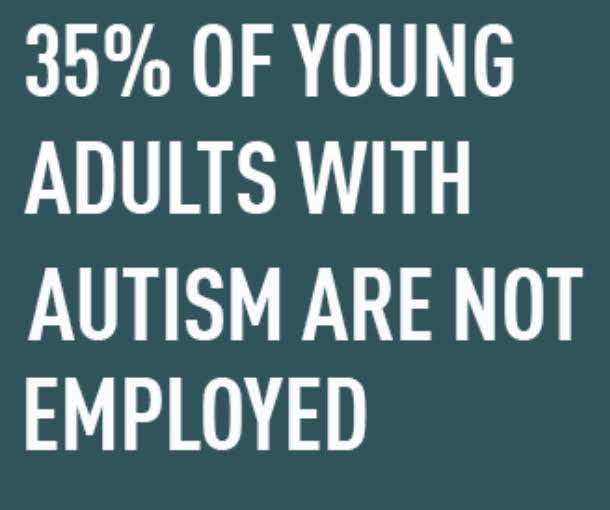
27 Companies Who Hire Adults With Autism


img_6948

Growing list of companies who hire adults who are diagnosed with autism or are autistic. Includes company information and resources for job seekers.

img_6947
— Read on workology.com/companies-hiring-adults-with-autism/

Posted in #mentalhealthmonth, Autism, Economy, Education, Employing Disabled, Illinois, illinois politics, mental health, mike madigan, minimum wage, new horizon center, News, Norridge, Norridge School D80, Pennoyer School District 79, politics, Pritzker, Roy F. McCampbell, Social Media, Special Education, student discipline, Taxation | Tagged , , , , , , , , | Leave a comment

Three dead after smoking fake weed laced with rat poison


Another 100 people have suffered from severe bleeding and several have tested positive for a lethal ingredient used in rat poison in Illinois.


— Read on metro.co.uk/2018/04/12/three-dead-smoking-fake-weed-laced-rat-poison-7460430/

Posted in #420day, #madigoon, #mentalhealthmonth, #taxation, Crime, e cigarettes, Health, health risk, Illinois, illinois politics, Medical, murder, politics, Pritzker, referendum, Roy F. McCampbell, Social Media, weed | Tagged , , , , , , , , | Leave a comment

Can A Condo Association Stop An Owner From Smoking Marijuana?


The legalization of the possession and usage of  recreational marijuana poses some real challenges for  condo owner association boards. Among others, the challenges include:   complying with both state and federal law addressing the differences between recreational and medical marijuana, and since legal marijuana is relatively new, wading through the uncertainty that conflicting state and federal laws create.

 
Given that the legal obligations of  condo owners associations in cases like this are unclear, it may be tempting for a board to wait and see how other condo owners associations handle the problem. Sitting back and waiting may not be the best approach, though. Smoking marijuana is not a fundamental right. In fact, marijuana remains illegal under federal law. (21 U.S.C. 841(c).)
Additionally, secondhand marijuana smoke, like secondhand cigarette smoke, contains carcinogens that some experts worry may have adverse health effects. Interestingly, condo association  boards have been held liable for not taking action to protect owners from cigarette smoke. While there is a direct link between secondhand cigarette smoke and negative health consequences (such link has not been made with secondhand marijuana smoke), it is possible courts will still require condo owners association boards to take action to protect owners and tenants from secondhand marijuana smoke.


Condominium Associations Should Keep Detailed Records of All Complaints It Receives
As support for any decision it makes, your condo owners association board should maintain a record of all marijuana smoke complaints it receives. At a minimum, keep information such as the date and time of the complaint, the name of the parties involved, and any health concerns expressed by the complainant. Without having a record to support whatever decision it makes, the board’s decision may look arbitrary to other owners and, if a lawsuit is filed, the court.
Medical Marijuana and the Fair Housing Act
One question that is yet to be answered by the courts is how the Fair Housing Act (“FHA”) may impact owners’ rights to smoke marijuana in their units. The FHA is a federal law that prohibits discrimination based on, amongst other things, disability, race, and religion. In the case of a condominium owner with a disability, a condo owners association may have to make a reasonable accommodation to its rules and policies to provide the person an equal opportunity to use and enjoy the condominium unit. For example, a rule prohibiting owners from having dogs may need to be relaxed for an owner who is depressed and needs a companion pet.
In the context of medical marijuana, a condominium owner may claim smoking marijuana treats a disability and that by prohibiting the smoking of marijuana, the COA is violating the FHA. While this issue has not made its way through the courts yet, related issues have. For instance, the Oregon Supreme Court ruled that an employer does not discriminate against an employee when the employer fires the employee for smoking medical marijuana because marijuana is unlawful under federal law. In that case, the employee claimed he had a disability that justified the need to smoke marijuana. It is possible courts will apply a similar rational in the housing context, by ruling that since federal law still makes it unlawful to smoke marijuana, a condo owners association is not obligated to accommodate an owner’s disability by letting that owner smoke marijuana.
Review the Condo Owners Association’s Governing Documents
As the board begins to look for answers, it should carefully review the condo owners association’s governing documents. These typically include bylaws, covenants, conditions, and restrictions (“CC&Rs”), and rules and regulations. As you review these documents, look for any provisions that relate to “smoking” or “cigarette smoke.” There may already be a rule that prohibits smoking in units or in common areas. Or there may be a rule that prohibits smoking cigarettes that the board can piggyback on if it also wants to prohibit smoking marijuana. Also look for language that prohibits owners from creating nuisances.

Amending the Governing Documents
If the condo owners association’s governing documents are silent or unclear about smoking marijuana, the board’s task will be more challenging. However, the board may still be able to take action to appease the complaining owners.
First, the board may be able to declare marijuana smoke a nuisance. A “nuisance” is something that interferes with someone’s use of their property by being irritating, offensive, or dangerous. Many CC&Rs prohibit owners from creating a nuisance. Keeping a detailed record of all complaints, including information about how the marijuana smoke is interfering with other owners use of their condominiums, may help show that marijuana smoke is, in fact, a nuisance.
Another option is to say that since marijuana is unlawful under federal law, smoking marijuana is not permitted in the condominium development. If this is the position your board wants to take, it may need to adopt a rule prohibiting smoking marijuana or amend its CC&Rs to prohibit smoking marijuana. This will require strict compliance with the procedural requirements under both state law and the condo owners association’s governing documents.
Other Options
There are other options your board can consider that might not be as controversial amongst owners. For example, there may be a better way to filter the air that is shared between units. Or perhaps individual units can be sealed better to prevent the transfer of smoke from one unit to another. Mediation may also provide a forum for individual unit owners to resolve complaints amongst themselves, or for the condo owners associations and owners to sit down to address the issue.
Condo Owners Association Board Should Receive Legal Advice
Due to potential liability and legal uncertainty this issue poses, the condo owners association  board should seek legal advice from its own attorney. Regardless of what action or inaction the board is considering, legal advice is critical to help make sure the board does not get involved in a lawsuit it does not want.  If you desire to consult me for legal advice on such issues or any other issues regarding condo association management please contact Roy F. McCampbell, Esq at 708/878-7957.

Posted in marijuana, political satire, politics, Pritzker, Rauner, referendum, robert martwick, Roy F. McCampbell, senator durbin, senator Mulroe, Social Media, vaping, weed | Tagged , , , , , , , , , , , , , | Leave a comment