So What Does An Enhanced ATF Presence in Chicago Mean for Schiller Park and the West Cook Suburbs ?


blueline


About 20 additional agents from the US Bureau of Alcohol, Tobacco, Firearms, and Explosives are headed to Chicago………David Coulson, a spokesman for the Chicago field office of the ATF, said “We are always seeking to enhance the enforcement efforts of ATF…..in conjunction with CPD.”

Couple this with the fact that the gang structure in Chicago is so fractured, no one know who runs one block to the next.    For example, the Autobarn, a luxury car dealership in Evanston was broken into in Evanston and they made off with 4 BMW’s and a rare Porsch 9-11 turbo, but the gang members converting these cars to cash these cars were used for joyriding and shootings.   One of the cars was used to “livestream” a rap video when police pursued it all over the west side.

Chicago, with some 100,000 documented gang members, has more gang members than any other city with the possible exception of LosAngeles (Researchers estimate that gangs account for at least half the homicides in those tow cities, a number so large that together they make up about 20 percent of all gang-related homicides nationwide.

Will this new effort of problem oriented policing by ATF simply relocate the crime to suburban areas already controlled by the gangs ?

What will be the repercussions on the suburban communities with the enforcement focus being seen in Chicago ?

Schiller Park has neighboring towns acknowledging for years the presence of gang members and territory control by these gangs.

Gangs identified in Elmwood Park include Milwaukee Kings, Maniac Latin Disciples, Four Corner Hustlers, Spanish Cobras, Gangster Disciples, Gaylords, Imperial Gangsters and the Latin Kings.

In Franklin Park, the gang, the Imperial Gangsters have been identified controlling the “The Jungle” an area bounded by Mannheim Road to Ruth and Crown to James Avenue.

Harwood Heights has been associated with the Latin Kings, Latin Pachucos, Insane Deuces,  and Satan Disciples.

Gangs identified in unincorporated Leyden Township include Imperial Gangsters, Gangster Disciples , the Latin Kings and LaRaza, with “Lil Darkside” having territories around Armitage and Ruby, Dickens and Ruby and Palmer and Ruby.

The City of Northlake has seen gang activity involving the Latin Kings, Gangster Disciples, Vice Lords, Two-Two Boys with the Imperial Gangsters controlling an area of condos and apartments known as King Arthurs Court and the Maniac Latin Disciples controlling the area around Fullerton and Wolf known as the “Lost City”.

The gang known as Almighty Simon City Royals has been identified as being associated with Norridge.

In Park Ridge, the Latin Kings and Surenos 13, have had a presence;  and River Grove    has seen activity from the gangs of Insane Dragons and M.O.B.

But Schiller Park has refused to acknowledge to residents that inquire whether there is gang activity in Schiller Park.   It creates an interesting question, “Is Schiller Park an island in a sea of gang activity or has a “blind eye” been turned to this activity ?

Some  have noted that the Simon City Royals, La Raza control the area around 25th and Ruby Street, residing in the apartments that border Ruby Street in Schiller Park.

Gangs have evolved over decades from social to corporate, so now with the aggressive stance of he Chicago PD, the gang leadership is constantly querying, “where can I go and get out of the spotlight ?”   This gang leadership is constantly looking for the “smaller town” with less resources to combat their activities.

The next year very likely will see an additional gang migration to the west Chicagoland suburbs and eastern DuPage County.    Recently a senior CPD officer said “We can see them going but they are not going away, like disappearing, just moving.”

Schiller Park has failed to create an ongoing community collaboration of major stakeholders (which should include the residents) to implement strong neighborhood policing.

Someone needs to take a leadership role to formulate a regional gang strategy.   This could become an epidemic in Schiller Park and the West Cook suburbs because their are no borders for gangs.    Mayor Rahm Emanuel is trying to reduce his crime in Chicago, but does care if he achieves this by the relocation of the criminals.   Big city police departments are experienced, the smaller ones aren’t.   Things will change in Chicago, and what happens there, in the city with the greatest gang violence problem in America, could have repercussions throughout the region.

The answer to deal with this problem is as complex as the problem itself.

But we all need to start as residents of each of our towns questioning the strategies and planning of our communities to deal with this pervasive gang violence problem for which we may see the repercussions of the enforcement in Chicago.  


Posted in Crime, Economy, Franklin Park, gangs, gun control, Harwood Heights, News, Norridge, Northlake, politics, Schiller Park, Schiller Park Commentaries, Social Media | Tagged , , , , , , | 1 Comment

Is Leyden Area Special Education CoOp (LASEC) Obsolete ?  Should Norwood Park Grammar Schools Withdraw From LASEC and Consolidate Special Education Services ?


Leyden Area Special Education CoOp (LASEC) is a partnership organization composed of Leyden SD212, Elmwood Park Consolidated SD401 ,  Ridgewood SD234 , Mannheim SD83, Franklin Park SD84,  River Grove SD85.5 ,  Rhodes SD84.5 , Norridge SD80, Pennoyer SD79, Union Ridge SD86, Rosemont SD78.

This partnership pools the member Districts resources to provide special education services to the students of these districts.
In 2006, Schiller Park School District 81, recognized there was a disparate distribution of resources and pulled out of the Co-op.  SD 81 decided to manage their own special education services and keep the financial resources in the  District.   This in house program has operated very well for the last 10 years.    My wife testified in front of a committee for the Illinois State Board of Education in the process of the withdrawl from  the CoOp.

The withdrawl of the Pennoyer 79, Norridge 80 and Union Ridge 86 from LASEC would present a unique opportunity  for these districts to take a step towards consolidation by  working collaboratively in providing special education services in a joint program between the three districts and keep special education services and the funds locally in Norwood Park Township for the benefit of these financially troubled school districts.

Pennoyer 79 has a unique opportunity to lead this collaboration because Dr. Kopka their new Superintendent was a principal at Schiller Park School District 81’s Washington School and is familiar with the withdrawl and implementation of the in house special education program.

A driving reason for the with drawl of SD81 from the CoOp was that for the dollars spent the District was not getting the full value of their contribution and the dollars could be better spent with in the district to more successfully education the entire student body.

D80 is confronting their problems and being frank and transparent with the community, Districts 79 and 86 need face the facts that they have their own serious financial problems.  District 79 has lost two referenda and had their bond rating downgraded by Moody’s.  District 86 is showing signs of financial deficiency.

Times are changing, the 1960’s model of LASEC may be obsolete in the 21st Century.

The taxpayers are demanding the reduction of the layers of government and education.    The special education dollars from the schools of Norwood Park Township are going in part to the administration of LASEC rather than to the support services of the students of Norwood Park Township and in part may be subsidizing other district’s special education services with the type of model that LASEC operates.  As another example, Maine Township Special Education Co-Op has been disbanded.   See this link:

http://articles.chicagotribune.com/2011-08-11/news/ct-met-special-ed-districts-20110811_1_school-districts-special-education-la-grange-area-department

Across the State of Illinois, numerous Districts have pulled out of or disbanded special education co-ops with many superintendents citing savings in the neighborhood of $200,000 to $300,000 a year.

The politicians and educators need to pursue a meaningful dialog to find the best usage of the educational dollars available.   Everyday that this does not occur is another wasted day in the lives of the education of all of our children.


Posted in Autism, Economy, Education, Elections, Finance, Franklin Park, Norridge, Norridge School D80, Pennoyer School District 79, Schiller Park, Schiller Park School District 81, Social Media, Special Education, Union Ridge SD86 | Tagged , , , , , | 1 Comment

Pedestrians’ Safety Is In Jeopardy At Scott and Irving in Schiller Park


East bound approach from Mannheim Road to Irving Park and Scott Street intersection (Above)


West Bound from 25th Avenue  approach to Irving Park Road and Scott Street intersection  (Above)

Scott and Irving is a major street crossing used by Schiller Park residents  going to and from the pool all summer and to a lesser extent numerous pedestrians cross there on a daily basis the remainder of the year.

The crossing is unmarked and does not comply with IDOT regulations because there is no continuation of sidewalk from one side of Irving Park Road to the other side;  the crossing provides no continuity for the pedestrians.

The intersection is at a location where drivers going east bound on Irving Park Road are reducing speed from 40 mph to 35 mph;  while west bound traffic is being permitted to accelerate from 35 mph to 40 mph with many cars accelerating to merge on to the northbound TriState 294.

Eastbound traffic is distracted by the traffic lights at Judd and  Irving just a half a block from pedestrians crossing at Scott and westbound traffic attention is drawn to the traffic light overlooking the pedestrians crossing at Scott Street.

East and west bound on  traffic on Irving Park road have no regulatory signs warning of pedestrians crossing at Scott and Irving, let alone vehicular cross traffic.

Easily east and west bound traffic on Irving Park Road are usually operating at a minimum 10 mph over the speed limit;  meaning pedestrians are easily facing at times 55 mph traffic as they attempt to cross Irving Park Road.

Drivers are warned about the cemetery entrance and the divided highway ahead;  but drivers are not warned about pedestrians.

There are marked crossings at Stalica Park and at the Recreation Center BUT NOT at Scott and Irving.

Scott and Irving has seen a number traffic accidents each year, with some having resulted in serious injuries and fatalities, but little has been done to identify the crossing and warn drivers of pedestrians.

The Village provides a crossing guard most of the time that the Montana Water Park and Memorial Pool is open.  But the Village employee faces the same disadvantages that the pedestrians encounter.

I personally was hit twice while crossing children in the 1970’s and ironically hit again in 2014 as I tried to divert a car from hitting a mother crossing with her children.  As circumstances would be had no drivers license and left the scene only to be apprehended later.

The deficiencies are as unfair to the drivers as they are dangerous to the pedestrians.

What remains confounding is the outrage and pursuit of concerns regarding flashing stop signs around the schools, that have no accidents and no injuries reported at Village Board meetings and school board meetings; but the SD81 and Schiller Park have allocated thousands of dollars in grant funds for flashing stop signs.  Yet there is no mention or pursuit by anyone to improve the safety at Scott St and Irving Park Road.

What will it take to engage the full participation of the elected officials, school district and Village administrative staff and residents to pursue a responsible safety solution at this intersection.  So far it has been almost 50 years since the pool was opened and no one has provided the leadership to resolve this safety quagmire.

But yet the bickering continues over flashing red stop signs at intersections near the schools.  Let’s move on address an intersection which children are crossing a highway with cars traveling at 55 mph, with no marked intersection and no regulatory signs warning the drivers of pedestrians.

These conditions at the intersection on a daily basis threaten the lives of our residents;  and place unsuspecting motorists in an awful position which could result in a life altering tragedy for the driver.

Posted in Education, Elections, News, Schiller Park, Uncategorized | Tagged , , , , | 2 Comments

Maybe It’s Time To Discuss the Consolidation of the Norwood Park Township Grammar Schools(SD79,SD80,SD86)


The word of the week is “consolidation”;  so lets think about consolidation of the three grammar school districts in Norwood Park Township into one grammar school District.

A day does not go by that there is some news regarding the financial problems of Norridge School District 80.

Currently, grammar school students attend schools in three separate and distinct grammar school districts in Norwood Park Township.    The individual school districts are Norridge SD 80, Pennoyer SD79 and Union Ridge SD86.  It is quite a confusing patchwork of service areas.   Pennoyer SD79 serves portions of Norridge, Harwood Heights (actually 5 disconnected service areas) and unincorporated Norwood Park Township;  Union Ridge SD86 serves portions of Harwood Heights and Norridge.

SD80 has two buildings, spends approx $16,600 per student, enrolls 1100 and an annual budget of $12,400,000

SD79 has only one building, spends approx $15,300 per student, enrolls 400 and an annual budget of $4,200,000

SD86 has only one building, spends approx $11,216/student, enrolls 600, and an annual budget of $7,700,000

So the grammar schools of Norwood Park education system have a  total budget of $24,300,000;  total enrollment of less than 2000 students

To run a system education  for Norwood Park Township at the grammar school level the current taxpayers are paying for 3 superintendents, 3 business managers and staffing 3 District offices.   Even the single building districts each employee a principal for each building.

With the spotlight brought on education by the bickering and fighting at SD80, it is only a matter of time before the other 2 districts will be asking the taxpayers for additional funds.

The Norwood Park Township community needs to begin a dialog to consolidate the grammar school districts to enhance the education and reduce the costs to the taxpayers.

This consolidation could achieve the following:

  • More efficient use of public funds through economies of scale and less administrative cost
  • Lower per-pupil costs
  • Expanded curriculum
  • Expanded extra-curricular activities
  • More specialized teachers and staff
  • Better instructional materials and equipment
  • More resources for advanced and special needs
    students
  • Greater cultural diversity
  • Lower teacher turnover
  • State consolidation funding incentives

A townshipwide taskforce  should be constituted to begin to explore the option of consolidating the three grammar school districts into one feeder district for Ridgewood High School.

The community at large needs to begin a dialog to examine the opportunities that present themselves with a consolidation.

Norridge District 80 has demonstrated their inability to resolve the financial problems of their district.    Clearly, District 80 needs an intercession of the township community to get this educational system that feeds into Ridgewood High School back on track.

Community members need to reach out to the State Task Force on Consolidation and look for input from the Illinois State Board of Education to resolve this educational crisis that is developing in Norwood Park Township.


Posted in Education, Finance, Harwood Heights, Illinois Pensions, News, Norridge, Norridge School D80, Pennoyer School District 79, politics, Union Ridge SD86 | Tagged , , , , , , | Leave a comment

My Goal for All Parishioners: Be Passionate, Be Concerned, Be Involved in the Chicago Archdiocese Parish Consolidation Process


change

I am going to open with my closing thoughts from an earlier posting on this topic of Chicago Archdiocese parish consolidation:

“My closing thoughts:  I think this is a great opportunity for all people and for the archdiocese. We have to recognize there is going to be pain but try not to be afraid, try to trust. We are trained by American society to distrust things; we are trained to be afraid. Here is a place where you make a Christian choice — am I going to trust and hope or am I going to distrust and be afraid?

The second thing is this is opening up opportunities for everybody to have a hand in how this gets played out, even if you are not sitting at the tables that figure out what the new configurations of parishes will be. People will be able to step up and take important roles in helping to make decisions and carrying out actions and carrying out ministries.

You can focus on the loss or you can focus on the growth that will come”

Based upon the responses that I have received since my original post, I believe many have missed my closing thoughts.

I am happy that I have gotten everyone’s attention regarding this very important series of events which the Chicago Archdiocese and its parishioners are confronting.

My point is that every member of the Chicago Archdiocese needs to pay close attention to the future planning that is on-going in the Archdiocese currently.

We as parishioners should never allow special interests to hijack the planning and implementation of the future progress in our parishes.     We all need to be vigilant and participatory in the on-going process.

The majority of my education has been in Catholic schools in this archdiocese both at the grammar, high school and college levels (2 of 3 degrees from DePaul University);  I spent 5 years on a Catholic grammar school board as well as been a member of the Knights of Columbus.    I endorse for everyone the opportunity to engage as closely in their faith as possible, but have encountered a fair amount of Church “politics” which has also caused me to approach the corporal side of the institution with a bit of cynicism.

I know that I have angered a few with my writing, but I hope that this will cause a greater scrutiny and participation by all members of the Chicago Archdiocese parishes.   I encourage all to be attentive and involved in the future of our Chicago Archdiocese, please take every opportunity available to participate, understand and contribute to the process.

For sure,  this is not the last of what I will have to say about parish consolidation process of the Chicago Archdiocese;   you will regularly hear my passion about the issues surrounding this process.

Posted in Cardinal Cupich, Chicago, Chicago Archdiocese, Education, Finance, Franklin Park, News, Norridge, Project Renewal, Religion, renew my church, Schiller Park, Schiller Park Commentaries, Social Media, Special Education, Uncategorized | Tagged , , , , , | Leave a comment

The Repurposing of Chicago Archdiocesan Parish Real Estate is Being Met With Great Anticipation By Developers and Expectations of Large Profits By All But The Parishioners


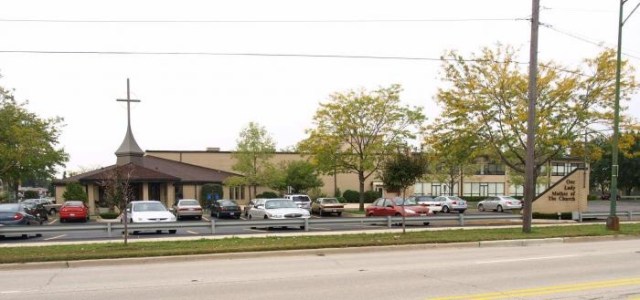
While the parishioners of St Rosalie  are split up between St Priscilla , St Francis Borgia and possibly, St. Pascal’s , and the parishioners of Divine Savior are sent to Our Lady Mother of the Church the Chicago Archdiocese will be splitting up the financial proceeds between themselves, and the handpicked real estate brokers and developers.  Years of history and memories will be lost on balance sheets.   And in the case of St Rosalie, Ridgemoor Country Club and there members will be profiting as well.   

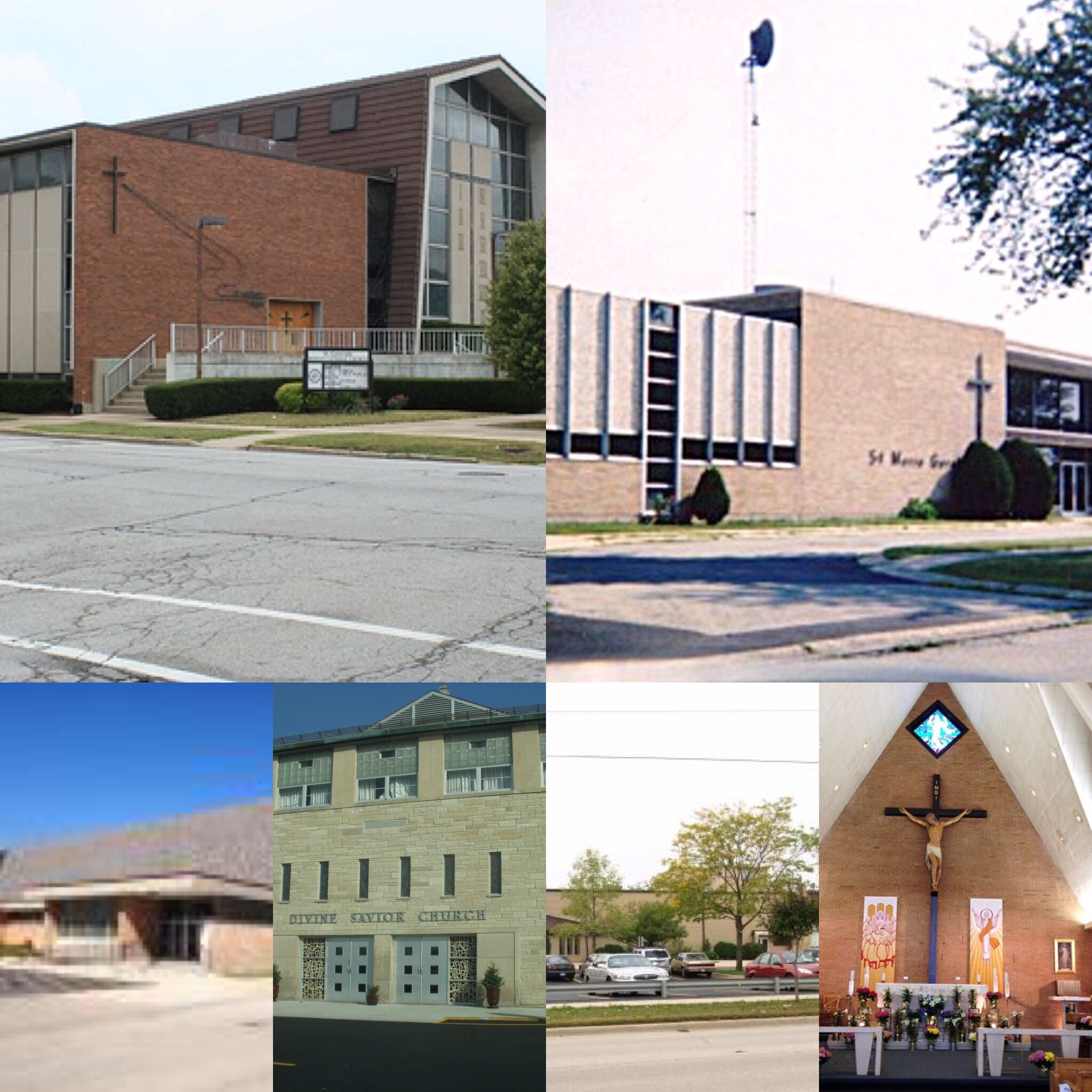
Will St Marie Goretti property be sold for a residential development and St. Beatrice become the sole Schiller Park Church ? Will St Gertrude be sold and demolished due to its deteriorating condition and the parishioners disbursed to neighboring parishes ?

As the U.S. real-estate markets have recovered, the sale of religious property has turned into a brisk business. Last year, there were 1,506 sales of religious facilities, compared with 1,366 in 2013 and 874 sales in 2010, according to CoStar Group Inc. More than 80% of such sales tracked by real-estate services firm CBRE Group Inc. were in or near cities.
But the decline in traditional demand for many houses of worship also has alarmed preservationists. In some cases, properties have been lost during bad real-estate markets or periods of migration out of urban areas. Since 1970, Manhattan has lost 45 architecturally or historically significant religious sites, according to Ann-Isabel Friedman, director of the Sacred Sites program of the New York Landmarks Conservancy.

For example, this year a developer completed demolition of Brooklyn’s Church of the Redeemer, a Gothic-style Episcopal Church that was built just after the Civil War. The developer, who purchased the property in the hot Barclays Center area, hasn’t yet announced plans for the site.

The Catholic Archdiocese of several cities have been selling property. In New York, the Archdiocese has been reducing its number of parishes to 296 from 368. As part of this effort, St. Augustine church in the Bronx was sold to build affordable housing and Holy Trinity parish in Yonkers was sold to an Eastern Rite Catholic community known as the Malankara Catholics.

In Chicago, the Archdiocese will continue to eye its real estate as a funding source and to repay debt, Ms. Bohlen Archdiocesan COO said.  As a very large institution with very old infrastructure and very illiquid assets, we’re constantly looking for how to make sure we have the liquidity to fund our church.”

Real-estate experts say the best use of the site across the street from Holy Name Cathedral would be a mix of residential, hotel and retail. Stephen Livaditis, a senior managing director at Eastdil, is spearheading the sales effort, according to an Archidiocese spokeswoman.

The Catholic Archdiocese of Chicago has tapped an adviser to sell the sprawling lot across the street from its 140-year-old Holy Name Cathedral, in the latest sign of a religious institution selling prime real estate in response to hot property markets.
The Archdiocese has hired Eastdil Secured LLC to market the site, which takes up most of a block, according to Betsy Bohlen, the former McKinsey & Co. partner who became the Archdiocese’s chief operating officer last year. She declined to put a value on the property, but experts say it is worth as much as $100 million.
Ms. Bohlen said Eastdil would be exploring options including an outright sale of the property and a long-term lease. “There’s been an interest in this property for decades,” she said in an interview. “Given the strength of the market and increased development in downtown Chicago, we decided to take a hard look at developing the property now.”
Chicago’s real-estate market has enjoyed a flurry of development thanks in part to an increase in demand for apartments in the city. According to the city Building Department, there are currently 23 tower cranes operating on construction sites, four more than last year and 13 more than in 2011.

Mayor Rahm Emanuel has announced that developer 601W Cos. has closed its purchase of Chicago’s old Post Office building, part of a $500 million redevelopment plan for that long-vacant structure in the West Loop.

At the same time, the move by the Archdiocese to sell the 90,000-square- foot site near the city’s Gold Coast historic district comes as many religious organizations are taking fresh, and more businesslike, approaches to their real estate.
“As chief operating officer of the Archdiocese with a business background, there’s no doubt my job is to focus on how we make sure we’re the best steward of our assets,” Ms. Bohlen said.

Religious groups are re-examining their uses of real estate in part because attendance at houses of worship has been shrinking in some areas. In 2014, about 54 million Americans older than 14 years old—or 21% of that population—attended church on an average Sunday, according to the U.S. Labor Department’s American Time Use Survey. That’s down from 24% of the population—or about 57 million people—in 2003.

Suburban Chicago archdiocesan real estate is very attractive because most of those properties have no historical or architectural significance; developers and archdiocese representatives are quite excited to repurpose parish properties.

Real estate brokers and developers expect large profit margins on choice parish properties.

Posted in Cardinal Cupich, Chicago, Chicago Archdiocese, Economy, Education, Finance, Franklin Park, Norridge, politics, Project Renewal, Religion, renew my church, Schiller Park, Uncategorized | Tagged , , , , , , , | Leave a comment

What is the future of the Catholic parishes in Schiller Park ?


A radical overhaul in the nation’s third-largest Roman Catholic archdiocese could shutter many of the Chicago church’s houses of worship by 2030 as it reckons with decaying buildings and an expected shortage of priests, was further outlined in a letter from Cardinal Cupich which was read from the pulpit  at all masses in the Archdiocese on Sunday, January 22, 2017, including at St. Beatrice and St. Maria Gorietti in Schiller Park.   Link to Cardinal Cupich letter :

https://www.archchicago.org/documents/70111/70558/1.21.17_RMC+letter+to+parishioners_English.pdf/19094599-c006-4e1f-b8fe-0f3971bc7f4c
Chicago Archbishop Blase Cupich has told  priests and advisers in meetings over the last year that the shortage — an estimated 240 priests available in 2030 for the archdiocese’s 351 parishes — could necessitate closings and consolidations. The archdiocese governs parishes in Cook and Lake counties.

Based primarily on those projections and on future capital needs, the priests who attended the meetings say a large number of churches could close over the next 14 years. Several of those priests who attended the sessions with the archbishop have shared details about the reorganization process,  some requesting anonymity because of the sensitive nature of the discussion and because they didn’t have permission to speak on behalf of the archdiocese.
The reorganization process is kicking into high gear this Spring when auxiliary bishops begin meeting with parish leaders and staff in their regions to discuss solutions.

Such a massive parish reorganization would be larger than — and play out much differently from — Cardinal Joseph Bernardin’s decision in 1990 to close and merge more than 40 parishes, which along with school closings and a 10 percent cutback in administrative costs was aimed at saving $13 million annually.

No cost-saving target has been announced for this plan, but Chief Operating Officer Betsy Bohlen says the initiative is less about economics and more about fortifying the church’s mission.
The financial impact of this effort will be avoiding having to spend capital repair dollars that are unaffordable, it should be noted that the archdiocese has just launched a review to gauge those deferred costs. But that’s not the most significant reason (for the reorganization) at all.

In a message to parishioners that appeared in the past in Catholic New World, the archdiocesan newspaper, and that Cupich has shared with priests and advisers in the last year,  the archbishop casts the parish reorganization as an opportunity for renewal.

“Demographics have shifted dramatically,” he wrote. “Some of our parish buildings are in disrepair. We have fewer priests to pastor our faith communities. The result is that we end up spreading our resources too thinly.
“I would be less than honest if I did not acknowledge that by the time this consultative process is complete, we will mourn together the loss of some parishes,” he added. “But that will not be the final word. By having the boldness to leave behind familiar ways of doing things, we can seize this season as one that is not simply of loss, but rather of renewal.”

“I would be less than honest if I did not acknowledge that by the time this consultative process is complete, we will mourn together the loss of some parishes,” he added. “But that will not be the final word. By having the boldness to leave behind familiar ways of doing things, we can seize this season as one that is not simply of loss, but rather of renewal.”

Priests who spoke to the Tribune said, based on the expected priest shortfall and future infrastructure needs, as many as 100 churches could close over the next 14 years.
Bohlen said that could be the case if leaders in the archdiocese decide to assign one pastor per parish. But it’s unlikely that such a generic formula would be applied universally, she said.
“Parishes are very vital homes for people,” she said. “It’s closely connected to their faith life, and we take that very seriously. If they are a strong presence in the community, we’re biased to keep the strong presences out there. I don’t know how it’s going to play out.”
Cupich did not speculate in the column how many parishes might close. But it’s the numbers behind Cupich’s reference to the shortage of priests that is guiding preliminary projections for how many parishes could close or merge, sources said.
By 2030, there will be an estimated 240 priests available to fill Chicago’s pulpits according to published projections.
Those priests could be assigned individually to parishes, or to multiple churches in any variety of configurations, which ultimately will affect how many parishes eventually shutter. The estimate of 240 priests available for parishes by 2030 is not a firm figure, because not all ordained priests serve as pastors. Some work as canon lawyers, professors or administrators. And some simply aren’t ready to serve as pastors right after ordination, some publications note
At the present rate, about 180 priests are expected to retire by 2030, replaced by roughly 10 ordinations a year, according to archdiocesan information. 
Since religious orders, which sometimes help fill pulpits, are facing the same shortages, the archdiocese may not be able to rely on them to fill the gap.
No one wants to be the pastor of two or three parishes if they can help it, they would be ineffective.

In the Schiller Park area, representatives from five parishes — St.Beatrice,  St. Maria Gorietti, Our Lady Mother of the Church,  Divine Savior (Norridge), and St. Gertrude (Franklin Park) — will meet beginning in March, 2017 to  discuss options and deliver recommendations to Cupich.

This working group is intended to solve the question of what to do with consolidation. Conversations in these meetings are centered on the question, “How can we form parishes that are going to respond to future needs with future resources that we’re going to have?”

Parish leaders also are to discuss the ministries that set their communities apart, which should lead to more discussions about making sure those ministries continued even if parishes closed.   This kind of collaboration is exactly how clergy and church officials hope the process will unfold in the working group. 

While about a quarter of the 351 parishes in the archdiocese now receive financial aid, the archdiocese will weigh three additional factors when assessing the sustainability of parishes: capital needs, pastor availability and mission vitality.
Mission vitality will be based on people in the pews and less tangible, more pastoral metrics such as whether the community supports each other in prayer and worship, engages the millennial generation and brings newcomers to the church, fulfilling the church’s and Pope Francis’ call to evangelize. Efforts also will be made to avoid creating church deserts — neighborhoods with no accessible Catholic parish. Shifting the decisions to auxiliary bishops who oversee each region will help ensure that, reflecting Cupich and the pope’s mutual inclination to decentralize power.
Cupich also has emphasized to advisers, including the Archdiocesan Pastoral Council, that the process will take an egalitarian approach and no parish will be left out. Affluent parishes bursting at the seams will feel the pinch too, he has said.

Priests are saying the process will be nothing like the closings in 1990, when priests found out suddenly that their doors would be shut by the end of the year. One priest suffered a heart attack after delivering the news to his congregation on Sunday morning.

Back then, archbishops of other major cities frowned on Bernardin’s decision, saying closing parishes just wasn’t done. This time, priests say, Chicago is late in acting. Priests and parishioners in Boston and New York have already suffered painful parish closings in the past decade.

Some are saying of the 5 parishes in this working group only 2 will survive.   We are all facing a lot more questions than answers at this time.   

With Norridge School District 80 interested in the Divine Savior property, the future of Divine Savior may be doomed, with the serving parish for Norridge, Chicago, and north Schiller Park going to Our Lady Mother of the Church, with the balance of the area including Schiller Par, and Franklin Park, going to one of the three remaining parishes in the working group.   

Obviously, there is some template emanating from the Chicago Archdiocese with the way the 5 parish working group was designated;  leading one to conclude that the Archdiocese has already made some as yet undisclosed decisions impacting all of us who are parishioners in one of the parishes.   

My closing thoughts:  I think this is a great opportunity for all people and for the archdiocese. We have to recognize there is going to be pain but try not to be afraid, try to trust. We are trained by American society to distrust things; we are trained to be afraid. Here is a place where you make a Christian choice — am I going to trust and hope or am I going to distrust and be afraid?

The second thing is this is opening up opportunities for everybody to have a hand in how this gets played out, even if you are not sitting at the tables that figure out what the new configurations of parishes will be. People will be able to step up and take important roles in helping to make decisions and carrying out actions and carrying out ministries.
You can focus on the loss or you can focus on the growth that will come.

Posted in Cardinal Cupich, Chicago, Chicago Archdiocese, Finance, Franklin Park, News, Project Renewal, Religion, renew my church, Schiller Park, Schiller Park Commentaries, Social Media, Uncategorized | Tagged , , , , , , | 3 Comments

Does Anyone Know What Are Schiller Park Police Department’s Crime Prevention Strategies ?


What are Schiller Park’s Police Department crime prevention strategies ?

Community crime prevention programs or strategies target changes in community infrastructure, culture, or the physical environment in order to reduce crime. The diversity of approaches include neighborhood watch, community policing, urban or physical design, and comprehensive or multi-disciplinary efforts. These strategies may seek to engage residents, community and faith-based organizations, and local government agencies in addressing the factors that contribute to the community’s crime, delinquency, and disorder.

My post regarding “Let’s Keep Schiller Park Residents Better Informed Regarding Crime” caused interesting feedback;  some impressions require some comments.   

The original post was not to inject the concept into politics, but rather refocus the issues to be managed and addressed by the Village’s professional management team.    

The professional management staff has failed to clearly articulate any crime prevention strategies that are open and understandable to the community members.   

A secure environment is made possible through community involvement in crime prevention. The purpose of community crime prevention is simple: to help you recognize your own vulnerability to crime, and reduce your risk by taking preventive action and cooperation with the police.

Four key areas that the Schiller Park professional management team should  be pursuing to ensure the best interests of the residents:  

  • Reduce crime and increase community safety
  • Get more members of the public involved in reducing crime
  • Boost integration between all stakeholders involved in crime reduction
  • Make more people aware of the reality and perception of crime

For a resident,  crime is personal.    As an example, the robbery at the Marathon gas station without a formal release by the PD confusion can ensue on the facts.   The robber did not display a weapon at the Marathon, but stated he had one. Technically, the incident did not qualify as an “armed robbery” but a victim being told by the robber he has a gun makes it very real.    Accurate information is clearly an important element of crime prevention.

Let’s keep crime prevention outside the realm of politics.    

Again, I must conclude this post by asking, “What are Schiller Park’s Police Department crime prevention strategies ?”

Posted in Crime, Schiller Park, Schiller Park Commentaries, Social Media, Uncategorized | Tagged | 1 Comment

Park Ridge board member Tom Sotos and a sexual harassment suit—-Fred Klonsky Blog


At the Park Ridge board meeting last night, board member Athos Tom Sotos interrupted a parent during the public comment section of the meeting. Reports the Daily Herald: Perhaps the most dramatic moment during the almost hourlong public comment came when board member Athan Sotos interrupted district parent Daisy Bowe because she, like several other […] https://preaprez.wordpress.com/2017/01/24/park-ridge-board-member-tom-sotos-and-a-sexual-harassment-suit/

Posted in Uncategorized | Leave a comment

Let’s Keep Schiller Park Residents Better Informed Regarding Crime 


It appears that we as residents are not receiving information from the Schiller Park police department about crime in our neighborhoods. I was advised by friends and neighbors of at least two break ins in the Frogtown area as well as an armed robbery of the Walgreens and the Marathon Quik Mart at 25th and Irving Park road recently.  Cars have been stolen, cars broken into in the neighborhoods and widespread vandalism. In the last two years a family was held hostage in their home.   

 Most police departments such as Norridge regularly release to the residents, news bulletins keeping them updated as to crime in their neighborhoods.   

Since the PD is seriously lacking in keeping us informed we need to share every bit of anecdotal information we can glean.   

This is all quite troubling as a resident.

Posted in Crime, foia, Schiller Park | Tagged , , | 2 Comments