If you are looking for a worthy cause to donate to and support please consider the Palumbo Family Foundation.
Sebastian (Sam) and Mary Palumbo, along with their children, Jessica, Kaitlyn, Samantha, Elizabeth, and Gabriella, founded the Palumbo Family Foundation with the desire to offer boys and girls the opportunity to thrive through education and wellness grants. The pursuit of overall well-being serves to allow them to further their education and careers.
The Palumbo Family Foundation strives to make a difference in two sectors of our communities in the Chicagoland area. One is providing scholarships to well deserving students of lower income families. Without scholarships, many of these students would not realize their dream of furthering their education. The other is providing medical grants to organizations that serve the needs of local medically challenged children.
The Palumbo Family Foundation is a 501(c) 3 nonprofit charitable organization. The administration of the foundation is all volunteers; a 100% of the net proceeds of donations and fundraising events give hope and inspiration to young adults looking for financial help to continue their education after high school; as well as children with medical needs.
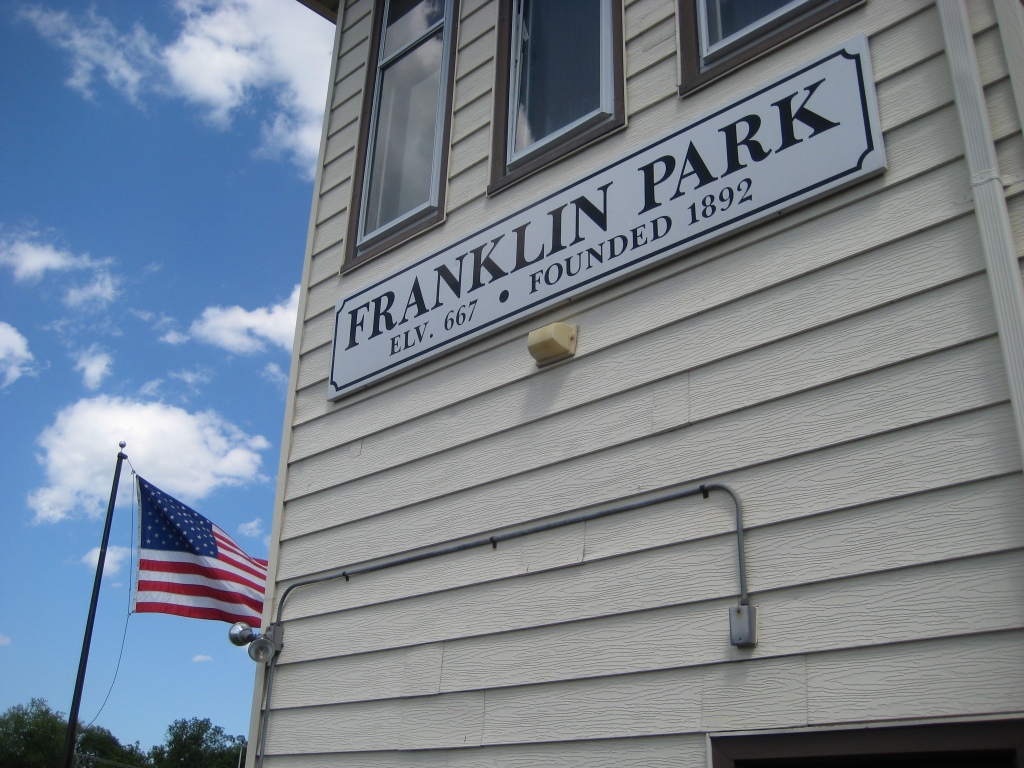
Franklin Park is planning a series of road improvements to complement the ongoing planned I-490 interchange project, which will allow drivers to access O’Hare International Airport from the west.
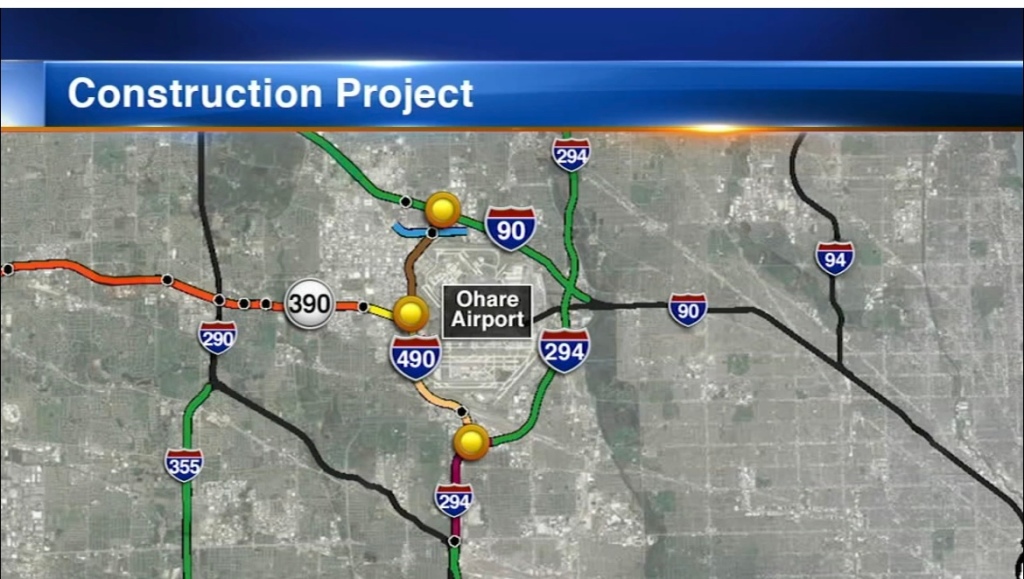
The I-490 project, or O’Hare Western Bypass, “will be built to carry north-south traffic around the western border of O’Hare and provide access to the airport,” according to the Illinois Tollways website. I-490 will begin with a partial interchange with I-294 in Franklin Park.
The new configuration will create access to southbound I-294 off of Franklin Avenue in Franklin Park. Meanwhile, northbound I-294 traffic could ramp off to I-490 and then ramp down to Franklin Avenue. As part of this project, Franklin Park will complete reconstructionand widen Franklin Avenue starting in the winter of 2022, with completion planned for the fall of 2023. Franklin Park has received $35 million in grants related to the project. The bulk of the grant funding – about $32.8 million – came from IDOT and the tollway, with the remainder coming through county programs.
In anticipation of the tollway project, and the reconstruction of Franklin Avenue, Franklin Park is making other road improvements meant to align traffic patterns. One of those improvements will be the creation of a dedicated right-turn lane for southbound traffic on Mannheim Road to turn onto Belmont. The truck traffic will then be able to reach Franklin Avenue by turning right onto Williams Drive.
The new traffic configuration should eliminate the need for southbound truck traffic on Mannheim to make left turns off onto Belmont to reach Franklin Avenue. Pedersen said the current traffic pattern can create congestion and delays, as trucks sometimes have difficulty making the left turn onto Belmont.
Right now, we can have situations where a semi is coming across Belmont, and the light changes, and it can actually end up blocking Belmont.
To facilitate the creation of the turn lane, Franklin Park is buying and demolishing 3204 Mannheim Road, a property which has been abandoned for more than a decade. The Village Board approved the transfer this month of $696,700 in funds from the Belmont Avenue/Williams Street Tax Increment Financing District. Franklin Park had already allocated $1.455 million for the project, according to village documents regarding the project.
A tax increment financing district can be created when an area is deemed blighted in such a way that private investment is unlikely to occur without some kind of government intervention. The creation of such a district allows the reallocation and use of property tax dollars to be used for public improvements, according to the Illinois Department of Commerce.
Aside from property acquisition, the project will entail widening Mannheim Road to create the turn lane, the widening and reconstruction of Belmont Avenue from Williams to Mannheim, and the widening of Williams from Belmont to Franklin.
Well, once again, we can thank social media for stirring up a “fake news” hornets nest. This time, the tin-foil-hat brigade are up in arms about privately-owned businesses possibly asking customers for proof of vaccination.
The CDC, recently, updated their guidelines in regards to mask-wearing. Basically, the organization stated that fully-vaccinated people can now go without wearing masks while indoors. However, they still recommend that non-vaccinated people wear masks.
Almost immediately following the updated guidance, many businesses adjusted their guidelines. Some state you don’t have to wear a mask, inside their establishment, and some stated they wish to continue enforcing mask-wearing.about:blank
Of course, that was enough for trolls to rise from the ashes and begin their BS on social media again.
You’ve probably seen the same posts, that I have, about people claiming they’ll sue a business that asks for proof of vaccination.
Here’s a portion of the post making its rounds on Facebook, currently.nullabout:blank
I am putting everyone on notice, if I walk into a restaurant, bar, retail store of any kind etc, and you ask me for proof of vac, I will immediately file suit against you. I will file both a personal and business lawsuit for violation HIPAA Laws.
They state it’s a violation of HIPAA laws. But, is it really? In short, the answer is no, it’s not a violation of HIPAA laws.
So, let’s take a little dive into HIPAA.about:blank
HIPAA stands for “Health Insurance Portability and Accountability Act” and is meant to protect some of the patient’s health information to be protected. According to the U.S. Department of Health and Human Services, these laws apply to people in medical-related fields; which include medical and insurance providers.
In essence, most businesses aren’t covered/governed by HIPAA laws, thus does not restrict them from asking about your vaccination status.
As a consumer, you have every right to not patronize a business. So, if you don’t feel comfortable “going there” then give another business your money. It really is as simple as that.
For myself, I don’t care either way. There are much greater issues to worry about than worrying if someone knows whether I’m vaccinated or not. However, I’d be willing to bet there are some ambulance-chaser type of attorneys that will challenge HIPAA laws soon, so stay tuned.
The U.S. Supreme Court on Monday ruled that warrantless seizures of firearms from Americans’ homes is unconstitutional and violated the Fourth Amendment.
The nation’s highest court found in favor of Edward Caniglia from Cranston, Rhode Island on May 17.
Caniglia’s guns were taken by police after his wife said she was worried he would hurt himself, according to the ABA Journal.
The seizure occurred after he had a fight with his wife and took out an unloaded handgun and put it on the table and told her to shoot him and put him out of his misery.
Caniglia stormed out of the house, so his wife hid his gun and then went to spend the night elsewhere, NPR reported.
When she couldn’t reach him the next morning, she called the Cranston police to do a welfare check and escort her to their home.
Caniglia was on his front porch when they arrived and officers worked to convince him to go to the hospital for a psychiatric evaluation even though they wrote in their police report that he “seemed normal” and “was calm for the most part,” according to the Foundation for Economic Education (FEE).
He agreed to go, but only after police allegedly promised not to confiscate his firearms, the ABA Journal reported.
But after Caniglia was gone, officers told his wife that he had agreed to have his weapons confiscated, FEE reported.
Then they entered the home and seized two guns, the ABA Journal reported.
Caniglia was evaluated and released from the hospital the same day, but police refused to return his legally-owned weapons that had been removed without a warrant,
So he filed a lawsuit that alleged police had illegally searched his home and seized his guns.
The lower courts ruled that police could enter Caniglia’s home and take his weapons under the “community caretaking” exception to the Fourth Amendment’s warrant requirement that applied to homes and cars, the ABA Journal reported.
The exception is a 50-year-old Supreme Court doctrine created to give law enforcement a legal way to remove cars from the side of the interstate and clear car crashes.
The First Circuit called the exception “ill-defined” but allowed that the rule extended to private homes.
EMPLOYERS: If you choose to “force” your employees to get vaccinated (or lose their job), and your employee has an adverse reaction… YOU CAN BE SUED!!!
The politicians never exempted you from liability
The date your new “mandatory mask/vaccine policy” goes into affect, will coincide with the date the required vaccine is administered, thus providing a timeline that is recordable, and used against you in court.
Suggestion: Make all vaccines & masks “optional” in the workplace. This way, should an:
employee choose to get vaccinated and become vaccine injured, the employer is not liable.
employer or co-worker catch Covid at work, they can’t fire or hold an un-masked & un-vaccinated employee liable.
Chicago releases 1,000 FERAL CATS onto its streets to deal with surging rodent problem after city was named the rat capital of the US for sixth year running
Animal shelter the Tree House Humane Society is behind the Cats at Work program, neutering the animals before they are returned to patrol the streets. The shelter has put 1,000 cats to work as pest control since 2012, WGN9 reports. Chicago was named the rat capital of the US for the sixth year running in 2020.
The shelter says: ‘Cats are placed two or three at a time into residential or commercial settings in order to provide environmentally friendly rodent control. ‘Property and business owners provide food, water, shelter, and wellness to the cats who work for them. In most cases, our Cats at Work become beloved members of the family or team and some even have their own Instagram pages.’
Shelter spokesperson, Sarah Liss, said: ‘We’ve had a lot of our clients tell us that before they had cats, they would step outside their house and rats would actually run across their feet.’ Rather than killing the rats Liss says the cats ‘are actually deterring them with their pheromones’ adding: ‘That’s enough to keep the rats away.’
Those living in Chicago can apply for a cat online.
The Federal Ninth Circuit Court of Appeals recently reaffirmed that a student may establish a claim for damages under Section 504 of the Rehabilitation Act of 1973 if a school district violates Section 504 “intentionally or with deliberate indifference.” (Mark H. v. Hamamoto (9th Cir. 2010) ___ F.3d ____, 2010 WL 3349198.) This case serves as a reminder that, in addition to filing a due process complaint under the Individuals with Disabilities Education Act, a student may be able to sue for damages under Section 504 if a school district fails to provide special education services and/or develop an appropriate IEP.
In Mark H.,the family of two students with autism prevailed in an administrative hearing against the Hawaii Department of Education (DOE). The hearing officer found that the DOE denied the students a Free Appropriate Public Education under the IDEA and that their IEPs were inadequate. Following the administrative hearing, the family sued the DOE in federal district court, seeking damages for alleged violations of Section 504. The district court held that there was no private right of action to enforce FAPE as required by Section 504. The court also held that the family failed to establish a Section 504 violation because the family did not demonstrate that the school district intentionally discriminated against the students solely by reason of their disabilities. The family appealed the decision to the Ninth Circuit Court of Appeals.
The Ninth Circuit held that there is a private right of action under Section 504. However, establishing a violation of the right to a FAPE under the IDEA is not sufficient to prevail on a claim for damages. Rather, to prevail on a claim for damages under Section 504, a student must establish that the school district violated Section 504 “intentionally or with deliberate indifference.” After clarifying the legal standard, the Ninth Circuit remanded the case to the district court to allow the family to amend their complaint.
The family then filed an amended complaint against the DOE and its Superintendent. The family alleged the DOE failed to provide the students with reasonable accommodation for their disabilities in the form of autism-specific special education services and that it failed to design their IEPs to meet the students’ needs as adequately as the needs of non-disabled students were met. The family further alleged that the DOE acted with deliberate indifference. The district court granted summary judgment in favor of the DOE, finding that the family failed to present sufficient evidence to support their claim. The family appealed the decision to the Ninth Circuit.
The Ninth Circuit reversed the district court’s grant of summary judgment. It found that the family had presented evidence that raised a question regarding whether the DOE violated Section 504 with “deliberate indifference” by failing to adequately investigate whether autism-specific services that the students needed in order to access their education were available as a reasonable accommodation. In addition, the evidence also raised a question regarding whether the DOE knew that its failure to design the students’ IEPs to include autism-specific services was likely to result in a violation of their federally protected rights and whether it failed to act upon that likelihood. As a result, the Ninth Circuit reversed the district court’s grant of summary judgment and remanded the case to be heard in the district court.
This case demonstrates that if a school district knows that a student requires certain special education services, but does not act upon that knowledge, it could be subject to a claim for damages under Section 504.
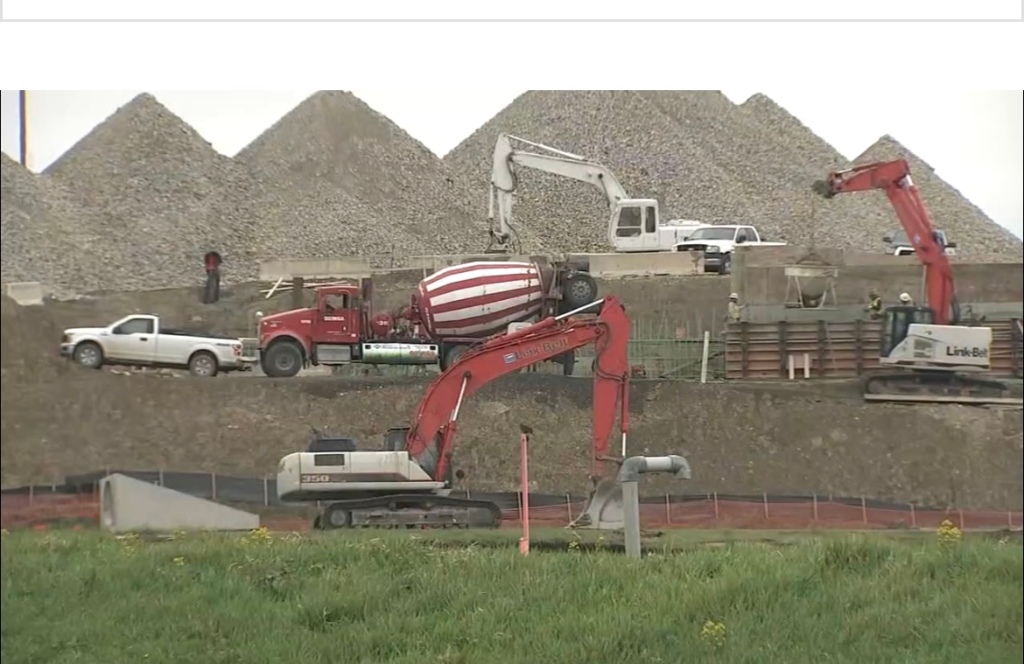
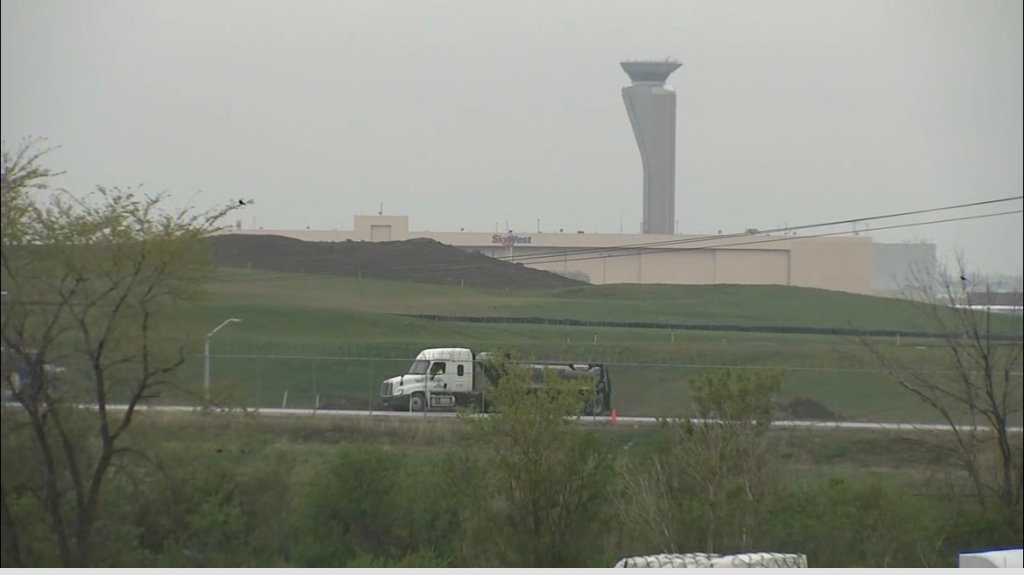
One of the biggest construction projects of 2021 on I-490 western access to O’Hare International Airport is firmly underway.
The concrete ramps stop abruptly, but it will eventually take shape in the long awaited I-490 western O’Hare corridor that will tie together I-90, Route 390 and the Tri-State Tollway.
This is a big deal because they are finally allowing people to connect from I-90 all the way down to the southern suburbs without having to go through the airport corridor, and that’s going to help in a lot of ways. It’s going to save congestion, it’s going to save fuel, it’s going to save money,
Local leaders got a tour of the I-490 progress Thursday, including the large amount of work that got done in the past year during the stay-at-home mandates and social distancing.
Along with the progress being made at the I-490/Route 390 Interchange, there is also construction in place at the I-490 Interchange with I-90, the Jane Addams Tollway and at the former site of the old Des Plaines Oasis. null
There are several years to go until the new corridor is complete. The ramps will open first.
While the project will make it easier to access O’Hare, there are also benefits to the surrounding suburbs.
This project is going to provide significant congestion relief. I mean there’s 86% of the roads in this area are considered congestion, that they experience severe congestion. This project is going to relieve a lot of that.
The project also includes local road improvements and wide-reaching economic development that is expected when it is completed. It is scheduled for completion in 2026.
There will be 15 ramps that make up the I-490 and Route 390 Interchange.
Last week I had the privilege of working with a British film crew that is filming a documentary for the Science Channel on the collapse of the Horizon in 1979. This will probably air early next year. The film will portray the how and why of the collapse, the emergency responders and that fateful day, how Mayor Stephens changed Illinois law to ensure public construction was built by credible construction companies and how Rosemont made a comeback from that horrible tragedy. As one of the producers termed it: “the little engine that could”. I will be doing some of the narration of the tragic days events and a tour of Rosemont today. Hopefully this will be an intro to the reopening of the Village and it’s venues. A special thank you to Mayor Stephens and the Village of Rosemont for embracing this British film crew and opening their doors to this worthwhile documentary for the Science Channel.












 Roy F. McCampbell's Blog