
This didn’t begin Friday.
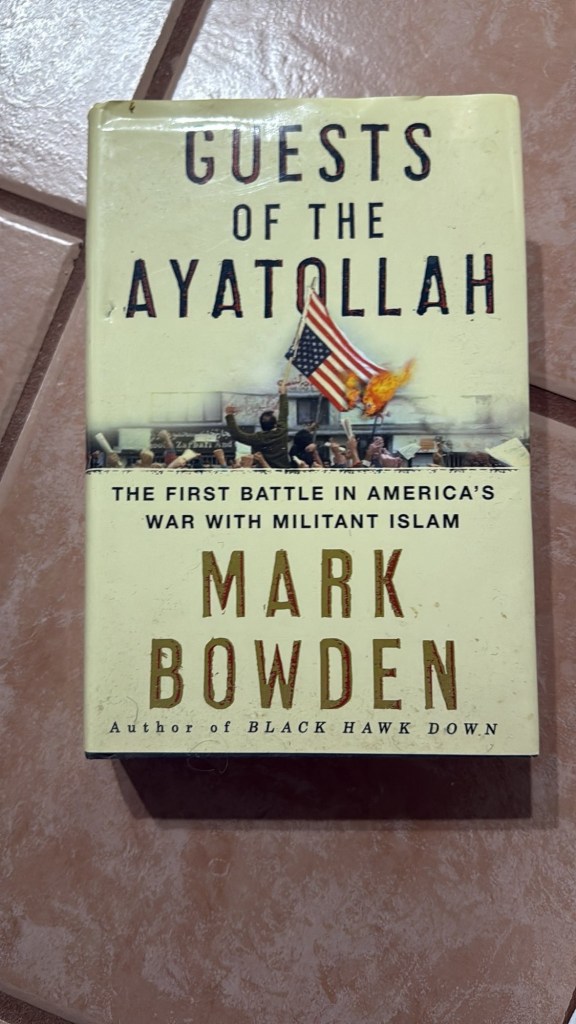
Carter started it.
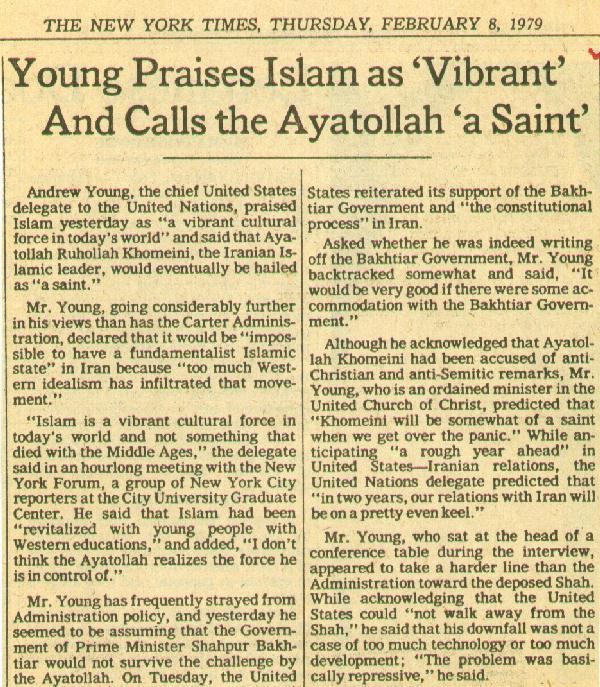
Carter didn’t just watch, he helped the Ayatollah overthrow the Shah.
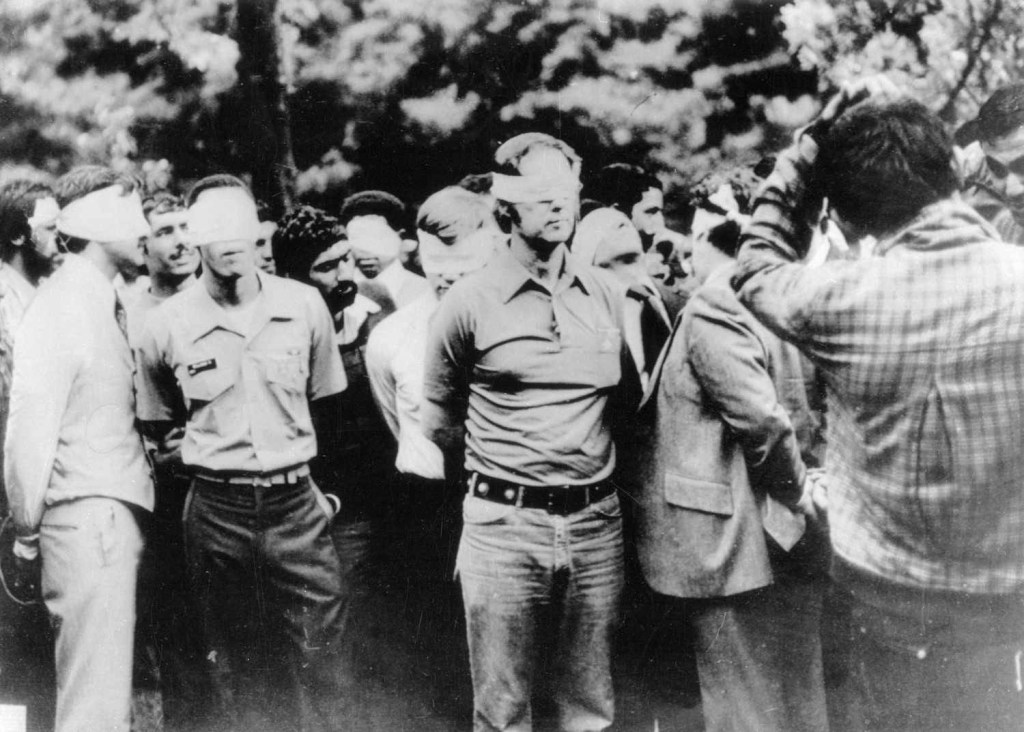
He watched the Islamic Republic take power, watched American diplomats get seized and paraded on television for 444 days, spent the rest of his presidency negotiating with people who had already told us exactly what they were.
Reagan facilitated it.
October 23rd, 1983. A Hezbollah truck bomb funded and directed by Iran killed 241 United States Marines in Beirut while they slept. The deadliest single day for the Marine Corps since Iwo Jima. Reagan’s response? Tehran was heard clearly and never forgotten kill enough Americans at once and America will leave.
That lesson became the operational blueprint for every Iran-backed proxy attack for the next forty years.
Clinton ignored it.
1995 — a car bomb in Riyadh kills five Americans.
1996 — Khobar Towers. A massive truck bomb kills 19 United States Air Force personnel in Saudi Arabia. Nothing.
1998 — Embassy bombings in Africa.
2000 — USS Cole. Seventeen sailors killed. Clinton launched missiles at an empty training camp and an aspirin factory. Eight years. Hundreds of Americans dead or wounded. Zero consequences for Tehran.
Bush handed them the keys.
He called them the Axis of Evil correctly. Then invaded two countries simultaneously and handed Iran the greatest strategic gift in its history. Iranian Quds Force operatives flooded across the border funding, training, and arming the militias killing our soldiers.
And the response was to continue the war while avoiding direct confrontation with the country killing our people.
By the time Bush left office Iran had deeper influence in Iraq than we did.
Obama funded it.
This is where failure becomes unforgivable. The Green Revolution of 2009 where millions of Iranians in the streets begging for American support ignored.
The protesters were crushed. The regime survived. Then came the $150 billion in sanctions relief, sunset clauses that expired within a decade, zero restrictions on ballistic missiles, and zero restrictions on funding proxy terror networks.
Then came the cash. $1.7 billion. On pallets. On an unmarked plane. In the middle of the night. Delivered simultaneously with American hostages.
The regime used the imagery as propaganda for years and used the money to fund Hezbollah, Hamas, the Houthi expansion in Yemen, and the proxy militia networks in Iraq and Syria that spent the next decade killing Americans.
Obama literally funded the apparatus that put the drone into Tower 22.
Biden surrendered to it.
160-plus attacks on American forces from October 2023 forward. American soldiers killed in Jordan. Two Navy SEALs lost at sea intercepting Iranian weapons shipments to the Houthis.
Houthi missiles disrupting global shipping lanes.
Iranian proxies running operations across five countries.
Three Georgia soldiers died in their beds.
Then came Trump.
He looked at forty-five years of this record and did something no president had done since the hostages came home.
He said no.
Maximum pressure. IRGC designated as a foreign terrorist organization. Sanctions reimposed. The JCPOA abandoned. Soleimani the architect of Iranian proxy violence across the entire Middle East, personally responsible for hundreds of American deaths killed in a precision strike in January 2020.
The regime paralyzed.
The proxies recalibrated. The nuclear program set back. For the first time in four decades the regime faced a president it genuinely could not predict.
Then Trump left office. Biden came in. The pressure evaporated. The appeasement resumed. And the regime, patient as it has always been, went back to work.
And now we’re here.
So the next time someone tells you this is Trump’s war tell them they are brainless twats.
This isn’t Trump’s war.
This is forty-five years of American presidents refusing to finish it and one president finally deciding that the bill comes due.
If you are not capable of comprehending that move to Iran and defend the regime personally.
















 Roy F. McCampbell's Blog
Bad Outcome for USA with Mojtana Khamenei Chosen as Supreme Leader of Iran
The US hopes for a diplomatic offramp in Iran are over!
Mojtaba Khamenei the son of former Ayatollah Ali Khamenei has been elected as the Supreme Leader, taking over from temporary Supreme Leader Arafi.
This is bad.
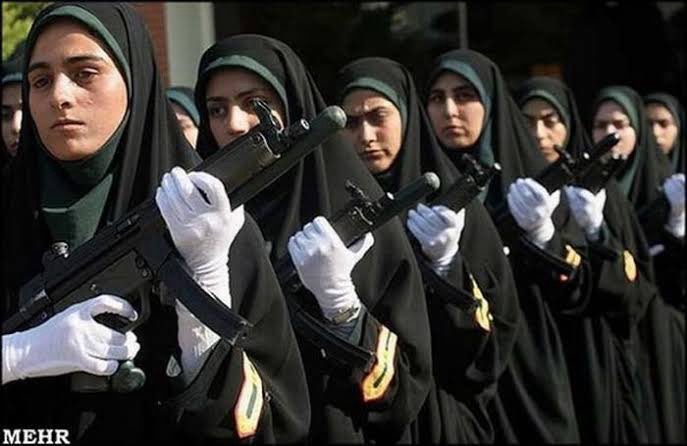
Initially considered dead, Mojtaba is a former member of the IRGC and the Basij, with combat experience in the Iran-Iraq war.
While he is not as extremist conservative as Arafi, he believes in enforcing the regimes beliefs through an iron fist.
Mojtaba was the key figure that leveraged IRGC forces and secret police to crush down 2009 protests against his father’s regime.
These crackdowns were ones where reports included protestors beaten to death, dragged through the streets, hung from public cranes, and where rape was used as a weapon of compliance.
Majtoba strongly believed in his father’s regional ambitions and believed Iran should leverage the Basij paramilitary group, as well as its proxies in Hezbollah and Yemeni Rebels to expand Iranian influence.
He has a deep hatred of America who has been in a long sanctions battle with him.
Unlike other potential Supreme Leaders who would be more ideologically driven in a religious sense, and hands off on the secular, Mojtaba is more likely to consolidate power and control the other branches of Iran like his father did, but by pushing them forward instead of reigning them in.
He is also more likely to push the message of his father as a martyr and frame this as a religious fight for revenge.
Iran’s New Supreme Leader: Mojtaba Khamenei Takes the Throne Under IRGC Pressure
In a move that reeks of dynastic power-grab, Iran’s Assembly of Experts has named Mojtaba Khamenei—son of the late Ayatollah Ali Khamenei—as the Islamic Republic’s next Supreme Leader. The decision, rushed amid ongoing war with Israel and the U.S., came heavy pressure from the powerful Revolutionary Guards (IRGC), according to informed sources.
Mojtaba, a mid-ranking cleric long rumored to pull strings from the shadows, now inherits absolute authority over Iran’s theocracy, military, and nuclear ambitions. His ascent marks a sharp departure from the regime’s anti-monarchical founding principles—ironic for a system born from revolution against hereditary rule.
While some hardliners celebrate continuity and IRGC dominance, critics inside and outside Iran see nepotism fueling instability. The late Khamenei reportedly opposed turning leadership into a family business, favoring non-hereditary figures like judiciary chief Gholam-Hossein Mohseni-Eje’i or Hassan Khomeini (grandson of the revolution’s founder). Yet with key rivals eliminated in recent strikes and the Guards calling the shots, Mojtaba prevailed.
This isn’t stability—it’s a regime doubling down on hardline control at its most vulnerable moment. Expect tighter repression at home and escalated defiance abroad. The mullahs’ grip tightens, but cracks are showing.
The fact the IRGC pushed the clerics in this vote highlights the control they’ve seized in this process, and that they expect Mojtaba Khamenei to uphold his father’s ambition through strength.
The US can expect this fight to expand regionally, and be deeply insurgency focused.
This is one of the worst possible outcomes.
Share this: