
State Representative Emanuel Chris Welch excited to co-chair this amazing event for @The_answerinc. Come walk with us. #autism #theanswer #specialneeds

Autism and Special Needs Walkathon

Posted in Uncategorized
Leave a comment
A Tragedy in London on the Thames
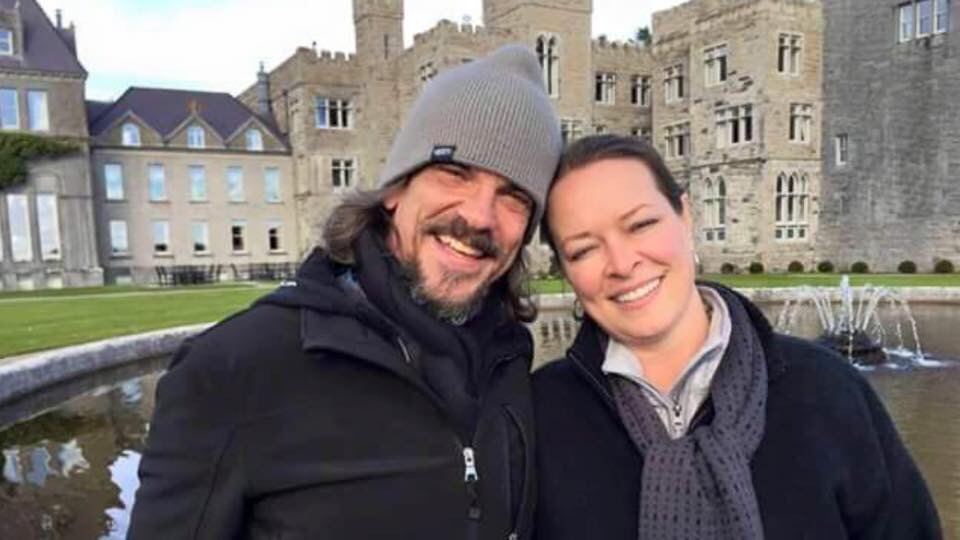 An American from Utah named Kurt Cochran takes his wife on a once in a lifetime trip to the great places of Europe for their 25th wedding anniversary and a piece of “donkey dung” runs them over with his car, on the bridge over the Thames in London.
Kurt died and now his wife Melissa, will forever lose the future they had together, because leftists wish to protect extremists by pretending they are good people.
Extreme Islam has one goal, that is to turn the whole world into pagan worshippers of Allah, which is just another name for Satan.
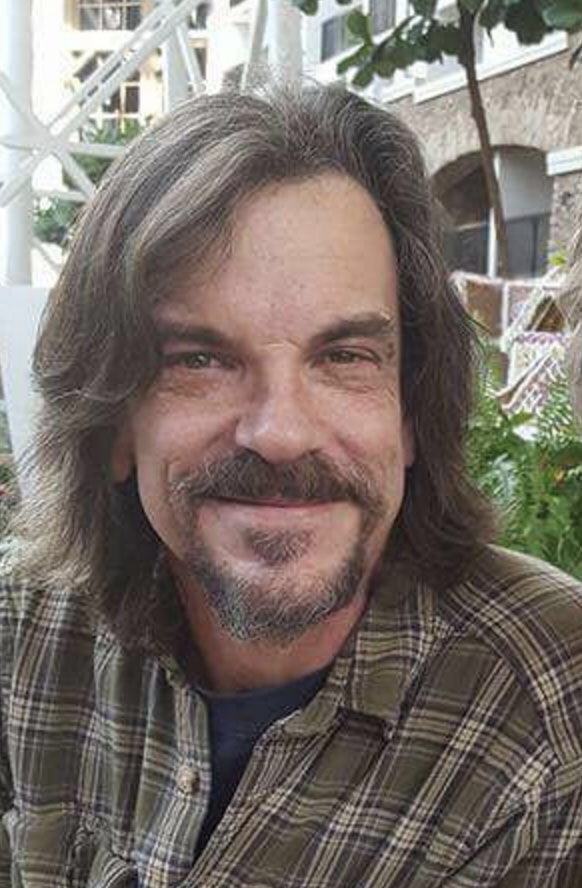
Kurt Cochran
Share this:

Posted in Economy, London, Muslim, politics, Religion, Terrorists, War on Terror
Tagged ISIL, ISIS, London, terror, War on Terror
Leave a comment
Demolition Begins Today at East Leyden’s Dodge Field
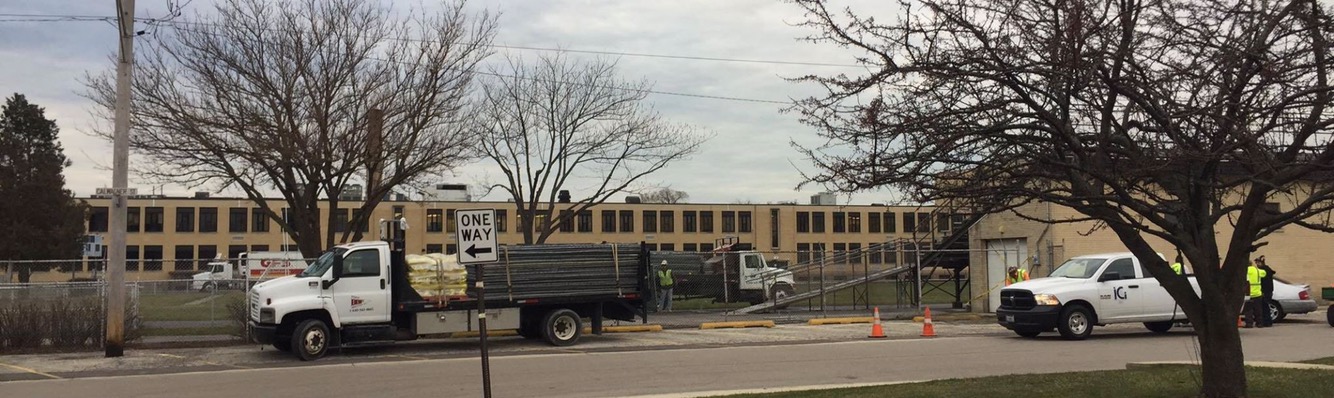 The demolition of Dodge Field began this morning . This is the first step in the construction of a $65 million addition to East Leyden. This construction includes a new expansive pool, a new state of the art cafeteria, new labs, new girls locker room, and a new wrestling room. The music department is getting new practice facilities. Also there will be an employee daycare facility and a Districtwide preK program facility constructed. For the next two years traffic patterns will have detours around East Leyden. The construction should be completed by the Fall of 2019. For many it is the passing of some great memories at Dodge Field.
Share this:

Posted in East Leyden, Education, Franklin Park, Leyden, Schiller Park, schillerparkblog, Social Media, Special Education, Uncategorized
Tagged Dodge Field, East Leyden
Leave a comment
Homeowners Face an Increasingly Unaffordable Burden from Property Taxes
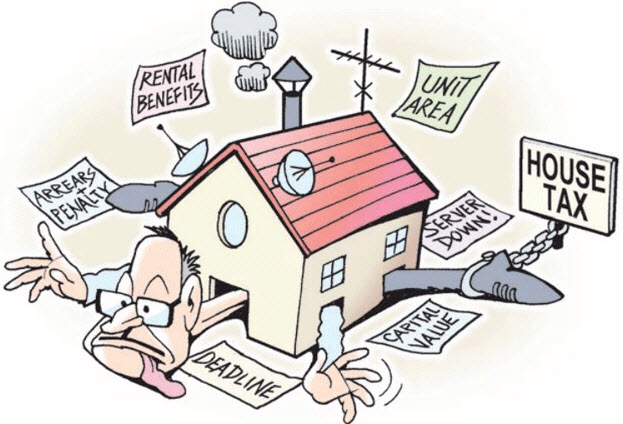
In light of the April 4th elections municipal and school board candidates must address “the elephant in the room” ……… “homeowners facing an increasingly unaffordable burden from property taxes”. Consolidation, would go a long way toward bringing down property-tax costs.
Property taxes are the single largest tax in Illinois, burdening residents far more than either income or sales taxes.
Illinoisans already know they pay high property taxes.
But what is not as well known is that property taxes are outpacing residents’ ability to pay for them.
Over the past 50 years, whether measured in comparison to household income, economic growth, population or inflation, all classes of property taxes – residential, commercial, industrial, etc. – have placed an increasingly unaffordable burden on Illinoisans.
Since 1963, Illinois property taxes have grown 2.5 times faster than inflation and 14 times faster than the state’s population.
And looking at residential property taxes alone since 1990 shows:
• Residential property taxes in Illinois have grown 3.3 times faster than median household incomes.
• Illinoisans’ residential property-tax burden – as a percentage of median household income – has risen 76 percent.
• If Illinois froze its residential property taxes today, it would take 28 years for residents’ property-tax burden to return to 1990 levels.
This long history of growth has resulted in an average effective property-tax rate of 2.32 percent in Illinois – the second highest in the nation, behind only New Jersey.Illinois will be in competition for the highest property taxes in the country.
Property taxes are the single largest tax in Illinois, burdening residents far more than either income or sales taxes.
Illinoisans already know they pay high property taxes.
But what is not as well known is that property taxes are outpacing residents’ ability to pay for them. Over the past 50 years, whether measured in comparison to household income, economic growth, population or inflation, all classes of property taxes – residential, commercial, industrial, etc. – have placed an increasingly unaffordable burden on Illinoisans. Since 1963, Illinois property taxes have grown 2.5 times faster than inflation and 14 times faster than the state’s population.
And looking at residential property taxes alone since 1990 shows:
• Residential property taxes in Illinois have grown 3.3 times faster than median household incomes.
• Illinoisans’ residential property-tax burden – as a percentage of median household income – has risen 76 percent.
• If Illinois froze its residential property taxes today, it would take 28 years for residents’ property-tax burden to return to 1990 levels.
This long history of growth has resulted in an average effective property-tax rate of 2.32 percent in Illinois – the second highest in the nation, behind only New Jersey.2 Illinois will be in competition for the highest property taxes in the country.
Although all property owners (residential, commercial, industrial, etc.) are paying more in property taxes now than they were 20 years ago, even after adjusting for inflation, the overall tax burden has increasingly fallen more heavily on residential property owners. Twenty years ago, residential taxpayers paid 52 percent of all property taxes. Today, they pay over 64 percent.
Thanks to the complex nature of property taxes in Illinois, it’s also difficult for taxpayers to know just where their tax dollars are going.
Property taxes are the main source of income for local governments in Illinois. The state has nearly 7,000 local government districts with the power to levy property taxes, far more than any other state. These local entities, from airport authorities to forest preserves to fire-protection districts, all levy property taxes that are layered on top of each other – making the total property-tax bill for Illinoisans more expensive and more opaque.
However, the biggest driver of property-tax growth throughout Illinois has been property taxes that fund schools, which constituted 63 percent of all property taxes in 2013.
Since 1970, school-related property taxes have grown at the rate of 5.6 percent a year, 25 percent faster than the 4.1 percent average annual growth in inflation.
All areas in Illinois – whether Cook County, the collar counties or downstate – have experienced growth in property taxes in excess of inflation. Individually, almost every county in Illinois has seen a dramatic increase in its property-tax burden since 2000.
And it’s not that property taxes are high in order to keep other forms of taxation low. Overall, Illinois has one of the highest overall tax burdens of any state, meaning that Illinoisans are taxed more heavily across a majority of tax categories than most other Americans. In fact, Illinois has the ninth-highest state and local tax burden per capita and the 13th-highest burden as a percentage of income.
Fixing the problem
Illinois has attempted in the past to control the growth of property taxes, most notably through the 1991 Property Tax Extension Limitation Law, or PTELL. But the law has been largely ineffective in reducing the property-tax burden and has only added one more layer of complexity to an already overly complex, broken property-tax system.
In Illinois, capping the rate of property-tax growth is not enough. The state needs to reduce the property-tax burden for all Illinois residents. Freezing property taxes at current levels would achieve that objective by lowering the tax burden in relation to the economy and household incomes over time.
However, a property-tax freeze would only be a first step. Other reforms, such as reducing the number of taxing districts and creating new transparency and financial-planning requirements would result in greater efficiencies and would also reduce Illinoisans’ overall property-tax burden.
Illinois has experienced massive growth in property taxes over the past several decades. This growth has far exceeded the growth of population, inflation and the economy.
Illinois homeowners face an increasingly unaffordable burden from property taxes. When measured against median household income, Illinoisans’ residential property-tax burden is 76 percent higher in 2013 than it was in 1990.
And the state’s increasingly burdensome property taxes are not due to an attempt to keep other taxes low. Instead, property taxes are just one of the many high taxes Illinoisans face. As a result, Illinois has the ninth-highest state and local tax burden per capita, and the 13th-highest burden as a percentage of income.
Due to the burden that property taxes already place on Illinoisans, the state must take steps beyond just moderating the growth in property taxes, as PTELL attempts to accomplish.
Instead, Illinois should reduce the overall burden of property taxes to make them more affordable for average homeowners and to bring Illinois’ effective rates in line with those of other states.
A universal property-tax freeze would achieve that goal over time.
Additional steps to reduce the burden of property taxes include reducing the number of taxing districts and requiring taxing districts to implement financial plans to deliver services at lower costs.
By consolidating some taxing districts, overhead will be reduced, the number of highly paid executives and staff will be streamlined, and the overall burden borne by taxpayers will become more transparent.
Consolidation, therefore, will go a long way toward bringing down property-tax costs.
In addition, the General Assembly should consider requiring each district that levies property taxes to submit financial and implementation plans regarding how it will operate more efficiently by providing necessary services at lower costs. These plans will help bring greater transparency and accountability to the system.
Share this:

Posted in Uncategorized
Leave a comment
Please Consider Patronizing A Company Owned By A Disabled Person
The founder of this company has Downs Syndrome, in honor of March, being Disability Employment Month, I will be spotlighting some disabled persons company’s. Please consider patronizing.

Share this:

Posted in Uncategorized
Leave a comment
The Importance of Transition for Adolescents with Disabilities And the Role That Your High School District Plays in that Transition
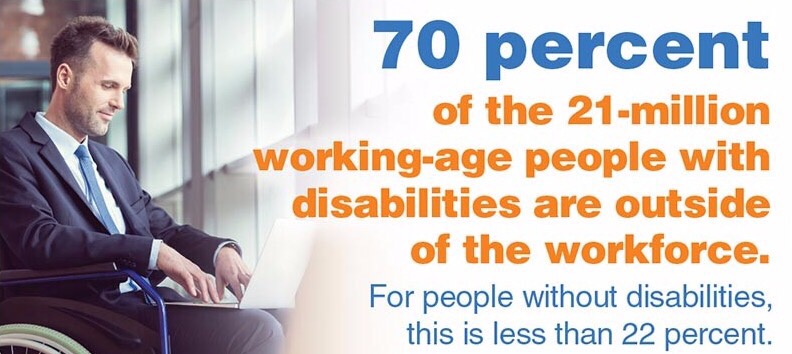
Congress has designated March as a time that businesses recognize the talents that people with disabilities contribute to their communities.
As companies such as AMC Theatres, Walgreens and Microsoft can attest, disabled workers can be a great asset. But only about 20% of Americans with a physical or cognitive disability participate in the traditional workforce and of that group 14% are unemployed—-roughly twice the non disabled rate. New research by Walgreens suggests that this group makes for a particularly stable workforce. A study of its distribution centers by the American Society of Safety Engineers found that workers with disabilities had a turnover rate 48% lower that of the nondisabled population with medical costs 67% lower and time-off expenses 73% lower.
At a time when many workers are unreliable, this is a pool of laborers that get the job done.
It is a great challenge for students with disabilities when they leave school and face adult service systems and programs.
For success the students at ages 14-16 need to have a transition IEP to assist them as the emerge into adulthood to work, live and participate in their community.
All need to understand how the transition relates to the “whole life” for all young people.
The types of transitions that lead to whole life require the involvement of the family, the culture, the appetite to grow and a plan with supports. There is no perfect way to a perfect life, but there are ways to get there. Many require more supports than those without a disability.
The true transition outcome should be real work for real pay. The focus for the disabled has to be on capitalizing on their positive attributes rather than their deficits or problems. This places a heavy burden on high school transition programs where much of the heavy lifting occurs. The high school programs need to have a focus on developing vocational capacity and competency. The goal needs to be that before leaving school a student should be employed in real work for real pay. But that is a tall order for most high school programs that must discharged these students by their 22nd birthday.
In summary, this transition to adulthood includes preparing these young people to live and participate in the community, get around the community, develop financial literacy, cultivate friendships, develop self esteem and a sense of personal identity, as well as learn to engage in fun.
When we consider the needs of those with disabilities we need to look and consider the highs and lows in our own lives. At all times we need to reflect on the need for students to have a community life.
Share this:

Schiller Park Voters Need Answers Before Election Day
When will the candidates for the elective offices for the Village of Schiller Park focus on the voter issues?
We as voters would like to hear the candidates positions on many issues confronting Schiller Park today. We need to know who the candidates are, what they are proposing and what they stand for before we decide who we are voting for on Election Day
These issues include:
Street Re-Paving——What is the plan in the next year ? Next five years? Next ten years ? How will the elected officials prioritize the selection of areas to be repaved ? How can this be accomplished without another tax increase ?
Police Services Upgrades——-What are the plans to replace a 50 year old police station that was obsolete when it was built and occupied in 1967 ? How will this be paid for without a tax increase ?
When will the police department implement and energize a true community based policing program ?
See: https://royfmc.com/2017/01/24/lets-keep-schiller-park-residents-better-informed-regarding-crime/
What are the plans to combat the encroaching crime and gang violence from the City of Chicago ? See https://wordpress.com/post/royfmc.com/3106
Pension Deficits—–What are the plans to fully fund the police and fire pension funds that have multimillion dollar deficits ? How will this debt be erased without increasing the tax burden on the residents ?
Sexton Landfill—–How will the environmental concerns voiced by the residents regarding the landfill be resolved ? How will the elected officials engage the residents input regarding the development of the site ?
Recreation Opportunities—–How will the elected officials engage the middle school and high school students in recreational opportunities in the Village ? Currently there are no programs available for the children between 12 and 18 years of age beyond “open gym” nights at the recreation center. There are no supervised teen dances. What steps would the candidates offer to engage the tweens and teens in Village recreation opportunities ?
TIF Districts Operating in Deficits—–What steps do the candidates propose to ease the burden on the Village taxpayers for subsidizing TIF district that are operating at a deficit ? Other than parking lots and hotels what economic development opportunities do the candidates envision for Schiller Park ?
Regional CoOperation ———-How do the candidates propose that the Village becomes a leader in the region rather than being subjugated to the needs of our economically aggressive neighbor, Rosemont ?
Improve Traffic Safety Throughout the Village ——How do the candidates propose that we make the crossing at Scott and Irving Park Road safer for pedestrians ? Especially children crossing to go to and from the swimming pool ? How do the candidates propose to improve traffic safety around the schools? What steps do the candidates propose to increase parking in the Garden Court-Soreng Avenue town house area ? See: https://royfmc.com/2017/02/02/pedestrians-safety-is-in-jeopardy-at-scott-and-irving-in-schiller-park/
Airport Noise——What are the candidates proposing to do to pursue a more extensive sound proofing program and secure better craftsmanship on the work being done ?
Ornamental Street Lighting—-What are the views of the candidates to modernize the street lighting and light up the neighborhoods rather than have a rural lighting system ?
Ethics Legislation ——-Why haven’t the elected officials proposed and acted on an ordinance to ban the hiring of relatives ? Or are statements being made just lip service and it will be business as usual after the election ? Why haven’t the elected officials agreed upon and enacted term limits on the elective offices in Schiller Park ? OR do some of the candidates not support the banning of the hiring of relatives or not support term limits ? The voters need to know the positions that these candidates are taking on ethical opportunities that the elected officials should consider.
Infrastructure Rehabilitation and Maintenance –———-What is the short term and long term plans for upgrading and maintaining our water mains and sewer mains ? What are the candidates positions on the adoption of capital plans ? How are they proposing to fund such capital planning ?
Irving Park and Lawrence Avenue Viaducts——-What are the long term and short term goals regarding the viaducts ? What are the candidates advocating to improve the physical condition and aesthetics of these structures ?
Business Outreach ———-What are the visions of the candidates in regards to attracting new businesses and reaching out to existing businesses ? What dialogue to the candidates see as necessary to encourage existing businesses to assist in the recruitment of other businesses ? What are the sentiments of the candidates in attracting additional retail for the Village ? Do the candidates see the future of the Village to be in retail, or manufacturing or parking lots or entertainment or warehousing ?
Cook County Minimum Wage Ordinance—Where do the candidates stand on exempting the Village of Schiller Park from the Cook County Minimum Wage Ordinance ? See https://wordpress.com/post/royfmc.com/2961
These are the types of discussion that the voters thirst for from the candidates. It is less than four weeks before election day and two weeks before early voting, and yet we do not know the positions or platforms of the respective candidates.
Lets engage in some meaningful dialog to assist the voters in getting to know the candidates, so that the voters can vote for the candidates that embrace their vision and ideals for the Village. The voters need to realize that they are voting for persons who will be making decisions in their behalf that affect the quality of their lives and that of their children. Not only the quality of life, but also their future costs as taxpayers. The voters should not take this decision on April 4th lightly and neither should the candidates. This is not about someone’s ego, it is about the future of the Village.
Let’s all engage from this day forward in a meaningful dialog, share our positions and vote our choice knowledgeably on April 4th.
Share this:

Budget Battle Continues in Springfield
You’ll recall that the governor campaigned on the idea of raising the income tax a bit (he never really said by how much) and then rolling it all the way back to 3 percent by the end of his first term. Those 2014 hopes of his are now completely dashed, but this shows you how far Cullerton was prepared to go this week. After all, the temporary nature of the 2011 income tax hike is what put Illinois into this current disaster. Do we really want to go through that again in five years?
The Republicans counter that Gov. Quinn’s biggest mistake was that he didn’t reduce spending by enough to deal with the rollback from 5 to 3.75 percent on January 1, 2015. They’re absolutely right about that. The Democrats did cut some spending, but not nearly enough. They just figured they’d either win again or that the newbie Rauner would be a pushover.
Share this:

Posted in Chicago, Economy, Education, Elections, gambling, Illinois Pensions, News, politics, Taxation
Tagged General Assembly, Governor Rauner, income tax
Leave a comment


 Roy F. McCampbell's Blog
A Memory of an Election Past
As the normal acrimony builds in suburban elections in the western suburbs of Chicago, as we approach the April 4, 2017, local government elections where there are contested seats, it brings back memories of an election in Schiller Park in November, 1985.
(ABOVE) This is a Chicago Tribune article from November of 1985, when it was election season in Schiller Park #schillerpark #royfmccampbell #schillerparkelection #schooldistrict81

(ABOVE) This is a Sun-Times article from November of 1985, when it was election season in Schiller Park #schillerpark #royfmccampbell #schillerparkelection #schooldistrict81
Share this: