School Shootings Reveal Gaps in Our Mental Health System, Where Do We Go From Here ? We have to shift from a strategy of trying to find the bad guys and neutralize them to a framework of identifying what the core dilemma is, and what we can do on behalf of the many, many individuals who grow up with only a tenuous connection to other people and find themselves confused by and disconnected from their own emotions.


After Adam Lanza burst into Sandy Hook Elementary School and gunned down 20 students and six educators, Connecticut’s Office of the Child Advocate tapped Julian Ford to help make sense of the shooting. A professor of psychiatry at the University of Connecticut School of Medicine and a practicing psychologist for 35 years, Ford served on an expert panel that conducted a detailed review of Lanza’s brief life to look for “any warning signs, red flags, or other lessons that could be learned.”
The resulting report painted a picture of an odd, sensitive child with significant communication difficulties who became an anxious and withdrawn adolescent. By the time he became a young adult, he was depressed and profoundly isolated, connecting only with his mother, online games and websites that trafficked in extreme violence.
At every turn, the report saw missed opportunities to treat Lanza’s multiple interpersonal and mental health difficulties — he had been diagnosed with autism spectrum disorder, obsessive-compulsive disorder and severe anxiety — and to draw him out of his profound isolation. After years of having fallen through the cracks, Lanza’s shooting rampage on Dec. 14, 2012, underscores the need to “identify and assess youth from a very young age, the importance of effective mental health and educational service delivery, and the necessity of cross-system communication amongst professionals charged with the care of children,” the report concluded.

img_5906


There is now an emerging picture occurring showing parallels between  Nikolas Cruz, the confessed gunman who shot and killed 17 people at Marjory Stoneman Douglas High School in Parkland, Fla., on Feb. 14 and his similarities to Adam Lanza.
Each case and each individual is unique, of course. But what struck me is both were extremely isolated young men who didn’t feel they fit in, and felt a profound sense of alienation from virtually all human relationships.
That kind of isolation — that sense of not fitting in with a peer group — in no way accounts for an act of violence. But it is very seriously problematic. As that isolated young child becomes a young adult, he is not going to be able to recognize the impact of actions he might take or understand how they might hurt others — from words or small gestures to large, much more consequential actions.
Cruz is reported to have put a swastika on his backpack, a gesture his mother said he did not understand. Lanza was judged by a Yale psychiatrist to require intensive help “using communication that is appropriate to setting, listener, context, or purpose.”
In both cases, this is about not getting other people’s perspectives and the fact they might see things differently. That includes not understanding that their actions or the symbols they wield might be hurtful.
One issue for both these young men seems to be a kind of emotional numbness. We certainly associate that with several psychiatric disorders, such as post-traumatic stress disorder. But it can happen to people who simply are not really tuned into their own or other peoples’ emotions.
Emotional literacy or intelligence is really very crucial for young adults. They have to be able to recognize that other people can feel injured, can have other perspectives, even when they don’t feel it’s warranted. That perspective-taking, or empathy, is lacking in Cruz or Lanza. It’s a very serious psychological and emotional impairment.

The common denominator is the detachment, the isolation, the emotional disconnection. That’s a challenge for every teen transitioning into adulthood, and most kids make that successfully because they’re either able to figure out for themselves or they have adults in their lives who can help them learn to connect. But some parents or caregivers, even thoughtful and caring ones, don’t know what to do to help a child to fit in. We really, as a society, need to think carefully about how we help parents in that predicament.

The online world plays a role in the process,

It’s a blessing and a curse.
Online media provides a wealth of opportunities to interact and connect. But they do not provide the basis for personal relationships. Most adolescents and young adults come to recognize there’s a fundamental difference between going online and actually having a close personal relationship. But for kids who are not fitting in, that’s a very attractive alternative: You can hide or disguise who you are and what you’re thinking.
Adam Lanza became drawn into online communities that were very toxic. He appeared to be trying to substitute those virtual interactions for actual personal connections.
While we’re still learning about the situation with Nikolas Cruz, it’s quite possible that he, too, was trying to find some sense of personal connection through social media, but instead found encouragement for hate and even violence.
Both kids appear to have had identifiable mental health problems. How is it that they seemed to fall through every crack?
We all need to think about what are we asking of the mental health system. The mandate to providers is to help individuals and families when they’re having acute psychological problems, and to help individuals with more long-term persistent problems — such as schizophrenia, bipolar disorder or chronic severe depression — to maximize their quality of life and their safety.
But in between those acute crises and chronic psychiatric disorders, there are many individuals who go through their childhood and adolescence feeling disconnected from person-to-person relationships, or essentially have no meaningful personal relationships. Conventional mental health treatment is really not designed to address this.
There’s this big gap, and that crack is where these young men seem to have fallen through.
It sounds like there could be a lot more kids like them.
There are a lot of people like them who are suffering and need help. They may be recognized as having problems, as was the case with both Lanza and Cruz, but are able to maintain just enough of the appearance of fitting in to be viewed as needing social or educational accommodations, but not therapeutic help. Their parents often make heroic attempts to help them “get by,” while either not recognizing the severity of their child’s problems (as appeared to be the case with Mrs. Lanza) or feeling helpless and becoming detached emotionally from their child (as appeared to be the case with Mr. Lanza).
Although these young adults often are described as having a personality disorder, in most cases this is not fundamentally a problem of personality, but of social communication, emotion regulation, information processing, decision-making and problem-solving. Their personalities have not fully formed as a result of those difficulties. Other people tend to feel uncomfortable and unable to connect with them. That results in a vicious cycle in which their difficulties push away the very people from whom they need connection.
The mental health system is not really funded or mandated to help people who are profoundly disconnected but essentially not intensely symptomatic. So they’re easily missed.
Still, they are struggling, and the people in their lives often don’t know how to get them on track. They tend to be the wheel that’s not squeaky enough. And in very rare cases, the outcome is violence.
Cruz’s public defender described him as a “broken human being.”

Do we see Cruz and Lanza as broken?
When people struggle because they do not relate to other people, or when people find them difficult to get along with, those individuals typically get labeled as “broken” — or technically, with having personality disorders. I don’t think it’s helpful. It’s very stigmatizing. It leads others to conclude they have a disorder they can never recover from.
The common denominator is not that they have a broken personality, but they have been unable to master how to relate to other people, especially when other people do things they don’t understand or find hurtful. And that’s a person who’s likely to be viewed as odd and shunned or bullied, and as a result to withdraw or occasionally to lash out.
Both of these young men relied on their mothers to buffer them from the world. But Lanza’s mother was considering a move that would have taken him away from his childhood home, and Cruz’s mother died in November. How might loss, or the prospect of it, affect troubled young adults?
There is a definite parallel here. Both of these young men had very important relationships with their mothers. When their mothers were no longer present or were less able to provide the kind of balance and support both young men clearly needed, their connection to the rest of society — to other human beings — is frayed or even lost.
It’s not all about mothers. It can be a father, a teacher, a coach. But if there’s only one relationship, and that relationship has to fulfill all those needs, that puts a kid at risk. No caregiver can alone be the connector to the rest of humanity, and no caregiving relationship can last forever.
Had we known much of what we have learned about Lanza, could we have predicted he was capable of such violence?
I absolutely would not have predicted he’d have been capable of such extreme violence, and people who knew him well and who have studied prediction of violence much more than I have say there was no way they could have predicted it.
What we could predict is that he was going to struggle with conflict and isolation and withdrawal. And that as that struggle became more profound and exhausting, he would break down in some way.
So what could have been done differently?
One thing that increases the likelihood an Adam Lanza or a Nikolas Cruz will act on violent impulses is access to weapons that make that possible.

And secondarily, involvement in groups — whether on the internet or any other forum — that strongly endorse violence as a solution to problems.


When you have the combination of those two things, in a person who’s confused, who has difficulty feeling empathy toward others, and who feels hurt and aggrieved by others, that individual may then decide the solution is to be the person who has the power, and be the one who takes action. He may conclude that violence is the only solution.
Fortunately, in most cases, people who have come to that extreme juncture don’t have the access to weapons, or there are people or institutions that intervene to help them.
But unfortunately, it’s impossible for any of us to predict who is going to go from being troubled and isolated to actually harming others.
We  really  can’t rely on prediction and identifying the bad guys. Because we’ll misidentify some who aren’t bad guys, and we’ll fail to identify others who may become bad guys.
We have to shift from a strategy of trying to find the bad guys and neutralize them to a framework of identifying what the core dilemma is, and what we can do on behalf of the many, many individuals who grow up with only a tenuous connection to other people and find themselves confused by and disconnected from their own emotions. Most of these people will never be violent. But they deserve and require some additional assistance beyond that which is now available.



Posted in Uncategorized | Leave a comment

Music Programs Have Great Value for Norridge School District 80 Students, But Someone Has To Pay For Them !!!


“Public School Cuts Music Programs; Teachers Lose Jobs”

“High School Music Program Slashed”

“Budget Cuts Affect Music and Arts”

We see those headlines in the news all the time.

Now we are seeing such headlines in the local Pioneer Press with regards to Norridge School District 80: ‘”One of the saddest, most depressing moments’: Norridge District 80 board votes to eliminate band program”

http://www.chicagotribune.com/suburbs/norridge/news/ct-nhh-district-80-to-cut-band-tl-0222-20180215-story.html

Now everyone needs to come together and stop pointing fingers and blaming others. Everyone needs to take ownership of the solutions.     There are  NO other options or avenues. All actions that have been  taken by the School District 80 Board of Education  1) Grade Centers 2) teachers lost their jobs 3) sports fee 3) Kindergarten tuition for all day 4) larger class sizes;   these actions are  not the boards fault.

The Norridge School District 80 Board of Education has demonstrated great leadership and a forward approach to addressing the educational needs of the community while working under an extreme financial restraint. The Norridge community needs to thank the SD 80 Board members for their service, and their honesty and selfless decision making efforts.

Would’ve……………could’ve ………………..should’ve…………………..are all too late NOW.

NOW everyone needs to work together.

It has been disheartening to many because of the lack of present band parent support.

https://www.facebook.com/Save-the-District-80-Band-Program-539216289782270/

Go to this page and ask your friends, relatives and neighbors to show their support by donating to this worthy program :

https://www.youcaring.com/norridgeschooldistrict80bandprogram-1110480

“Heading in to the vote, board members had backed a proposal agreeing to keep the band program going if a minimum of 125 students would pay a fee of $650 to keep the program running three years before being phased out, or if they would pay $800 with participation of 150 students to keep it running as is.

Community response fell far under those figures. In a paper survey distributed by district band director Chris Bucaro and Giles Principal Stephanie Palmer to all fifth-, sixth-, and seventh-grade band students, 44.7 percent of those surveyed said yes to the $650, and 15.8 percent said yes to the full $800, and 39.5 percent said no to any additional fee, according to the results tabulated Feb. 13.

Attendance has been sparse at community meetings called by parents to look into fundraising to save the program. Board member Pasquale Biondo, who has had three children in the district band program, was one of a handful of parents to show up at a meeting at Eisenhower Public Library on Feb. 12.

So far, “we’re limited, in what we (board members) can do,” he told community members, “and without help and support, we’ve been alone.”

“We need more parents to stand up and be involved,” he added.”

The community has failed to support Norridge SD 80 during their multiple efforts to pass a referendum and now the parents and community have failed to step up and assist the Board of Education in saving the band program.

Now the question must be asked, Does the Norridge community care about quality education and a great band program ?

The answer appears to be a deafening “NO” !!!

During every budget cycle, teachers, parents, and music advocates hold their collective breaths hoping cuts will not come down on their programs.  This is because music and the arts are often at the top of the “cut list” — but why is this?  Board of Education members aren’t necessarily “music haters”, and community members (at least on the surface) don’t want to see music leave the school curriculum.  But the cuts keep on coming year after year, and some feel powerless to stop them.

My grammar school band director and my mother, who taught music, laid my music foundation, developed my instrumental skills, and enriched my appreciation of the arts.

My high school band instructor, helped me through my high school career by motivating me, inspiring me, and believing in me, as he did for every student. A music teacher is more than an instructor; they are a friend, mentor, and role model. Music education helps students connect with adults, such as their teachers, better, and help them create a strong connection. This connection corresponds to academics, willingness to participate in school, and the work force. Sharing a bond with an instructor can encourage the student to want to come to school, learn, and participate.

Nevertheless, the cuts are wrong and in many cases are not in the best interest of the systems and the children they serve.  When it comes to budget cuts, schools in other countries and great districts in our country do not cut the arts first.

Here are a few of the main reasons why music is cut from school each year, and some thoughts about how they can be avoided:

Many may argue that school leaders are not innovative.  Here we are in the 21st century, yet our education system is built on a 19th century model: the idea of academic ability and that the “most useful subjects” that can “get you a job or into college” are at the top of some educational hierarchy.  Academic ability — not the capacity for creative thought — still dominates our view of intelligence and therefore our school budget priorities.  But as our continued poor academic standing in the world has shown, this way does not work.  As far as a creative approach to education is concerned, however, I truly believe the pendulum is about to swing the other way.  The age of hyper-standardized testing will soon come to a halt, and there will be a push for more arts instruction in schools.  Until that day, we all need to continue to remind school leaders that if they are going to push for innovation in school curricula, they need to put their trust into the arts to fulfill that mission.

Cutting music instruction will negatively affect the creativity of our next generation’s leaders, so now is the time for parents to be arts advocates– not only in our schools, but in our communities and in the press as well. Parents should be aware of local and federal timing issues, such as when school budgets are planned and when elections take place.  They should always feel free to contact the media in thoughtful response to budget cuts to the arts and follow up with timely letters to administrators with thoughts and concerns.

In the past few years, many Districts have  been struggling to sustain music programs in schools. Some superintendents and school boards cut music programs because some schools have weak programs, along with a lack of support from parents, which makes music an easy target, especially when budgets are tight.

Unfortunately, much of society is unaware of just how beneficial music is to every student in the program, both socially and developmentally.

Short-sighted budget “fixes”.  Many do not realize that strengthening and improving in-school music programs can actually save money.  In my experience, the first administrative quick-fix for budget issues has been reducing or eliminating music programs. However, music classes usually have high student-teacher ratios, so cutting music programs may actually have negative budget implications over the longer term.  Basically, a cut to an instrumental music teacher may result in two or more teachers needing to be hired later to provide elective classes with low student-teacher ratios.  The cuts end up being short-sighted — and bringing back a music program once it is cut is very rare and incredibly difficult to do.

The intangible and tangible benefits of music education will never appear in the sterile data represented by tests scores.  “Right brained”, creative people will be the next leaders and innovators in our country, and public school was created to foster these young brains. Cutting music instruction will negatively affect the creativity of our next generation’s leaders, so now is the time for parents to be arts advocates– not only in our schools, but in our communities and in the press as well. Parents should be aware of local and federal timing issues, such as when school budgets are planned and when elections take place.  They should always feel free to contact the media in thoughtful response to budget cuts to the arts and follow up with timely letters to administrators with thoughts and concerns.

Music is one of the most impressive and beautiful achievements of the human race and deserves a permanent place in education.  The intellectual growth and happiness of our children depend on it.

The recent budget cuts involving Band in Norridge SD 80 will negatively affect their student’s advancement in education.

The importance of music education on children is grossly over- looked by public school systems. When the school board does not take into consideration that music benefits a child academically as well as in greater society, they lose the foundation to a student’s well-rounded future. Test scores show it, attitude and cooperation show it, and the work force shows it–music education affects not only a child’s scholastic career, but also his or her future. It is wrong to take funds away from public school music programs; however, it is more wrong to be taking away funds for education as a whole.

Funds taken out of music education as well as general education will only negatively affect a child’s life as well as Norridge’s future as a Village. A child’s education is like a seed, when it is planted, it can grow. If the government takes away this seed, Norridge will not grow.

Nelson Mandela once said, “Education is the most powerful weapon which you can use to change the world,” and that is the weapon every child should own.

Posted in Illinois, LASEC, Leyden, Leyden Area Special Education CoOp, News, Norridge, Norridge School D80, politics, Rauner, Social Media, Taxation | Tagged , , , , , , , , , , , , , , | 1 Comment

People are Dying Due to this Pollyanish Outlook


Here is the response of the Cook County Board President and Chief Judge to the Sheriff’s concerns about the low bonds or no cash bonds given to gun offenders in the county.

Particularly offensive is the following comment by Chief Judge Evans’ spokesman, “The types of cases addressed by Sheriff Dart (in his letter) are gun cases — but they are gun cases in which nobody was shot or killed,” Milhizer said. “That means the charge is not an inherently violent charge,” he said.

It’s easy to talk like that when you sit in a government office building, where metal detectors screen everyone entering the building, and you’re surrounded by dozens of armed officers.

How can anyone in their right mind say that a criminal carrying a gun is not “inherently violent?” Criminals carry guns for two reasons: either to rob someone or shoot someone. But then again, I’ve never seen any of these people chase an armed offender down a dark alley at 0330 or being the first one through the door on a search

Right, a CRIMINAL carrying a gun is just going for a stroll in the park, so if this criminal gets caught carrying a gun but was not commiting a crime at that time gets to redeem his “GET OUT OF JAIL FREE” card given to him by Precwinkle and Evans, neither who have ever confronted a person carrying a gun or been victimized. I say this all the time, that the police don’t need to worry about good people carry guns. Cook County is a joke. These leaders should be managers of a Wal-Mart store.

Read the response at this link :

https://www-chicagotribune-com.cdn.ampproject.org/c/www.chicagotribune.com/news/local/breaking/ct-met-gun-suspects-bond-court-preckwinkle-20180226-story,amp.html

Posted in Chicago, Crime, domestic violence, Elections, Finance, foia, gambling, gangs, gun control, IEP, Illinois, illinois politics, Latin Kings, legal services, Leyden, mental health, murder, News, political satire, politics, Rauner, Roy F. McCampbell, School Incident Reporting System, Social Media | Tagged , , , , , , , , , , , | Leave a comment

Trump Directive Spurs Proposal To Delay IDEA Rule


The Trump administration is officially proceeding with plans to delay an Obama-era rule that aimed to ensure students from certain backgrounds aren’t wrongly placed in special education.

The U.S. Department of Education is issuing a notice in the Federal Register on Tuesday proposing a two-year delay of the so-called “significant disproportionality” rule, which was finalized in the closing weeks of the Obama administration.

The Individuals with Disabilities Education Act requires states to flag school districts with high rates of students from particular racial or ethnic groups identified as having disabilities, placed in restrictive settings or subjected to discipline.

For the complete story go to : https://twitter.com/surviving_sped/status/968808789049794561?s=21

Posted in Autism, Chicago, Disability Employment Month, Education, Employing Disabled, IEP, Illinois, language, LASEC, Leyden Area Special Education CoOp, Medical, mental health, political satire, politics, Social Media, Special Education | Tagged , , , , , , , , , , , , , , , , , , , , , , , , , , , , , , , | Leave a comment

No one could describe the color ‘blue’ until modern times


This isn’t another story about that dress, or at least, not really.

It’s about the way that humans see the world and how until we have a way to describe something, even something so fundamental as a color, we may not even notice that it’s there.

Until relatively recently in human history, “blue” didn’t exist, not in the way we think of it.

As the delightful Radiolab episode “Colors” describes, ancient languages didn’t have a word for blue — not Greek, not Chinese, not Japanese, not Hebrew. And without a word for the color, there is evidence that they may not have seen it at all.

How we realized blue was missing

In “The Odyssey,” Homer famously describes the “wine-dark sea.” But why “wine-dark” and not deep blue or green?

http://www.businessinsider.com/what-is-blue-and-how-do-we-see-color-2015-2

Posted in color, Entertainment, language, politics, Social Media | Tagged , , , , , , , | Leave a comment

Join Us at the Northwest Side Irish Parade on March 11, 2018


Posted in Edison Park, Entertainment, News, northwest side irish parade, politics, Roy F. McCampbell, Social Media, Special Education, Uncategorized | Tagged , , , , , , , , , | Leave a comment

New Horizon Center’s 11th Annual Pre-St. Patty’s Day Charity Pub Crawl


Join us at the 11th Annual St Patty’s Day Pub Tour! #edisonpark #stpattysday #chicago #fundraiser #supportautism

Posted in Autism, Chicago, Edison Park, mental health, new horizon center, Roy F. McCampbell, Social Media, Special Education | Tagged , , , , , , , , , , , , , , , , , , , , | Leave a comment

Experts warn not to link autism to violence after Florida shooting 


Autism experts are cautioning against linking the spectrum disorder to violence in the wake of the Parkland, Florida, shooting that killed 17.

Several news media outlets included in their coverage of the attack that alleged shooter Nikolas Cruz, 19, had autism, but autism advocacy groups have been quick to say that the two aren’t related.

“A massive shooting happens, and it’s a senseless act of violence,” said Dr. Karoly Mirnics, director of the Munroe-Meyer Institute for Genetics and Rehabilitation at the University of Nebraska Medical Center. “As you are searching for answers, you start to notice differences.” If you haven’t interacted with people on the autism spectrum, you might jump to conclusions, the doctor said. 

For more see:

http://www.omaha.com/livewellnebraska/health/experts-warn-not-to-link-autism-to-violence-after-florida/article_e9a2f052-b14f-598c-bd49-0a64ef8589bd.html?utm_medium=social&utm_source=twitter&utm_campaign=user-share

Posted in Autism, Crime, Education, gun control, mental health, News, politics, School Incident Reporting System, Social Media, Special Education | Tagged , , , , , , , , | Leave a comment

E-Cigarette Endangers Public Health


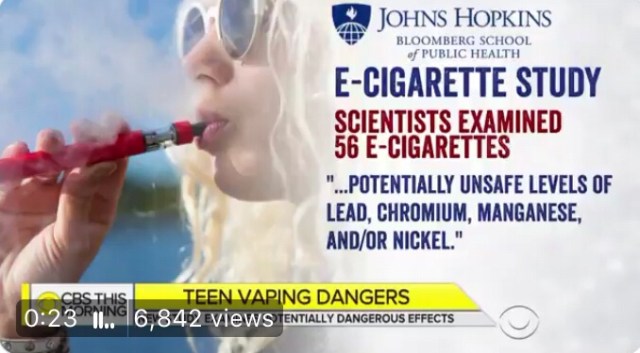
A new study found e-cigarettes can potentially release significant amounts of toxic metals in its vapors, which users inhale. Scientists discovered a number of them released vapors with potentially unsafe levels of lead, chromium, manganese, and more

https://hub.jhu.edu/2017/02/17/e-cigarettes-contain-toxic-metals/


cbsn.ws/2EXeKca

Posted in #leydenpride, cancer, e cigarettes, Health, johns hopkins, mental health, Social Media, vaping | Tagged , , , , , , , , , | Leave a comment

Democrats’ Rebuttal of Nunes’ Memo


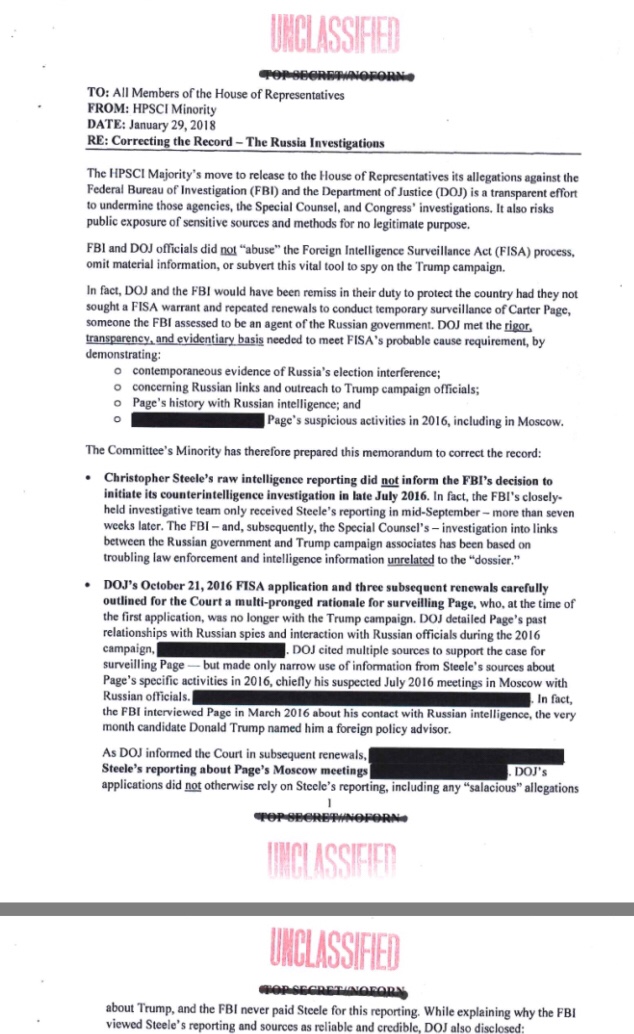
Democrats released a redacted memo over the weekend rebutting Republican claims of surveillance abuse. Read it here.

assets.documentcloud.org/documents/4387027/Democratic-Memo.pdf

Posted in Crime, FISA Court, gun control, illinois politics, politics, senator durbin, USCongress, War on Terror | Tagged , , , , , | Leave a comment