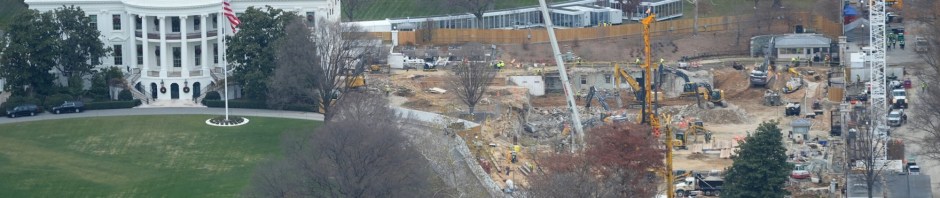
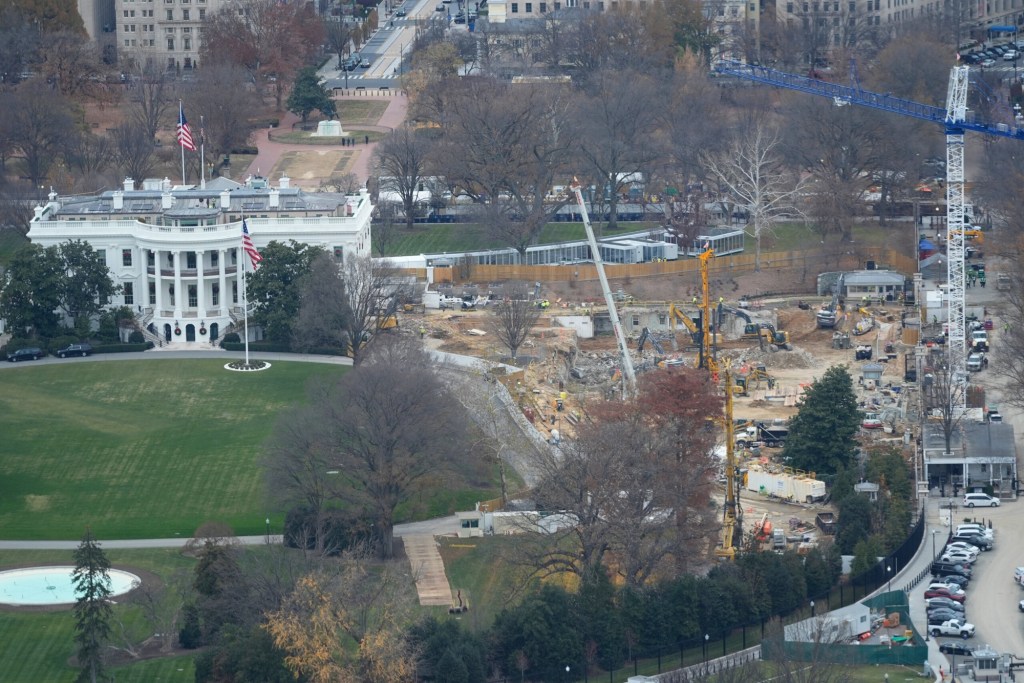
For all the non-lawyers in the room, here is what happened today at the Supreme Court and why President Trump is allowed to continue building the new White House ballroom.
Every law student learns fairly early that there is generally no such thing as taxpayer standing. Just because you don’t like how the federal government is spending your tax dollars does not mean you have the right to sue the government over that spending.
There is a broader principle behind that rule that is important to understanding today’s decision: You do not get to sue the federal government simply because you believe the federal government is doing something wrong.
As a general rule, the government cannot be sued unless it has permitted the lawsuit. And even when Congress has created a way to sue the government, you still have to satisfy the Constitution’s requirements for bringing a case in federal court. One of those requirements is called “standing.”
In plain English, standing asks a very simple question: What did the government do to you?
It is not enough to say, “The government is breaking the law.”
It is not enough to say, “I don’t like what the government is doing.”
And it is not enough to say, “I am a citizen and I want a federal judge to make the government stop.”
You generally have to show that what the government is doing is causing you a real and particularized injury.
That principle controlled today’s Supreme Court decision.
The National Trust for Historic Preservation sued to stop President Trump from constructing the new White House ballroom. But an organization needs someone with standing to bring that challenge. The Trust relied on one of its members, a woman who lives in Washington, D.C., and expects to visit the neighborhood around the White House about once a month.
Her claimed injury was essentially this: She is interested in historic architecture, she likes looking at the White House as it traditionally appears, and when the new ballroom is completed she is not going to like looking at it.
That was not enough.
The Supreme Court held that mere “offense, disagreement, or distaste” over what the government is doing is not the kind of concrete and particularized injury that gives someone standing to sue.
And this is the part of today’s decision that I suspect will be misunderstood.
The Supreme Court did not rule that President Trump has the legal authority to build the ballroom.
The Court expressly said:
“Today, we do not pass upon the legality of the government’s East Wing project.”
That is an incredibly important distinction.
The question of whether President Trump has the legal authority to build the ballroom is one question.
The question of whether this particular person has the right to walk into federal court and ask a judge to stop him is another question entirely.
Today, the Supreme Court decided the second question, not the first.
The woman simply did not have standing to sue.
And there is a good reason standing matters.
If merely believing that the President is acting illegally were enough to sue, virtually every controversial action taken by every President could immediately become a federal lawsuit brought by virtually anyone who disagreed with it.
That is not how our constitutional system works.
We live in a constitutional republic with three branches of government. The President is not above the law, but federal judges are not general supervisors of the Executive Branch either. Courts decide actual cases brought by people who have the legal right to bring them.
Congress is not powerless here. Quite the opposite. Congress controls federal spending, legislates concerning federal property and the District of Columbia, conducts oversight, and can enact laws restricting what the President may do.
If Congress believes President Trump has exceeded his authority, Congress has constitutional tools available to do something about it.
And if someone who actually has Article III standing brings the proper lawsuit, the courts may ultimately decide whether the President has the legal authority to build the ballroom.
But that was not the case before the Supreme Court today.
Today the Court decided something much simpler:
You don’t get to stop the President in federal court just because you don’t like what he is doing. You first have to show why you have the legal right to be the person asking the court to stop him.
This plaintiff couldn’t do that.
And that is why construction of the White House ballroom can continue.


