Illinois is considering a universal statewide bag tax, but a proposed bill (HB5112) seeks to introduce a
10-cent fee on all carryout bags starting Jan. 1, 2027, rising to 25 cents by 2030. Currently, taxes exist in specific locations, such as Chicago ($0.10, rising to $0.15 in 2026), Evanston, and Edwardsville.
Proposed Statewide Bag Tax (HB5112 – 2026 Session)
- Proposed Timeline: 10¢ in 2027, 15¢ in 2028, 20¢ in 2029, and 25¢ in 2030.
- Scope: Applies to paper, plastic, and reusable bags at most retail/grocery stores.
- Exemptions: SNAP purchases, produce bags, and pharmacy bags.
- Goal: To reduce plastic bag usage by 90%.
Existing Local Bag Taxes (As of 2026)
- Chicago: A 15-cent fee is imposed on each bag, with 1 cent kept by the retailer.
- Northbrook: A 10-cent tax on single-use bags, with 5 cents retained by the business.
- Other Municipalities: Various towns have enacted similar $0.10 fees, such as Edwardsville.
The proposed statewide legislation also aims to ban plastic bags entirely at some retail locations, focusing on driving the use of reusable, compliant paper, or higher-quality bags.
25 cent bag tax update. Chicago-area State Representative Laura Faver Dias (D) wants you to pay 25 cents per plastic (and reusable) grocery bags and would fine those who don’t comply a $1000.00.
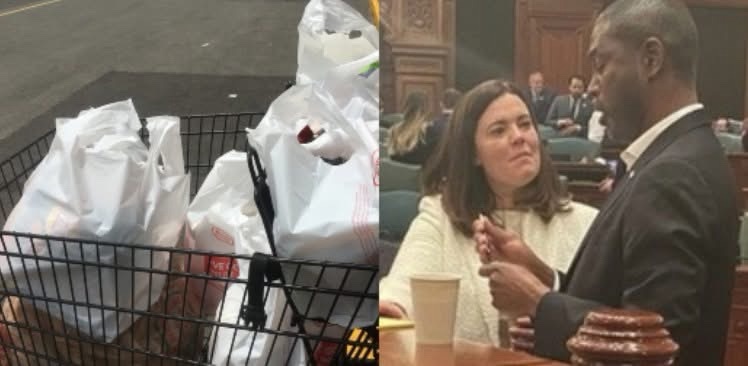
Background: Dias has introduced HB5112 (Carryout Bag Reduction Act) in Springfield. The law would require all retail and grocery stores in the state to charge customers a fee for every carryout bag—whether plastic, paper, or reusable—starting in 2027.
Yep…even re-usable bags! The revenue goes into the state General Fund, rather than purely environmental uses. More Spending money for JB Priitzker and Illinois Democrats.
Dais is proposing this Bag Fee taxes:
Year Fee per Bag
2027 $0.10
2028 $0.15
2029 $0.20
2030 $0.25
2031+ Increases by $0.05 per year
The proposal also includes punitive measures, with fines of up to $1,000 for stores that fail to comply with the law.
Notably, the legislation goes further for home delivery shoppers: Under HB5112, Illinoisans who use home grocery delivery would be banned from receiving their groceries in bags.
If passed the tax would be a regressive tax that burdens working families and low-income households
It taxes a broad range of bags, including reusable ones — Unlike narrower single-use plastic bans elsewhere, this applies to paper and reusable bags provided by stores, which many call overreach.
It penalizes people even if they bring their own bags and forces reliance on personal reusables without addressing convenience.
The latest: Dias’ bill has advanced to committee.
Illinois doesn’t need more fees/revenue streams when the state has a spending problem, not a revenue shortage, and people are already leaving due to high taxes.


 Roy F. McCampbell's Blog