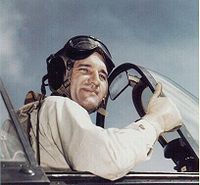
The History of the USS McCampbell Commissioned in 2002—-I am proud to be related for whom this ship has been named


USS MCCAMPBELL
DDG 85
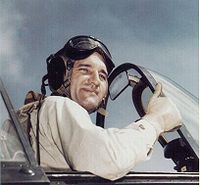
  

Construction of DDG 85 took place at Bath Iron Works in Bath, Maine, starting with the ship’s keel being laid on July 16, 1999. The McCampbell was launched in July 2000, ran her first sea trials in January 2002, and was delivered to the Navy in March 2002.

USS McCampbell was commissioned on August 17, 2002, in San Francisco at Pier 30. Former Secretary of State Madeleine Albright served as ship’s sponsor while Buffy McCampbell, wife of the ship’s namesake, served as matron of honor. The Aegis destroyer honors Capt. David S. McCampbell, the Navy’s all-time leading ace with 34 aerial victories during World War II.

May 12, 2003 In the predawn hours, off the coast of Central America, ship’s force and members of a U.S Coast Guard law enforcement detachment conducted a discrete boarding of the “Sin Rumbo,” a Canadian flagged sailing vessel. Inside the vessel, the boarding team from USS McCampbell discovered 1.36 metric tons of cocaine packaged for shipment and valued at more than $20 million.

June 24, USS McCampbell returned to homeport from its first deployment. She has been conducting counter-narcotics operations under the operational command of Joint Interagency Task Force (JIATF) West and South in the eastern Pacific Transit Zone since it left San Diego April 19. The McCampbell completed eight boardings, 34 Right Of Approaches, and 108 sightings and identifications of various vessels. The crew enjoyed several port visits to the cities of Mazaltan and Puerto Vallarta, Mexico; and Balboa, Panama.

May 5, 2004 USS McCampbell departed San Diego for its first six-month deployment in the western Pacific. The ship and its crew are headed to Southeast Asia in support of a Cooperation Afloat Readiness and Training (CARAT) cruise. CARAT is a series of bilateral exercises held annually throughout Southeast Asia that began in 1995, by combining a number of existing exercises to be conducted sequentially by a single U.S. Navy task group. The guided-missile destroyer will be conducting joint naval exercises with the countries of Singapore, Thailand, Brunei, Malaysia and the Philippines.

August 5, The 2004 edition of the Cooperation Afloat Readiness and Training (CARAT) exercise series ended Aug. 4 with the closing ceremony of the Philippines phase. CARAT Singapore was conducted from May 31-June 11 while CARAT Brunei took place from June 21-26. The 10-day CARAT Thailand phase ended July 9. CARAT Malaysia was performed from July 12-22. The CARAT Task Group ships arrived in the Philippines July 27 for the final phase of the CARAT series. DDG 85 returned to homeport in September.

January 4, 2006 USS McCampbell departed Naval Base San Diego, as part of USS Ronald Reagan (CVN 76) Carrier Strike Group, for a scheduled deployment in support of the Global War on Terrorism, as well as national and theater cooperative security commitments in the western Pacific.

February 17, DDG 85 recently departed Republic of Maldives after a goodwill port visit.

March 25, USS McCampbell and The Kiribati-flagged merchant vessel M/V Rokya 1 collided at 11:09 p.m., local time, approximately 30 miles southeast of the Iraqi coastline in the North Persian Gulf. Two U.S. Sailors received minor injuries as a result of the collision. Two crew members from Rokya 1 also received minor injuries and were treated on-scene by McCampbell’s independent duty corpsman. Both ships received damage on the bow and are deemed seaworthy. The cause of the accident is under investigation.

April 29, USS McCambell, commanded by Cmdr. Vincent McBeth, and USNS Catawba (T-ATF 168), along with Bahrain Coast Guard emergency management teams, participated in a proof-of-concept demonstration off the port of Mina Salman. Two U.S. Navy ships executed the proof of concept, which entailed simulating an oil spill and conducting the subsequent containment and recovery.

June 3, DDG 85 pulled to Singapore for a scheduled port call. The ship is en route to its homeport in San Diego after five months on station in the Gulf.

June 13, The guided-misile destroyer departed Hong Kong after a three-day port visit.

June 16, Destroyer Squadron (DESRON) 7, along with other ships and military personnel from around the U.S. Pacific Fleet, is making preparations for Valiant Shield 2006, one of the largest joint military exercises in this region in more than a decade. Two ships from DESRON 7, the McCampbell and Decatur (DDG 73), will be operating off the coast of Guam June 19-23. The exercise will involve more than 20,000 Sailors, Airmen, Soldiers, Marines and Coast Guardsmen.

July 6, DDG 85 returned to San Diego after a six-month underway period in the Persian Gulf and western Pacific Ocean.

June 21, 2007 USS McCampbell departed San Diego for its new homeport in Japan.

July 9, USS McCampbell, commanded by Cmdr. William Triplett, arrived in Commander Fleet Activities Yokosuka (CFAY) to take the place of USS Gary (FFG 51), which is scheduled to leave FAY and return to San Diego.

August 13, DDG 85 is currently participating in Exercise Valiant Shield 2007, as part of USS Kitty Hawk CSG, off the coast of Guam.

November 16, USS McCampbell completed its participation in ANNUALEX 19G, the maritime component of the U.S.-Japan exercise Keen Sword 08.

December 12, Sailors aboard the USS McCampbell successfully completed the Ship Anti-submarine Warfare Readiness and Evaluation Measurement (SHAREM) 155 exercise, a bilateral exercise with the Japan Maritime Self-Defense Force (JMSDF), which took place Nov. 30 to Dec. 4. McCampbell served as the command ship and was joined by USS Lassen (DDG 82), USS Fitzgerald (DDG 62), USS John S. McCain (DDG 56), USS Topeka (SSN 752), two JMSDF surface ships, and U.S. and Japanese aircraft during the exercise.

June 23, 2008 The guided-missile destroyer recently arrived in Singapore for the third phase of Cooperation Afloat Readiness and Training (CARAT) 2008 Exercise.

August 12, USS McCampbell departed homeport to participate in a multilateral exercise FRUKUS 2008 in the Sea of Japan Aug. 15-23.

August 13, The United States has cancelled a joint naval exercise with Russia after U.S. Secretary of State Condoleezza Rice warned Moscow that it’s attacks on Georgia have jeopardised its integration into international institutions. The exercises were to involve warships from Russia, France, Britain and the U.S. in the Sea of Japan as well as an onshore component in the Russian port of Vladivostok.

October 2, DDG 85 departed Yokosuka to conduct training and to participate in exercises with regional naval partners, for the first time as part of USS George Washington (CVN 73) CSG.

March 4, 2009 The McCampbell is currently participating in Multi-Sail ’09 exercise in the western Pacific.

May 17, USS McCampbell departed Shimoda, Japan, after a two-day port visit in support of the 70th Shimoda Black Ship Festival.

July 14, The guided-missile destroyer is currently off the coast of Australia supporting bilateral training exercise Talisman Sabre 2009 with the Washington Carrier Strike Group.

August 6, DDG 85 pulled to Darwin, Australia, for a scheduled port visit.

August 15, The McCampbell, commanded by Cmdr. Charles Johnson, arrived in Bitung to participate in the Indonesia International Fleet Review (IFR).

September 3, USS McCampbell returned to Yokosuka after a summer underway period.

October 3, The guided-missile destroyer departed Hong Kong after a two-day port call.

October 9, USS McCampbell joined USS Denver (LPD 9) off the coast of Padang, Indonesia, to assist in humanitarian efforts in West Sumatra following two earthquakes.

April 13, 2010 DDG 85 is currently participating in Multi-Sail 2010 exercise off the coast of Okinawa.

May 13, USS McCampbell, along with USS John S. McCain (DDG 56), arrived in Hong Kong for a scheduled port visit.

May 26, The McCampbell is currently conducting Combat System Ship Qualification Trials (CSSQT) with the GW CSG.

July 25, The guided-missile destroyer departed Busan, Republic of Korea, after a four-day port visit to participate in “Invincible Spirit,” a combined alliance maritime and air readiness exercise involving the Republic of Korea and the United States in the East Sea, July 25-28.

August 11, USS McCampbell pulled into Changi Naval Base for a scheduled port visit to Singapore.

September 4, DDG 85 arrived in Manila, Republic of the Philippines, for a four-day port call.

October 2, The McCampbell pulled into Laem Chabang, Thailand, for a scheduled port visit.

March 12, 2011 USS McCampbell is currently at sea east of the Boso Peninsula preparing to move into position off Miyagi Prefecture to assist Japanese authorities with providing at-sea search and rescue and recovery operations, in the wake of a catastrophic magnitude 9.0 earthquake that left thousands dead on Friday.

April 18, USS McCampbell conducted a passing exercise (PASSEX) with the Republic of Korea Ulsan-class frigate ROKS Seoul (FF 952).

May 16, The guided-missile destroyer pulled into Changi Naval Base at Singapore for a five-day port visit to participate in International Maritime Defense Exhibition (IMDEX) Asia 2011.

June 12, USS McCampbell intercepted a Belizean-flagged North Korean cargo ship M/V Light May 26, south of Shanghai, suspected of carrying missile technology to Myanmar and, after a standoff at sea and several days of diplomatic pressure from Washington and Asia nations, forced the vessel to return home.

July 4, DDG 85 arrived in Sydney, Australia, for a port visit before participating in a biennial joint exercise Talisman Sabre.

August 22, USS McCampbell returned to Fleet Activities Yokosuka after four-and-a-half month patrol.

August 30, The McCampbell departed Yokosuka to avoid Tropical Storm Talas in anticipation of the typhoon’s projected arrival on early Friday morning.

October 13, USS McCampbell, along with USS Fitzgerald (DDG 62), departed Apra Harbor, Guam, to participate in a joint anti-terorism exercise Pacific Eagle 2011 with the Russian Federation Navy (RFN) forces, including Pacific Fleet flagship Slava-class guided missile cruiser RFS Varyag (011), off Mariana Islands, Oct. 13-15

Posted in Uncategorized | Tagged , , , , , , , , , , , , , , , , , , , , , , , , , , , | Leave a comment

Debunking the Myths


Debunking Illinois Pension Myths!
Anyone who has read a newspaper over the last few years knows that Illinois state government has been
suffering through repeated budget deficits. Many factors have contributed to the state’s ongoing fiscal
difficulties. These factors include both a structurally flawed state revenue system, which imposes tax burdens
unfairly and fails to track the modern economy, as well as spending pressures for significant budget items, like
healthcare, the cost of which increases at rates much greater than regular inflation.
Among the most discussed – but least accurately portrayed – spending pressures that contribute to the state’s
fiscal problems, is Illinois’ unfunded pension liability owed to the state’s five public employee retirement
systems: the State Employee Retirement System (‘SERS’ – currently 46.1% funded), the Downstate Teachers’
Retirement Systems (‘TRS’ – currently 56% funded), the State Universities Retirement System (‘SURS’ –
currently 58.5%), the Judges Retirement System (‘JRS’ – currently 42%) and the General Assembly
Retirement System (‘GARS’ – currently 32% funded). Maybe the problem gets misrepresented so frequently
due to its enormous scale, an unfunded liability that exceeds $54.4 billion, the worst of any state in the nation.
Or, perhaps the current legislation covering repayment of the liability, frequently called the ‘Pension Ramp’,
which backloads costs and creates escalating fiscal pressure over the long term, causes people to misconstrue the
issue. Whatever the reason, almost the entire discussion of what caused the state’s unfunded liability to develop
in the first place, as well as how best to address the problem in the long run, is woefully off point, dominated by
myth and rhetoric, and contrary to the data.
The following is an effort to dispel some of the more common, and egregious, myths involving Illinois’ unfunded
pension liability.

1. Myth: The main cause of Illinois’ $54.4 billion unfunded pension liability is a bloated public sector headcount receiving overgenerous benefits.
Reality: Historically, the Illinois state fiscal system has failed to generate the revenue needed to cover both the inflationary increase in the cost of maintaining public services from year to year and the full employer contribution required to fund pensions. So, rather than cut services, the state usually chose to underfund its employer contribution.
Overtime, this chronic failure to make the full employer contribution is the primary reason for Illinois state government’s
predicament today, facing the worst unfunded pension liability in the country.
2. Myth: Illinois has too many public employees.
Reality: Illinois actually ranks 49th among the states, next to last in the nation, in number of state employees per capita.
Historically, Illinois has not been a high public employee head count state. Instead, Illinois is mostly a grant making state
– that is, rather than hire state employees to provide services; Illinois disburses grants to independent providers such as
Lutheran Social Services or Catholic Charities, which in turn deliver the service to the public.
3. Myth: Public employee benefits are too generous.
Reality: For most Illinois public employees, their pension is all they receive upon retirement – fully 78% are not
covered by and do not receive Social Security. This is unlike workers in the private sector, who receive both Social
Security and private retirement benefits.
4. Myth: Illinois’ current defined benefit system is too expensive.
Reality: The ‘normal cost’ of a pension system is the contribution required from an employer to fund the plan’s benefits.
The weighted average ‘normal cost’ across all five Illinois pension systems, as a percentage of active members’ payroll,
averages 9.13 percent. The national average for state and local government is 12.5 percent, placing the normal cost of
Illinois’ current defined benefit program far below the national average.
5. Myth: Switching Illinois from a defined benefit to defined contribution system will erase Illinois’
$54.4 billion pension debt.
Reality: Switching to a defined contribution plan from a defined benefit plan cannot reduce or eliminate any of the
$54.4 billion unfunded pension liability that Illinois owes to its five public employee pension systems.
The stateʹs duty to maintain pension benefit levels for its public employees is directly mandated in the Illinois
Constitution. Specifically, Article XIII, Section 5 of the Illinois Constitution provides, “Membership in any pension or
retirement system of the State, any unit of local government or school district, or any agency or instrumentality thereof,
shall be an enforceable contractual relationship, the benefits of which shall not be diminished or impaired (emphasis
supplied).” Irrespective of the nature of the plans going forward – the only way to address the unfunded pension liability
is to find a rational way to pay it. The problem cannot be legislated away.
6. Myth: Placing new public sector employees into a defined contribution system would save the state
money.
Realty: A switch to a defined contribution plan for new employees would not save the state of Illinois money. In fact, a
switch to a defined contribution system would likely increase costs; defined contribution systems have significantly higher
annual administrative costs than fully funded defined benefit systems.
According to the Investment Management Institute, the operating expense ratio for defined benefit plans averages 31
basis points (31 cents per $100 of assets); the average for defined contribution plans is three to six times higher, at 96 to
175 basis points. To put that in context of the Illinois pension systems, the administrative costs of a defined contribution
system would in all likelihood cost taxpayers anywhere from $275 to $610 million more annually than the state’s current
defined benefit systems.
Reality: If contribution rates remain the same, defined contribution systems can be expected to generate
significantly lower retirement benefits for greater costs. This was the specific experience of Nebraska, which
switched to a defined contribution system for some of its employees over 30 years ago, and recently shifted
back to a defined benefit system.
In the mid 1960’s, Nebraska switched from a defined benefit to a defined contribution plan for some of its state and county
government employees. Over time, Nebraska found that when compared to its defined benefit plan, the new defined
contribution plan cost the state significantly more in investment management fees, record‐keeping fees, educational
programs and other administrative line items. In 1999, Nebraska’s administrative expenses for its defined contribution
plans were double the costs of its defined benefit plans. Faced with irrefutable data illustrating that defined
contributions systems provide lower benefits for employees at higher costs to taxpayers, Nebraska legislators
changed back to a defined benefit model in 2002.
Reality: Going forward, a fully funded defined benefit system can reduce taxpayer costs
In a defined contribution setting, the normal cost is simply what percentage of a worker’s pay the government employer
has promised to contribute to that worker’s retirement account, together with any match. In a defined benefit setting,
normal cost is the annual percentage of total payroll a government employer must contribute to fund the promised benefit
for its current workforce, based on actuarial tables. This contribution is funded from a combination of employer and
employee contributions, tax revenue and investment returns earned on plan asset. If the returns on investments are high
enough they can actually reduce the amount of tax revenues needed to fund the contribution ‐ reducing taxpayer cost. In
the defined contribution setting, on the other hand, investment returns belong solely to the employee who makes the
investment in his or her retirement account, and are not available to reduce the employer contribution.
Frequently, fully‐funded defined benefit plans attain high enough investment returns that public sector employers are able
to reduce the amount of normal cost paid from tax collections, freeing taxpayer revenue to cover services. This cost
savings can be significant, as the experience of the Illinois Municipal Retirement Fund (“IMRF”) demonstrates.
The IMRF, the second largest pension fund in Illinois covering public employees such as bus drivers, sewer workers and
municipal administrators, has enjoyed a funding advantage for years, in large part because it demands full and on time
payments from member government employers and employees. As a result, the IMRF has consistently maintained high
levels of funding.

Posted in Uncategorized | Leave a comment

Farakkhan Convention in Rosemont Focuses on Increasing UFO Sightings Worldwide


Associated Press reports a panel of scientists at the annual Nation of Islam Savior’s Day convention in Rosemont will be discussing a rise in the number of UFO sightings worldwide:

The idea of seeking the divine in the skies is deeply rooted in the Chicago-based Nation of Islam, whose late leader Elijah Muhammad detailed in speeches and writings a massive hovering object loaded with weapons he called “The Mother Plane” — although religion experts, Nation of Islam leaders and believers offer very different interpretations of what exactly happens aboard the plane, its role or how it fits into religious teachings.

Continue reading “Out of this world: Farakkhan convention focuses on increasing UFO sightings worldwide” »

Posted in Uncategorized | Leave a comment

Dismantling of the Zion Nuclear Plant Should Be a Concern to All


Read this post and wonder why more people are not concerned about the dismantling of the Zion Nuclear plant  :    http://illinoisreview.typepad.com/illinoisreview/2011/02/zions-dismantling-should-concern-il-legislators-and-citizens.html

Why has this plant not been refurbished ?

Posted in Uncategorized | Leave a comment

Facebook Accounts Going to More and More Americans !


Reports indicate that w/in next 2 years, half of all American s will have a Facebook account.

http://tinyurl.com/4ewb5hh

Posted in Uncategorized | Leave a comment

Assembling Information On My Family Genealogy


This is information on my grandfather, Roy F. McCampbell :           http://www.walthertree.com/images/RoyFlyerDnld.jpg

Posted in Uncategorized | Leave a comment


Posted in Uncategorized | Leave a comment

Warren Buffett: Be optimistic about America’s future – Chicago Sun-Times


Warren Buffett: Be optimistic about America’s future – Chicago Sun-Times.

What do you think of Warren Buffett’s assessment ?

Posted in Uncategorized | Leave a comment

USS McCampbell The Namesake of a Cousin


Captain David McCampbell

DDG 85 | USS MCCAMPBELL

DDG 85
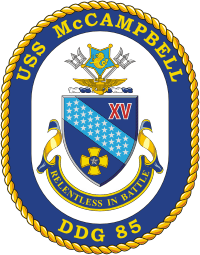
Namesake:

Captain David S. McCampbell

Bath Iron Works’s fourth FLIGHT IIA Arleigh Burke Class AEGIS Destroyer will proudly bear the name of Captain David S. McCampbell, United States Navy. Captain McCampbell is the Navy’s all-time leading ace with 34 aerial victories during World War II. David McCampbell was born in Bessemer, Alabama, on January 16, 1910. He attended Staunton (Virginia) Military Academy and one year at Georgia School of Technology before his appointment to the United States Naval Academy, where he graduated with the class of 1933.

From September 1943 to September 1944 Captain McCampbell was commander of Air Group 15, in charge of fighters, bombers, and torpedo bombers aboard the aircraft carrier ESSEX. From April to November 1944, his group saw six months of continuous combat and participated in two major air-sea battles, the First and Second Battles of the Philippine Sea. During the more than 20,000 hours of air combat operations before it returned to the United States for a rest period, Air Group 15 destroyed more enemy planes (315 airborne and 348 on the ground) and sank more enemy shipping than any other Air Group in the Pacific War. Air Group 15’s attacks on the Japanese in the Marianas and at Iwo Jima, Formosa, and Okinawa were key to the success of the “island hopping” campaign.

In addition to his duties as commander of the “Fabled Fifteen,” Captain McCampbell became the Navy’s “Ace of Aces” during the missions he flew in 1944. In October 1944 Captain McCampbell and his wingman attacked a Japanese force of 60 aircraft. During the mission, Captain McCampbell shot down nine enemy planes, setting a single mission aerial combat record. When he landed his Grumman F6F Hellcat, his six machine guns had two rounds remaining and the plane had only enough fuel to keep it aloft for 10 more minutes. Captain McCampbell received the Medal of Honor for that action, becoming the only fast carrier task force pilot to do so. During a similarly courageous mission in June 1944, Air Group 15’s planes routed a large enemy force and Captain McCampbell earned seven kills.

For his brilliant record in command of Air Group 15, Captain McCampbell was awarded the Medal of Honor, the Navy Cross, the Silver Star Medal, Legion of Merit with Combat “V”, the Distinguished Flying Cross with two Gold Stars in lieu of the second and third awards, and the Air Medal. After the war, his assignments included command of the carrier BON HOMME RICHARD and service as plans division chief of the Joint Chiefs of Staff. He retired from active duty in 1964 and was interred at Arlington National Cemetery after his death on June 30, 1996.

Posted in Uncategorized | Leave a comment

Northwestern Beats Vanderbilt in Opener


NU’s Persa has near flawless debut

NORTHWESTERN 23, VANDERBILT 21 | Wildcats hold on to win opener

Go to this link for the story :  http://www.suntimes.com/sports/colleges/2677030,CST-SPT-nu05.article

Posted in Uncategorized | Leave a comment