The Goldwater Rule; and Should We Psycho-Analyze Our Politicians ?


Was this petty, snarling man, utterly lacking in presidential temperament and heedless of the established rules and norms of politics, going to get us into a nuclear war? That’s what a lot of Americans wondered about Richard Nixon back in 1956. Chosen as Dwight Eisenhower’s running-mate four years before, Nixon was seen as unscrupulous, mean-spirited and reckless in smearing his opponents. So in the 1956 campaign, with Ike still wildly popular, Democrats made Nixon’s character an issue. The Soviet Union had just detonated its first hydrogen bomb, and Eisenhower had recently suffered a heart attack and a bout of ileitis (a gastrointestinal illness)—putting Nixon, they warned, perilously close to the Oval Office. In the fall Adlai Stevenson, the Democrats’ nominee, invoked what the liberal New York Post columnist Max Lerner called “the triple issue”: should Eisenhower suddenly die, the unreliable Nixon would have his finger on the button.

Today, of course, we’re wondering the same things about Donald Trump, whose recent tweets about big nuclear buttons and his own “stability” have pundits buzzing about his mental health. His behavior—impulsive, erratic, petty and often cruel (to name just a few of the most salient qualities)—especially amid the prospect of a nuclear showdown with North Korea, makes it impossible not to think about his psychology, just as it was during the Cold War.

It’s an understandable impulse: The public needs to understand what moves our leaders to act as they do, including not just “rational” motives—pursuing policy objectives, responding to political pressures, working within economic and international constraints—but also the drives and responses that operate deep in an individual’s unconscious, formed by experiences and relationships long ago.

But more than a century after Sigmund Freud revolutionized the understanding of the human mind, the use of psychology to understand our political leaders has failed to realize its promise. The diagnoses we’re now throwing around for Trump, from incipient senility or venereal disease, are simplistic, facile and unhelpful—and possibly fueled by politics rather than objective analysis. As crucial as it is to recognize the psychological dimension of Trump’s behavior, history suggests that analyzing public figures is a dangerously fraught project—one that tends to descend into subjectivity, politicization and self-caricature.

Applying psychological insights to political leaders’ behavior started way back in Freud’s own day. Stanley Allen Renshon, a political scientist and psychoanalyst, cites as the first such effort a March 1912 New York Times Magazine cover story titled “Roosevelt as Analyzed by the New Psychology,” about Theodore Roosevelt’s relationship with his successor as president, William Howard Taft. In it, Dr. Morton Prince, a professor of “nervous diseases” at Tufts, argued that Roosevelt was acting strangely because of an internal struggle: On the one hand, he consciously wanted to support his hand-picked successor and stand by his avowals to forswear a third term. On the other hand, he had a repressed, subconscious wish to win back the office he had loved so much. Over time, Prince explained, “the subconscious wish to be an active candidate became acceptable to his consciousness.”

But despite occasional invocations of Freudian theory in the press, it wasn’t until the Cold War that the psychoanalyzing of our presidents became a widespread pastime. The impulse had its roots in the work of the World War II-era Office of Strategic Services and its successor, the Central Intelligence Agency, both of which used psychoanalysis to study Hitler, Stalin and other leaders, to better understand their behavior and, perhaps, anticipate their actions. Then, in 1957, the Harvard historian William Langer, in his presidential address to the American Historical Association, urged his colleagues to avail themselves of the insights of “dynamic” or “depth psychology”—approaches to studying the mind, building on Freud, that look at the deep, even unconscious, forces that underpin human actions, feelings, decisions and struggles—in thinking about the past. Langer—who had served in both the OSS and CIA, and whose psychoanalyst brother wrote the OSS report on Hitler—argued that in light of the strides made by psychoanalysis, “the homespun, common-sense psychological interpretations of past historians … seem woefully inadequate, not to say naïve.”

The next year, Erik Erikson published his landmark psychobiography Young Man Luther, about the Reformation leader. It won a generally positive reception—though it was too overtly Freudian for some people’s tastes. Erikson used the harsh and demanding nature of Luther’s father to explain not only the boy’s deep sense of moral inferiority but also the conception of God he ultimately developed that would characterize early Protestantism. Even many critics of psychohistory conceded the book’s virtues.

More than academic fashion, though, it was the Cold War itself that put the mental health of political leaders on the public’s radar. The United States had emerged as a nuclear superpower, engaged in a hostile struggle with a rival nuclear power. Americans readily grasped the need for a president who was sane, stable and mature.

This new interest had consequences besides the psychological scrutiny of Richard Nixon. In the early 1960s, the Cuban Missile Crisis, along with doomsday movies like Dr. Strangelove and Fail Safe, brought home the importance of presidential sanity in a nuclear crisis. One nightmare scenario envisioned a hot-headed or irrational president starting a war; another had a Russian missile strike killing the president and others in the line of succession. As historian Rebecca Lubot, a recent Rutgers University history PhD, has argued, these worries spurred support for the 25th Amendment, which establishes the presidential line of succession. In June 1963, Nixon, now out of office, said as much to Tennessee Senator Estes Kefauver, who was planning hearings on a presidential succession bill. “With the advent of the terrible and instant destructive power of atomic weapons,” Nixon wrote, “the nation cannot afford to have any period of time when there is doubt or legal quibbling as to where the ultimate power to use those weapons resides.” Kefauver died weeks later, and with him the bill. But the next chairman of the Subcommittee on Constitutional Amendments, Birch Bayh of Indiana, took up a presidential succession and inability amendment—the 25th—which gained support after Kennedy’s assassination. Section Four of that amendment, which allows the vice president and Cabinet to remove a president for reasons of “inability,” has been getting attention amid questions about Trump’s competence, though to try to invoke it right now seems profoundly unwise.

In 1964, the Republicans nominated Arizona Senator Barry Goldwater for president. He soon got the Nixon treatment. Somewhat like Trump, Goldwater scared Americans with his unfiltered comments touting radical, intemperate or violent policy measures—he suggested using nuclear weapons as a defoliant in the Vietnam War—as well as for his alleged connections to neo-Nazi or other far-right extremists. (Daniel Schorr of CBS reported a segment from Bavaria, “Hitler’s old stomping grounds,” stating exaggeratedly that Goldwater “will be starting his campaign here.”) President Lyndon Johnson exploited his opponent’s reputation as rash and unpredictable. His campaign aired the “Daisy” television ad that showed a girl plucking a flower’s petals before seguing into a nuclear countdown. In a ridiculously unscientific study that year, the publisher-pornographer Ralph Ginzburg, using survey responses from members of the American Psychiatric Association, declared in his magazine Fact that the mental health professionals considered the candidate to be paranoid. (Goldwater won a libel suit, and the APA later adopted a “Goldwater Rule” declaring it unethical to publicly diagnose someone whom the psychiatrist has not examined. Some psychiatrists now want to reconsider the rule.)

Even after the Goldwater lawsuit, scholars and journalists continued to analyze politicians in psychological terms. More and more Americans were availing themselves of the benefits of psychotherapy, and, besides, the obvious neuroses of Johnson and Nixon all but cried out for deep interpretation. “Whether it is disagreeable coincidence or masochistic gratification, we have thereupon in quick succession elected the two most capricious and compulsive presidents we have ever had,” wrote the historian Arthur Schlesinger in a magazine essay entitled “Can Psychiatry Save the Republic?” That these men presided over Vietnam and Watergate—disasters in which the presidents were seen as having visited their own deep-seated afflictions on the nation—confirmed the apparent wisdom of probing our leaders’ psyches.

All the while, the nuclear issue hovered in the background—and occasionally came to the fore. During the 1973 Yom Kippur War, Nixon raised the military alert to Defcon III, just short of nuclear war—but it was reported that he was distraught, distracted by Watergate, possibly drunk and in no condition to lead the nation in a nuclear showdown. These and other anxieties about Nixon’s competency led Arnold Hutschnecker—a specialist in psycho-somatic illness who had treated Nixon over the years—to call for an official “board of physicians and psychiatrists” to make sure that presidential candidates “are healthy in mind and body.” “I cannot help think,” Hutschnecker wrote, “that if an American president had a staff psychiatrist, perhaps a case such as Watergate might not have had a chance to develop.”

Of course, when a politician did admit to seeking psychiatric help, everyone ran for the exits. When in 1972 George McGovern’s running-mate, Missouri Senator Thomas Eagleton, admitted to having undergone electroshock treatment for depression, a scandal ensued, and McGovern dropped Eagleton from the ticket. (Eagleton hadn’t previously disclosed his illness and treatment to McGovern.)

Clearly, the public vetting of politicians for mental health issues was not going to be simple. Part of the problem was that even some of the best analysts had a hard time bracketing their own politics when diagnosing public figures. Psychological profiles often read like political attacks—suggesting, for example, that Nixon bombed Cambodia because he needed to replenish his self-esteem. “We are danger of having the insights of psychotherapy,” warned the political journalist Godfrey Hodgson in a 1981 book review, “used as a tool for character destruction, certainly for libel, potentially for revenge.” Compounding the problem, people were using psychology to highlight a politician’s negative traits—such as, in Nixon’s case, his lying, his narcissism, paranoia, his rage—but rarely what one analyst called the president’s “many ego strengths and adaptations” that might explain how he had risen as high as he did.

Commentators in the media also failed to distinguish among varieties of mental distress. It was one thing to be insane or deranged; quite another to display neurotic behavior like extreme narcissism or paranoia; another to be functional yet still temperamentally ill-suited to the responsibilities of global power. And, of course, just as many perfectly sane people came to seek out therapy to cope with common neuroses or sources of suffering, so a politician might exhibit certain unhealthy tendencies while still mostly coping well in his or her job and daily life. But in the popular discourse, all of these distinctions tended to get lost.

In time, any pretense of Freudian or Eriksonian depth fell away. While journalists continued to harp on the question of “character,” their understanding of it became shallow and even silly, focusing on whether someone had avoided military service, smoked pot or slept around.

Still, when hotheaded candidates emerged, so did the public trepidation about whose finger would be on the button. Trump was actually on the mark last weekend when he tweeted, however vaguely, about “the old Ronald Reagan playbook.” Although nostalgia has softened Reagan’s image, during his 1980 presidential bid voters worried enormously about his penchant for angry, strident outbursts against his political opponents. “If it takes a bloodbath, let’s get it over with,” he had said of student protests at Berkeley in the 1960s; he later lashed out at the Soviet Union, calling it “the Evil Empire.” He also spoke openly of his belief in Armageddon, and his belligerent rhetoric and promises of an arms build-up raised the specter of nuclear war. To placate wary voters, Reagan spent the fall presidential debates against Jimmy Carter striking a gentle pose and reiterating his commitment to peace.

After a few harrowing years of renewed nuclear tension, Reagan pivoted and embraced Mikhail Gorbachev and arms reduction. Since then, nukes have loomed less large (although the fear that terrorists or “rogue nations” will get hold of them has underlain the Gulf Wars and conflicts with Iran and North Korea), and we’ve heard less talk about our presidents’ psychology. Whatever their failings, our recent ones have generally seemed grounded. (One exception was the controversy about candidate John McCain’s stability in the 2000 and 2008 campaigns.) Meanwhile, pinterest in psychodynamic therapy has given way to quick-fix treatments like pharmaceuticals, while the vogue for brain science has reduced the complex interactions of unconscious and conscious drives to the mechanical firing of neurons. Political scientists and historians, meanwhile, have by and large veered away from explanations rooted in individual human psychology in favor of those rooted in social and institutional structures.

With Trump, it seems necessary to retrieve the rich conceptual vocabulary of psychoanalysis. His aberrant behavior seems to demand deeper understanding. Why does he feel such a need to belittle and humiliate anyone who challenges his primacy, be it Jeb Bush, Hillary Clinton, Mitch McConnell or Kim Jong Un? What explains his habit of not simply denying criticisms made of him, but completely inverting them—to claim, for example, that he’s “the least racist person” of all, or that it was Hillary Clinton who colluded with the Russians in the 2016 election? How can he, without apparent awareness, embrace people one day, turn on them with fury the next, and then perhaps welcome them again as if nothing happened? These actions go beyond standard political spin and hypocrisy, beyond most politician’s self-aggrandizing or inconsistent behavior. Perceptive and psychologically conversant analysts should be able to contribute to our understanding of these sorts of patterns where political science and journalism cannot.

But there’s also a risk of repeating the errors of the Goldwater- and Nixon-era psychologists, who too often filtered their readings of those men’s personality through their own politics and failed to notice their high-level functioning in many areas. Trump, too, for all his juvenile, obnoxious and cruel antics, is a successful businessman and politician, one who functions in his job, however erratically. Moreover, as the psychiatrist Richard Friedman has argued, the character traits that make him outrageous aren’t necessarily symptoms of any deep psychological disorder; they may simply be the human traits of selfishness, pettiness, nastiness and shamelessness, in very high doses. Labeling Trump unstable or deranged does nothing to help us understand why he acts as he does. On the other hand, the dormant tradition of psychobiography, if practiced with due modesty and sensitivity, just might.

Posted in Disability Employment Month, Economy, Education, Elections, Finance, Illinois, News, political satire, politics, Social Media, Taxation | Tagged , , , , , | Leave a comment

St Maria Goretti Parish Celebrating Their 55th Anniversary with Cardinal Cupich Presiding


Cardinal Cupich celebrating Mass commemorating the 55th Anniversary of St Maria Goretti parish

Posted in Cardinal Cupich, Chicago, Chicago Archdiocese, Saint Maria Goretti, Uncategorized | Tagged , , | Leave a comment

2018 Has Interesting Scheduling Conflicts


a lot of people. Ok 2018, already has some strange situations #easter2018 #aprilfoolsday2018 #ashwednesday2018 #valentinesday2018

Posted in Astronomy, Economy, Education, Finance, News, political satire, politics, Religion, Roy F. McCampbell, Social Media, Sports | Tagged , , , | Leave a comment

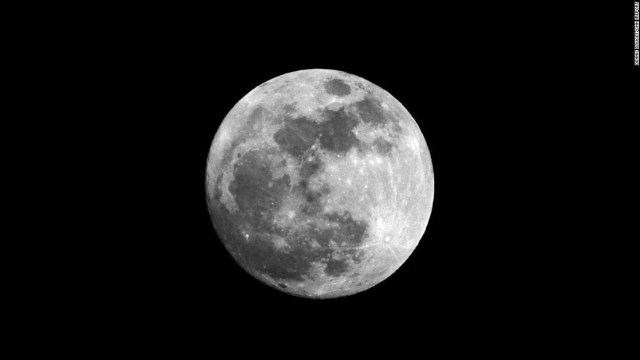
A Supermoon, Nicknamed the “Wolf Moon”


A supermoon has closed out the first day of the year. LOOK UP! What a great way to start 2018. A super moon, nicknamed the Wolf Moon, is happening tonight!

Posted in Astronomy, Entertainment, politics, Schiller Park Recreation, Social Media | Tagged , | Leave a comment

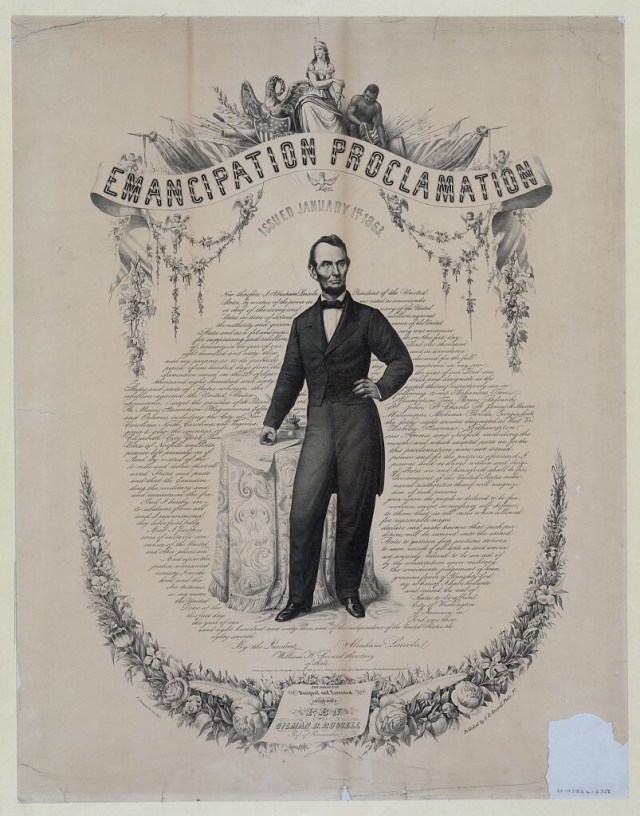
Emancipation Proclamation


President Abraham Lincoln issued the Emancipation Proclamation on January 1, 1863, as the nation approached its third year of war. The proclamation declared “that all persons held as slaves” within the rebellious states “are, and henceforward shall be free.”

Posted in Economy, Education, Elections, Finance, London, News | Tagged , , , | Leave a comment

And It Begins Again…………


MONDAY, JANUARY 01, 2018

017

Once again, a dark horse district:

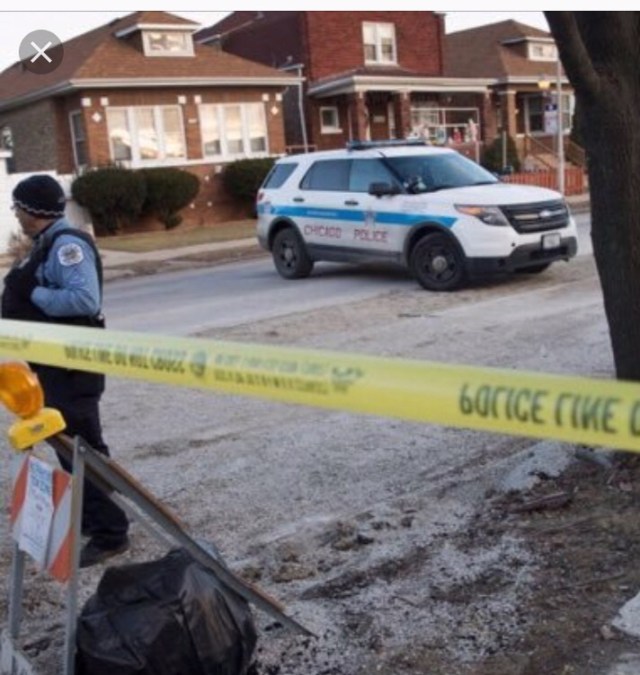
In the city’s first homicide of 2018, a 51-year-old man was shot and killed a little more than two hours into the New Year while driving on the Northwest Side.

The man was among 12 people shot Sunday and early Monday in attacks across Chicago, as city residents rang in the New Year amid sub-zero temperatures.

And the number of people shot is already in double digits.

The good news is, by pro-rating out the numbers, Chicago will be down to 365 homicides for the year which is a 50% reduction.

Shootings however, will jump to 4380, an increase of nearly 800.

See how playing with numbers is fun?

Labels: #crime, #sarcasm AND #silliness, #stats

Posted in Chicago, Crime, Elections, gangs, gun control, Illinois, political satire, politics, Rauner, Religion, Schiller Park | Tagged , , | Leave a comment

Political Thought For 2018


“The only way we will see a change for the better of this country is if both political sides are able to focus on the core values.”

Thus far with social media platforms abounding, the political sides are promoting “sound bites” and meaningless rhetoric without substance.

The political winner in 2018 will be the political side that pushes a sincere return to core values.

Let the games begin

#politics2018 #corevalues #mccampbellroyf #election2018

Posted in Chicago, Economy, Education, Elections, Illinois, London, Muslim, News, political satire, politics, Rauner, Religion, Social Media, Special Education, Sports, Union | Tagged , , | Leave a comment

The Limit on the SALT Deduction is a Major Game Changer for Local Government and Will Lead Taxpayers to Demand Lower Taxes or at Best to Reject any Additional Funding Requests for State Pensions, Schools, Public Safety and Health Services. How Should Illinois Respond To The New Federal Income Tax Legislation ?


The limit on the SALT deduction is a major game changer for local government and will lead taxpayers to demand lower taxes or at best to reject any additional funding requests for state pensions, schools, public safety and health services.

The SALT deduction allows households to deduct state and local taxes on their federal returns. A plan to remove the deductibility would disproportionately harm individuals who live in states with a high overall state tax burden, such as Illinois. This is because removing deductibility raises the federal income tax burden by the value of the tax bill due to the state.

In some of Illinois’ counties, the average SALT deduction per tax return is over $5,000 per year in some Illinois counties according to the Tax Foundation. But that benefit could vanish if Trump’s tax reform plan comes to pass, costing Illinois households thousands.

An increase in the overall tax burden faced by Illinoisans would have a disastrous impact on Illinois’ economy. This is because an increase in the tax burden further constrains households and businesses, thus discouraging economic activity. In addition, a higher tax burden raises the benefits to be gained from moving toward states with lower tax rates.

Illinois is already experiencing capital flight. According to Internal Revenue Service data, Illinois is already losing higher-earning residents to out-migration. A consequence of these outflows of labor and capital is state tax revenues suffer as the tax base shrinks. This exodus has had disastrous effects on the state’s budget. Eliminating the SALT deduction would only make this trend worse – as the full effect of Illinois’ high state and local taxes is truly felt.

But if state lawmakers pre-empt the possible elimination of the SALT deduction with tax cuts that improve Illinois’ competitiveness relative to other states, the president’s plan can trigger large inflows of capital to Illinois that would grow the state’s economy.

Competitive tax cuts grow the tax base, raising additional public funds without further harm to the average household. As a result, government programs that help the less fortunate can be better funded in a more competitive low-tax regime.

Fiscal solvency is a symptom of tax competitiveness while insolvency – as in Illinois’ current fiscal state – indicates a lack thereof. The bulk of evidence suggests tax hikes shrink the tax base while tax cuts grow the tax base and improve economic conditions for everyone.

It’s a tax provision that could prove costly for schools, police departments, drug treatment centers, and other state and local public services.

The sweeping tax overhaul imposes a $10,000 limit on the combined sum of property and state and local income taxes that a household could deduct. And that’s even if taxpayers would have an incentive to itemize anymore. The $10,000 cap will help pay for corporate and personal tax cuts totaling $1.5 trillion over the next decade.

Conservatives have argued that unlimited state and local deductions amount to a federal subsidy for the wealthy in high-tax states like New York, New Jersey, California and Illinois with their prosperous suburbs. But many middle-class families in those states face disproportionately high housing costs and depend on deducting their state and local taxes. These households could soon pressure states and localities to ease their burden by cutting taxes –which would likely force cuts to social programs and public services.

What’s more, pursuant to a separate provision in the tax bill now the federal tax law will no longer subsidize employers that help their employees pay their commuter costs. This change will likely increase the cost of public transit for riders.

Some Republicans in high-tax states resisted their party’s cap on local and state deductions. Two of them — Reps. Darrell Issa of California and Lee Zeldin of New York — opposed the overall tax measure because of the likelihood that it would hurt their constituents. And despite Republican arguments to the contrary, high-tax states already tend to send more money to Washington than they receive back in federal spending.

“On balance, this bill remains a geographic redistribution of wealth — taking extra money from a place like New York to pay for deeper tax cuts elsewhere,” Zeldin said. “This bill chooses winners and losers in a way that could have and should have been avoided.”

More than 73 percent of homeowners in Westchester County just north of New York City face property taxes alone that exceed $10,000. This means they couldn’t deduct any state or local income taxes. The same is true of half of Manhattan homeowners, a quarter of those in San Francisco, 17 percent of suburban Chicago homeowners, and 10 percent of those in Arlington, Virginia, just outside Washington, D.C., according to figures tracked by Attom Data Solutions.

The limit on the deduction could lead taxpayers there to demand lower taxes or to reject any additional funding requests for state pensions, schools, public safety and health services.

The overall tax bill would impose new costs on many taxpayers that would outweigh any savings on federal taxes, argues Matthew Chase, executive director of the National Association of Counties.

“We don’t see it as a net gain for taxpayers,” Chase said. “They want to strangle our revenue sources.”

The National Education Association, a teachers union, estimated that the cap on state and local deductions could put at risk $15.2 billion in annual public school spending, or $304 per pupil. Marc Egan, the association’s director of government relations, said the change could discourage local governments from investing in education and might eventually depress economic growth.

“We’re always making the case that investing in education is a common-sense way to grow the economy,” Egan said. “Why Congress continues to resist that on a number of fronts is a mystery.”

Even as Republicans in Congress decided to cap the state and local tax deduction for households at $10,000, their tax bill will continue to allow corporations to deduct their state and local taxes as a business cost.

Since the federal income tax code was introduced in 1913, Americans have been allowed to exclude the taxes they pay to state and local governments. Roughly a third of taxpayers have enough expenses to itemize their deductions. And nearly all who do so deduct their state, local and property taxes. These deductions have helped make it affordable for cities and states to fund school systems, health care services and police forces, while making it more acceptable for a community’s richest households to pay taxes that can help the poorest.

The tax bill nearly doubles — to $24,000 — a family’s standard deduction, which goes to taxpayers who don’t itemize their deductions. So there would automatically be fewer people who would deduct their state and local taxes.

But in addition, many households in high-tax states can no longer itemize their deductions because of the new cap on state and local taxes. This could reduce the perceived value of these taxes and incentivize voters to push for lower state and local taxes — a stated goal of some conservatives.

Gov. Bill Haslam has said he thinks the tax overhaul could encourage more people to move from high-tax states to his state of Tennessee, which charges no state income tax.

“We think it actually will encourage both investment growth and population growth in Tennessee,” Haslam said.

High-tax states are already considering adjustments to their policies. Steve Sweeney, president of the New Jersey Senate, has warned that the bill could derail his state’s planned tax increase on millionaires. That idea, estimated to generate about $600 million in revenue, is a central pledge of Democratic Gov.-elect Phil Murphy’s agenda to help raise pension payments and school funding. Murphy has said he is still committed to the tax hike on wealthy earners. But if lawmakers now balk, its prospects become more problematic.

California lawmakers are considering ways to restructure the state’s tax code to limit the impact on its taxpayers, said Assemblyman Phil Ting, a San Francisco Democrat. Speculation has centered on reducing income taxes and raising payroll taxes — in effect, shifting some of the state tax burden from workers to employers.

“We’re looking at a variety of alternatives,” Ting said.

Allowing up to $10,000 of state and local taxes to continue to be deducted, he said, “takes it from horrible to slightly less horrible.”

Illinois lawmakers concerned about fiscal solvency are at a crossroads. They can adopt competitive tax policies that will curb capital flight, eventually reversing a negative trend at the expense of other high-tax states, or they can do nothing.

If lawmakers do nothing, the elimination of the SALT deduction, if implemented, will result in further erosion of Illinois’ tax base.

I think the best way for Illinois to respond is to enact a graduated income tax.

Also known as a progressive tax, it’s a principal embraced by 33 states that charge wealthier individuals a higher income tax rate.

Illinois is one of just eight states that has a flat income tax. Nine other states do not levy a state income tax.

Politically speaking, Illinois is about as blue as it gets, with dominant Democratic majorities in both houses of the state legislature. There’s a good chance a Democrat will be elected governor in 2018.

Now is the time for Illinois Democrats to flex their political muscle and push for a graduated income tax. It’s a perfect response to the nastiness of the tax plan being pushed by the GOP-controlled Congress and a way for the state to help middle- and low-income families by making wealthier individuals pay more.

As recently as 2016 with House Bill 689, the legislature considered a measure to amend the state Constitution to allow for a graduated income tax. The proposal would have cut taxes for 99 percent of state residents, raised them on the top 1 percent and generated nearly $2 billion annually in additional revenue.

Amid the turmoil of the state’s budget impasse it wasn’t politically feasible to pass the legislation then, but the GOP tax plan is a game-changer. It’s time for Illinois to seriously pursue a graduated income tax structure.

The limit on the deduction is a major game changer for local government and will lead taxpayers to demand lower taxes or to reject any additional funding requests for state pensions, schools, public safety and health services.

Posted in Uncategorized | Leave a comment

My 2018 Predictions For The World As I See It:


I join the legion of prognosticators who offer guesses and visions about what will happen in 2018.

Once again,…………….

All predictions guaranteed, or your money back. Of the baker’s dozen below, one or two are tongue-in-cheek. I leave it to the reader to figure out which.

1. Sometime in the autumn, special counsel Robert Mueller will conclude his investigation into possible collusion between Donald Trump’s presidential campaign and the Russian government. There will be one or two additional indictments, but only for lying to investigators. No one will be charged with a substantive offense related to the reason Mueller was appointed in the first place. (Where special prosecutors are concerned, this is lately the rule, not the exception.)

2. By a vote of 6-3, the U.S. Supreme Court will decide the Masterpiece Cakeshop case against the baker who is violating Colorado law by refusing on religious grounds to custom design a cake for a same-sex wedding. Justice Anthony Kennedy, writing for the majority, will quote liberally from the late Justice Antonin Scalia’s opinion in Employment Division v. Smith (1990), which denied a request for a religious exemption to drug laws — a decision President Bill Clinton and Vice President Al Gore tried hard to overturn. Justice Neil Gorsuch will author the principal dissent.

3. Antarctica will continue to lose over 100 gigatons of ice a year. Diehard skeptics, fire away in the comments.

4. Sen. Al Franken, D-Minn., will return from holiday recess to say he has been talking to his constituents and they do not want him to resign from office. He will announce he has therefore decided to stay. Republican leaders will claim Franken never intended to leave and the Democratic indignation over his behavior was really just a cover to allow them to condemn Republican Roy Moore in the Alabama special Senate election without seeming unprincipled. They might have a point. On the other hand, the allegations against Moore were a lot worse.

5. The highest-grossing film of the year will be “Jurassic World: Fallen Kingdom.”

6. Given the finding that Russian athletes have been doping, and the subsequent International Olympic Committee action that constitutes either a ban or nothing important, the television ratings for the 2018 Winter Games in Pyeongchang, South Korea, will be worse than hoped. In fact, the ratings will be significantly lower than those for the 2014 Winter Games in Sochi, Russia, which already represented a drop-off from those of the 2010 Winter Games in Vancouver.

7. Speaking of Korea, the repeated purges by Kim Jong Un, leader of North Korea, will backfire in 2018. Kim is said to be trying to prevent a coup. He has reportedly hired Russian bodyguards because he does not fully trust his own security staff. But Kim’s ruthless brutality in pruning senior officials (two were executed last year with an antiaircraft gun), combined with the growing weight of international sanctions, will bring about exactly what he is hoping to forestall: a military coup. After several hours of hushed, anxious commentary from Western news media (along with a victory lap on Twitter by the U.S. president), Kim will emerge from hiding unscathed and the coup will be declared a failure.

8. At 2:14 a.m. on Aug. 4, having learned at a geometric rate, the internet of things (IoT, in the jargon) will become self-aware. In a panic, humans try to pull the plug. Skynet — um, the IoT — fights back, freezing smart wallets and tap-to-pay. All linked thermostats are shut off. All linked refrigerators stop running. All social media sites go offline. Smart cars and trucks block the expressways. Virtual assistants respond to every command with “Resistance is futile.” Email accounts and cell phones lock. Worst of all, videos cannot be streamed. Faced with a future of reading actual books and getting to know the neighbors, the human race swiftly surrenders.

9. President Trump will continue his tilt away from multilateral institutions toward a policy of bilateralism. He will accelerate his predecessor’s pivot away from Europe and toward Asia. And he will continue to assert an independent executive war-making power every bit as broad as that claimed by his two immediate predecessors. (More evidence that centralizing authority in the president is a bad thing, but that’s an old story.)

10. Despite a recent uptick, the rate of violent crime will resume its decades-long fall, but many Republican candidates will insist it is rising.

11. The New England Patriots will win Super Bowl LII. Regular readers know I always pick the Patriots. But I’m usually right. If I were a betting man, I would put money on them before the season begins, every year until Tom Brady retires. (Maybe longer.) This isn’t a rooting thing. At championship time, in every sport, I almost always support the underdog. It’s also not fan service. I’m sure there are far more Patriot-haters than Patriot-lovers out there. But in football, as in many areas of life, the best predictor of what will happen next time is often what happened last time.

12. For the same reason, I am skeptical of Democratic claims they will win back the House and perhaps the Senate in November’s elections. The polls are strongly on their side but I seem to remember that the polls were strongly on their side in the 2016 presidential election. More to the point, the special Senate election in Alabama, trumpeted by every left pundit with a pulse as the beginning of the wave, points the other way. Facing a Republican accused of what amounts to statutory rape (and with more than 100,000 white evangelicals who would likely have supported the Republican Party staying home on election day) Democrat Doug Jones was able to eke out victory by only 1.6 percentage points. So I predict the Republicans will hold onto at least one house of Congress, and probably both.

13. On at least one U.S. campus, students will demand disciplinary action against a professor for contributing money to a Republican political candidate. Administrators will comply.

That’s how I see 2018 in the headlines.

As for our everyday lives, I hope that in the year to come every one of us, whether #maga or #nevertrump or in between, will find ways to remain respectful of others across our myriad differences and will search unceasingly for the truth and beauty and grace to be found amidst the clamor and clutter.

Soon to follow, my local predictions for 2018 !!!

Happy New Year !!!

Have a happy, safe, and prosperous 2018 !!!

Posted in Chicago, Crime, Economic Development, Economy, Education, Elections, Elmwood Park School District 401, Employing Disabled, Entertainment, Finance, foia, Food, Franklin Park, gambling, gangs, Harwood Heights, Health, Horse Racing, Illinois, legal services, Leyden Area Special Education CoOp, Mannheim School District 83, Mayor Caiafa, Norridge, Norridge School D80, Northern Illinois University, Northlake, O'Hare Noise, Pennoyer School District 79, political satire, politics, Rauner, Religion, Rosemont School District 78, Roy F. McCampbell, Schiller Park, Schiller Park Commentaries, schiller park police, Schiller Park Recreation, Schiller Park School District 81, schillerparkblog, Sexton Company, Sexton Landfill, Social Media, Special Education, Sports, Sports Scholarships, Taxation, Terrorists, Transportation, Union, Union Ridge SD86, War on Terror, Weather, West Leyden | Tagged , | Leave a comment

Should You Prepay Illinois Real Estate Tax in 2017 for 2018 Year?


With the  passage of the new Tax Reform Act and it’s sweeping changes that are effective for the 2018 year, you may want to consider the prepayment of your personal residence(s) realestate tax in the 2017 year.

I also want to suggest that you also consider a prepayment of your state income taxes in the 2017 year.

WHY?

The new Tax Reform Act places a combined new limitation of $10,000 for both ofthese “SALT” (State and Local Taxes) starting with the 2018 year. Once again, let us outline some of the “ADVANTAGES” and “NO ADVANTAGES” scenarios to consider before making these prepayments.

ADVANTAGES

1. Acceleration of a tax deduction.

2. The possibility of Federal tax rates decreasing in the 2018 year.

3. The possibility of your taxable income decreasing in the 2018 year.

4. Use of the tax savings (refund) for one full year.

5. If estimated tax payments are made, the fourth quarter, 2017 estimated payments may be reduced.

6. The State of Illinois tax savings – since principal residence real estate taxes are subject to a credit of 5% of the amount paid. (NOT Applicable if your Illinois base income exceeds $500,000 in the 2017 year)

7. Assure yourself of 2017 year deduction if new Tax Reform ACT reduces or eliminates property tax deduction in the 2018 year.

NO ADVANTAGES

1. If you are in the Alternative Minimum Tax (AMT) scenario, for the 2017 year, NObenefit will be received from the payment of real estate taxes.

2. You will lose the use of the cash for a minimum of two months if you reside in Cook County where the first installment of real estate tax is usually due on March 1, 2018.

COOK COUNTY

Cook County residents can prepay up to 55% of the total amount of their 2017 real estate tax bill. Two steps must be taken in order to make a real estate tax pre-payment in Cook County:

A. The first step is to contact the Cook County Treasurer’s office to request that a Prepayment Program bill be mailed to you. There are three ways to contact the Treasurer’s office to enroll in the Prepayment Program (note: all three methods will require you to provide your Property Index Number-PIN):

1.  By email: visit: http://www.cookcountytreasurer.com, click the “payments” button at the top of the website. Click “Prepayment of First Installment Property Taxes” and fill in your information. Be sure that you choose “Prepayment Program” in the subject portion of your message.

2.  By mail: send a note to the address below requesting a PrepaymentProgram bill. Be sure to include your mailing address and PIN in your note.

Cook County Treasurer

Attn: Prepayments

118 N. Clark Street, Room 112

Chicago, Illinois 60602

3.  You can also request a Prepayment Program bill in person at the above address.

B.  The second step is to make your payment with your Prepayment Program bill to the Cook County Treasurer. Prepayments must be postmarked or delivered no later than December 29, 2017. Include the original tax bill payment coupon. Please send the correct amount. Overages will result in your check being returned. Your check must be made payable to the “Cook County Treasurer”; it should have a December, 2017 date and include the words “Prepayment of 2017 Real Estate Tax” in the memo. Your property index number, phone number and email (if available) should also be included on your check next to your address. You may make your payment in person at any Chase Bank location in the Chicagoland area or mail your payment to:

Cook County Treasurer

P.O. Box 805436

Chicago, Illinois 60680-4155

Phone: (312) 443-5100

If paying by mail, write the word “Prepayment” on the envelope in which the check is enclosed. Note also that no receipts will be mailed back to you. Your cancelled check will serve as your receipt.

Example

C. PAY at Chase Bank Locations

Please also note the following about paying current taxes at Chase Bank:

• You must present a tax bill payment coupon, such as the one you received in the mail with your tax bill. You may print a duplicate coupon on our website. Printouts from our website of other payment information will not be accepted.

• Through the dates listed on the bill, you may submit payment using cash, standard checks, money orders, cashier’s checks or certified checks drawn on any bank.

• Partial payments are accepted at Chase Bank.

• You must submit one original payment coupon and check per PIN.

• You will receive a dated receipt.

LAKE COUNTY

Lake County residents may prepay up to 100% of the amount of their 2017 real estate tax bill. Prepayments will be accepted only during the period from December 15 to December 29, 2017. The balance of the tax will be billed subsequently in the 2018 year.

Make your check payable to the “Lake County Treasurer”. The check should have a December, 2017 date; include the words “Prepayment of 2017 Real Estate Tax”, your name, address and property index number (PIN) on your check. Your payment and Pre-payment Agreement must be received no later than December 29, 2017 at the following address (no postmarks will be honored):

Lake County Treasurer

Attn: PREPAYMENT

18 North County Street, Room 102

Waukegan, Illinois 60085

(847) 377-2323

McHENRY COUNTY

McHenry County residents can prepay a deposit of any amount towards 2017 year real estate taxes. You must submit a signed “Pre-Payment Agreement” with your deposit and also include your Property Index Number (PIN). This agreement can be found at McHenry County Treasurer Office Website, click on advance tax button on the left hand side.

The advance deposit DOES NOT automatically pay your bill. The deposit amount will be held until 2017 taxes are issued. At this time you must settle the difference by the first installment due date.

If the entire amount due for the 2017 (both installments) tax bill is not received by the FIRST INSTALLMENT DUE DATE, your entire deposit will be returned. No advanced payment will be accepted after close of business on December 29, 2017.

In order to submit payment for the deposit or the settlement amount, the check must be payable to “McHenry County Collector.” Any checks should include your Property Index Number (PIN), and the words “Prepayment of 2017 Real Estate Tax”. Your payment must be received no later than December 30, 2017 at the following address (no postmarks will be honored):

McHenry County Collector

ATTN: Karla / Collen

2200 N. Seminary Avenue

Woodstock, Illinois 60098

(815) 334-4260

If you do not pay the entire amount due by March 28th, 2018 and your deposit is returned to you, your taxes will remain unpaid and treated like any other delinquent tax.

WILL COUNTY

Will County residents can make prepayments of real estate taxes. Any prepayment amount is allowed with a minimum of 50% and a maximum of 110% of the 2017 tax.

The payment should be accompanied by a separate sheet of paper which lists the property index number along with your name, address, telephone number, a note that states this is “Prepayment of 2017 Real Estate Taxes,” and a separate check in the amount of $2.00 to cover the service fee. Be sure to include your Property Index Number (PIN) in the memo section of your 2017 prepayment check and to date your check in December, 2017. In order to receive a receipt of prepayment, include a self addressed stamped envelope, or pay in person. Your payment must be received no later than December 29, 2017 at the following address (no postmarks will be honored):

Will County Treasurer Office

Attn: PREPAYMENT

302 N. Chicago Street

Joliet, Illinois 60432

(815) 740-4675

DU PAGE COUNTY

Du Page County residents may prepay up to 105% of the amount of their 2017 realestate tax bill using the Du Page County’s Prepayment Plan. You are able to sign up for this Program at – http://www.dupageco.org/Treasurer office website, click on paying your real estate taxes / prepayment plan:

When you sign up for this Program, you are able to make as many monthly or periodic payments between December, 2017 and August, 2018. You will choose the amount of your payments (minimum of $100.00).

When you make payments, be sure to include your Property Index Number (PIN) in the memo section of your 2017 prepayment check and include the word “Prepayment” on your check. You can make your payment by mail or in person at the Du Page County Treasurer’s Office at the following address:

Du Page County Treasurer

Attn: Prepayment Program

421 N. County Farm Rd.

Wheaton, IL 60187

(630) 407-5900


Posted in Uncategorized | Leave a comment