Trump Isn’t “Pirating Ships” — He Must Seize and Sell 300 Venezuelan Oil Tankers to Satisfy an International Court Judgment Owed to U.S. Companies
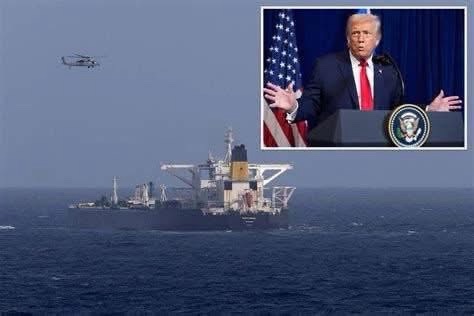
A lot of people are reacting emotionally to the idea of oil tankers being seized, but most of the outrage comes from not understanding what is actually being discussed.
So let’s slow this down and explain it clearly, legally, and step by step.
This is not war.
This is not piracy.
This is judgment enforcement — the same principle used every day when courts seize bank accounts, property, aircraft, or cargo from someone who lost in court and refuses to pay.
- What Venezuela did (the part that always gets skipped)
In the 2000s, under Hugo Chávez, Venezuela seized oil projects owned by foreign companies, including major U.S. firms such as ExxonMobil and ConocoPhillips.
This wasn’t a policy disagreement.
It was expropriation:
• Contracts were broken
• Assets were taken
• Compensation that had been agreed to was not paid
That is not controversial. It is historical fact. - What the courts decided
Those U.S. companies didn’t complain on social media.
They went to international arbitration and U.S. courts — the proper legal venues.
They won.
The rulings were:
• Final
• Binding
• Enforceable
Venezuela lost and was ordered to pay tens of billions of dollars in damages. - The real problem: Venezuela refused to pay
Here is the key point most critics ignore:
Venezuela refused to comply with the court judgments.
In any legal system — domestic or international — when a party:
• Loses in court
• Owes a judgment
• Refuses to pay
…the law allows creditors to seize commercial assets belonging to the debtor outside its borders to satisfy the judgment.
This is called judgment enforcement.
Countries do not get a free pass simply because they are countries. - Why oil tankers even enter the conversation
Venezuela’s primary commercial asset is oil.
Oil moves on oil tankers.
Those tankers:
• Carry state-owned Venezuelan oil
• Are commercial property, not military or diplomatic assets
• Can be lawfully seized by court order in cooperating jurisdictions
This is no different in principle from seizing:
• A bank account
• A plane
• A shipment of goods
Calling this “piracy” is legally incorrect.
Piracy is theft without lawful authority.
This is court-ordered seizure to collect a debt already ruled on. - The math everyone avoids
Let’s use conservative, realistic numbers so no one can claim exaggeration.
• Estimated unpaid court judgments: ~$35 billion
• Oil price used: $62 per barrel
• Typical large oil tanker (VLCC): ~2 million barrels
Value of one full tanker:
• Gross value: ~$124 million
• Net value after realistic court-sale discounts: ~$115 million
Now do the math:
$35,000,000,000 ÷ $115,000,000 ≈ 300 tankers
That’s where the number comes from.
Not one tanker.
Not ten.
About three hundred.
One tanker only covers about one-third of one percent of what Venezuela owes.
- What this means — and what it does NOT mean
This does not mean:
• Tankers are being randomly grabbed
• This is a military action
• The goal is punishment
It does mean:
• Courts already ruled
• A debt legally exists
• Enforcement is the only option left when payment is refused
When Donald Trump talks about seizing oil shipments, he is not inventing a new power.
He is talking about using existing legal authority to enforce judgments Venezuela already lost.
In plain English:
You took property, you lost in court, you refused to pay — so your commercial assets are seized and sold until the debt is satisfied.
That is how the rule of law works.
- Why you don’t see hundreds of tankers seized
Because enforcement is:
• Legally narrow
• Jurisdiction-dependent
• Deliberately targeted
Venezuela also structured its exports to:
• Avoid enforceable ports
• Use intermediaries
• Break shipments into smaller pieces
So tanker seizures are rare, careful, and strategic, not mass roundups.
Tankers are leverage, not a magic wand.
The bottom line
• Venezuela seized U.S. assets
• Venezuela lost in international court
• Venezuela refuses to pay
• The debt is ~$35 billion
• A tanker is worth ~$115 million net
• It would take ~300 Venezuelan oil tankers to make the judgment whole
This is lawful enforcement, not piracy.
This is accounting, not aggression.
This is what happens when court rulings are ignored.
People arguing “this sounds extreme” are missing the most important fact:
The court already decided.
Once that happens, enforcement isn’t optional — it’s inevitable.
Everything else flows from that reality.


 Roy F. McCampbell's Blog