Drones are becoming an increasingly common sight around the United States.
For some, drones are seen as fascinating and innovative tools. For others, they may raise concerns about privacy and safety.
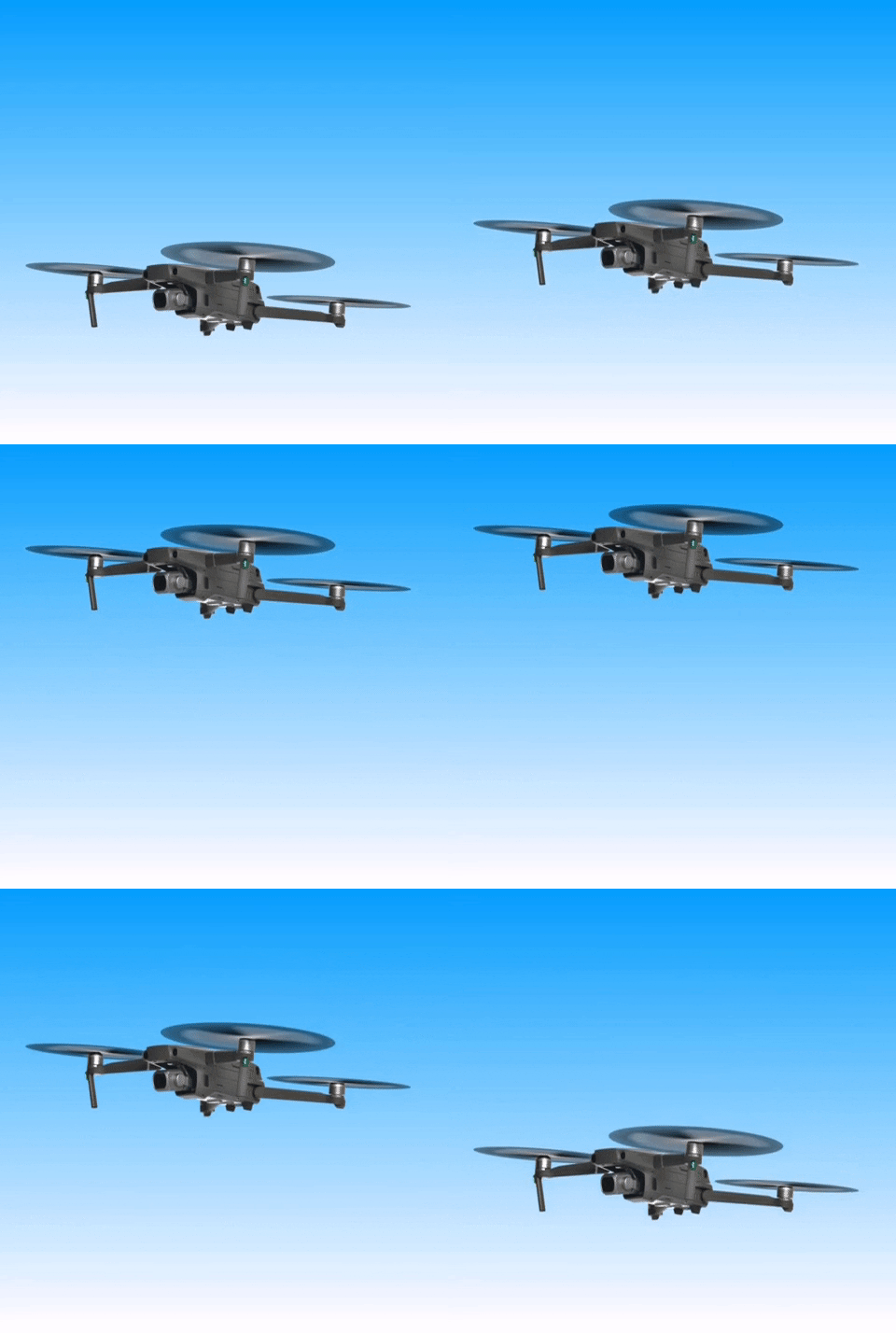
In New Jersey, a surge in mysterious drone activity has recently captured widespread attention. While these drones haven’t posed any immediate threats to public safety, they’ve sparked enough unease for at least one state official to controversially suggest shooting them down.
The situation in New Jersey has fueled a broader question: Is it even legal to shoot down a drone?
For Illinois, here are some considerations to keep in mind.
Federal law
First and foremost, the FAA considers recreational unmanned aircraft systems like drones to fall within regulatory definitions of an aircraft.
The situation in New Jersey has fueled a broader question: Is it even legal to shoot down a drone?
For Illinois, here are some considerations to keep in mind.
- Discharging a firearm at occupied buildings
- Discharging on school property or within 1,000 feet of school grounds
- Discharging toward occupied vehicles
- Discharging toward public safety personnel
Even if the intent is to shoot down a drone, missing the target or causing the bullet to strike within one of these contexts could escalate the offense to aggravated discharge of a firearm.
Additionally, according to Illinois Statute 620 ILCS 5/42, the regulation of unmanned aircraft systems (including drones) is the responsibility of the state, provided it aligns with federal law. This reinforces the idea that any actions involving drones, including shooting at them, generally fall under the state’s tightly controlled regulated framework.
Shooting at a drone would not only disrupt the state’s lawful operation, but could interfere with efforts to ensure the “safe and efficient operation of the unmanned aircraft” as described in the statute. As a result, shooting at a drone in Illinois could lead to legal consequences under both state and federal law.
Furthermore
Even if a particular instance of shooting at a drone were to align with state and federal laws, local ordinances may impose additional regulations.
Context is also important. While rare, one might attempt to argue in self-defense in shooting at a drone if its actions could be interpreted as posing an immediate or credible threat to personal safety. However, such cases could face heavy scrutiny under law.
If you’re concerned with drone activity or feel compelled to shoot down a drone, the safest course of action is to resist the temptation, report concerns to local law enforcement or the FAA, and follow any further guidance on navigating the situation.


 Roy F. McCampbell's Blog