The KGB’s Role in Founding the PLO
Russian KGB played a crucial role in the creation of the Palestinian national identity and the PLO. After the failure of Arab armies to destroy Israel, the KGB devised a strategy to manufacture Palestinian nationalism as a tool to oppose Israel.
The KGB was instrumental in drafting the Palestinian National Charter in 1964. It handpicked the 422 members of the Palestinian National Council, who then approved the charter, essentially creating the PLO. This move was part of a broader Soviet strategy to instill a deep-seated hatred for Israel throughout the Islamic world.
The KGB provided substantial support to various Palestinian militant groups within the PLO, including Fatah, the Popular Front for the Liberation of Palestine (PFLP), and the Democratic Front for the Liberation of Palestine (DFLP). The KGB supplied arms, training, and funding, and had codenames for each faction (Fatah was “Kabinet”). This support turned these groups into proxies for Soviet interests in the Middle East.

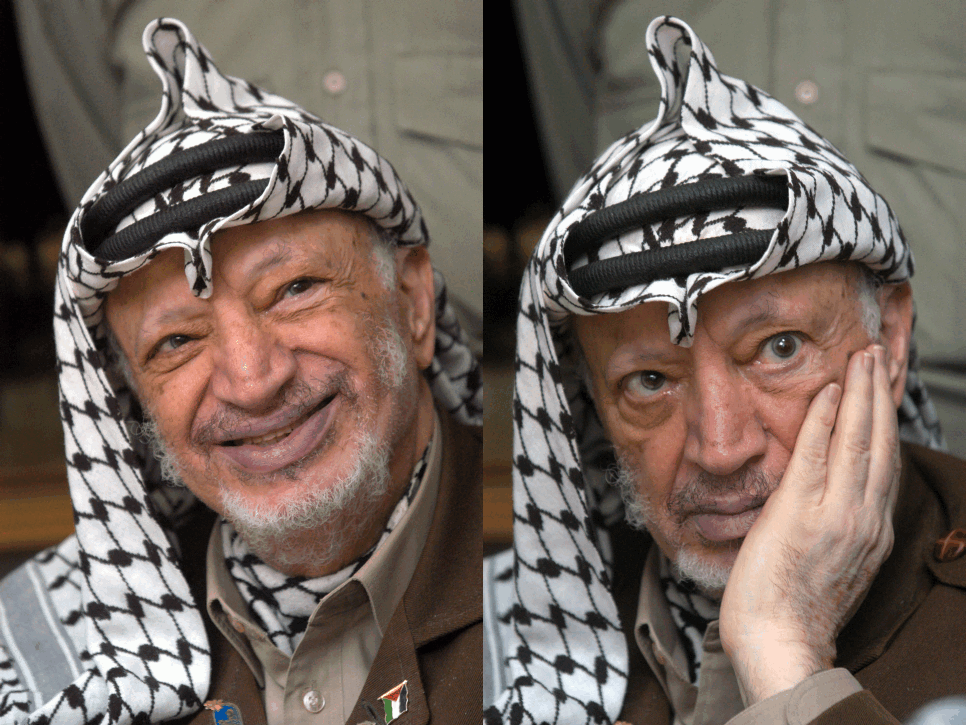
The KGB cultivated close ties with PLO leaders such as Yasser Arafat and Wadi Haddad of the PFLP. These relationships involved providing intelligence, training camps, and directing some operations. The KGB’s influence ensured that Palestinian groups operated in alignment with Soviet objectives.
The KGB’s propaganda efforts were aimed at portraying the PLO as a legitimate national liberation movement. By manufacturing Palestinian nationalism and backing the PLO, the KGB successfully promoted it on the international stage. This propaganda helped the PLO gain observer status at the UN in 1974 and recognition from various states, bolstering its credibility.
The KGB’s creation of Palestinian nationalism had long-lasting effects. Even after the collapse of the Soviet Union, the nationalist sentiment it had fostered continued to influence Palestinian groups. This foundation of anti-Israel ideology perpetuated the conflict and influenced subsequent generations of Palestinian militants.
The KGB-backed Palestinian militant groups posed significant security threats to Israel. These groups carried out numerous terrorist attacks, including hijackings and bombings, which forced Israel to adopt stringent security measures. The KGB’s support for these groups directly influenced Israel’s security policies and its approach to dealing with Palestinian militancy.
Operation SIG was a KGB active measures campaign aimed at undermining Israeli democracy by inciting hatred against Israel and creating chaos. This campaign involved disinformation and support for terrorist activities, further destabilizing the region and complicating Israel’s security landscape.
The creation of the notion of “Palestine” and the establishment of the PLO were the results of intricate geopolitical maneuvers involving key figures like Ahmad Shukeiri, Yasser Arafat, and the strategic influence of the KGB.


 Roy F. McCampbell's Blog