The push to make Juneteenth a federal holiday, which successfully led to the first national Juneteenth observance last year, brought a new wave of attention to the history behind this celebration: That on June 19, 1865, enslaved men and women in Texas found out—weeks after the Civil War ended—that they were free, and the Union Army’s Major General Gordon Granger issued General Order No. 3: “The people of Texas are informed that, in accordance with a proclamation from the Executive of the United States, all slaves are free.”
“There are some enslavers in Texas that didn’t tell their enslaved people that they were free, and they had them keep on working,” says Daina Ramey Berry, Professor of History and Dean of Humanities and Fine Arts at the University of California, Santa Barbara.
So then when did slavery actually end in the United States?
158 years ago on June 19, 1865, Major General Gordon Granger (born in Sodus, NY 130 miles from Buffalo) and 2,000+ soldiers of the 13th Army Corps arrive in Galveston, TX to spread the word about the Emancipation Proclamation that President Lincoln issued more than 2 years earlier on September 22, 1862.

General Granger first read General Orders No. 3 at Union Army Headquarters at the Osterman Building (formerly located at The Strand and 22nd Street) which provides in part:
“The people of Texas are informed that in accordance with a Proclamation from the Executive of the United States, all slaves are free. This involves an absolute equality of rights and rights of property between former masters and slaves, and the connection therefore existing between them becomes that between employer and hired laborer.”
Historians believe the reason for the 30-month lag time was that the Emancipation Proclamation wasn’t enforceable before the end of the Civil War. Juneteenth is celebrated because it was a significant milestone in the ongoing fight for racial equality.
Juneteenth celebrations started in Texas in 1866 and this holiday is the oldest known celebration commemorating the end of slavery in the United States. This year marks the 48th Juneteenth celebration in Buffalo and the third year Juneteenth is acknowledged as a national and state holiday.
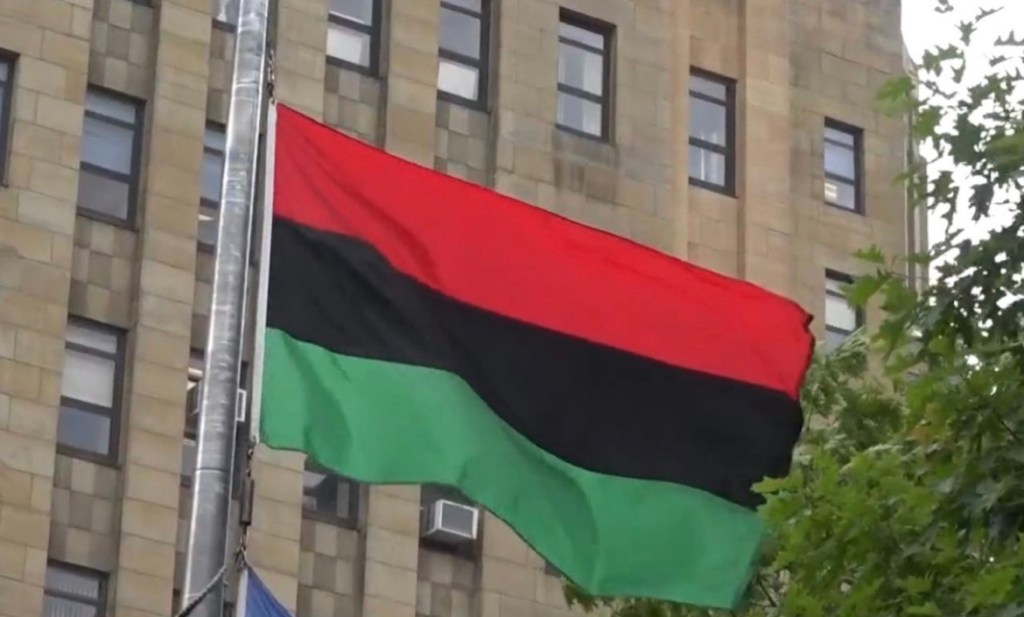
Pictured here is the Pan-African flag flying at Buffalo City Hall in celebration of Juneteenth. The Universal Negro Improvement Association and African Communities League (UNIA) first adopted this flag in 1920. According to UNIA’s website:
The three Pan-African colors on the flag represent:
Red: the blood that unites all people of Black African ancestry, and shed for liberation;
Black: black people whose existence as a nation, though not a nation-state, is affirmed by the existence of the flag; and
Green: the abundant natural wealth of Africa.


 Roy F. McCampbell's Blog